European Roulette: The Ultimate Guide for Better Odds

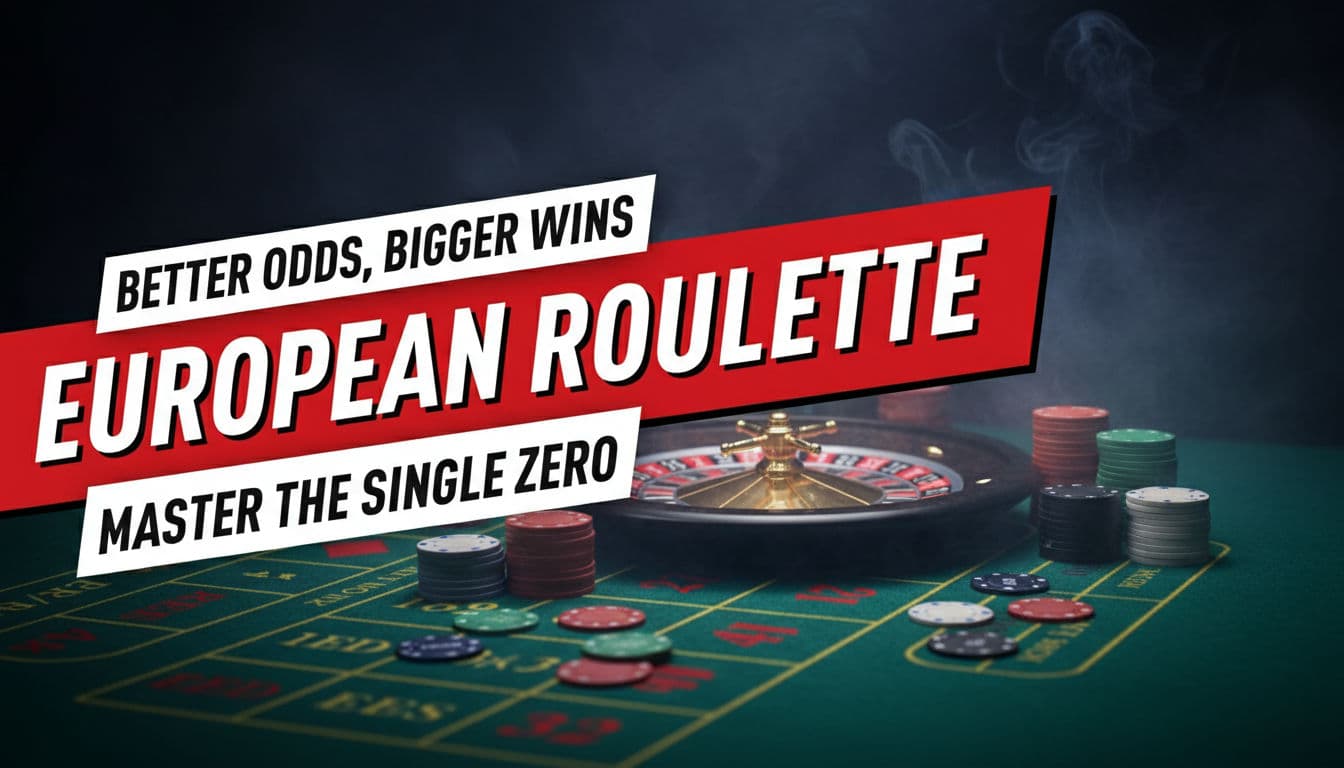
European Roulette stands out in the casino world for one simple reason: a single-zero wheel. This subtle difference from its American counterpart dramatically lowers the house edge to just 2.7%, offering players significantly better odds. Understanding its layout, bet types, and unique rules is key to maximizing your chances at the table.
What is European Roulette?
European Roulette is a foundational casino game and one of the most popular table games worldwide. Its defining feature is the wheel, which contains 37 pockets. These include numbers 1 through 36, alternating in red and black, and a single green pocket for the number 0. The presence of a single zero is the critical distinction that sets it apart from American Roulette and makes it the preferred version for many players.
In a modern online casino, this single-zero layout is often the gold standard for those looking to manage their long-term bankroll more effectively. Because the house edge is nearly halved compared to the American version, players experience a lower level of overall variance, leading to a more stable and predictable gaming session. This reduction in mathematical volatility allows you to explore complex betting systems with greater confidence, ensuring that your time at the virtual table is defined by strategic play rather than rapid, unexpected swings in your balance.
The Wheel and Table Layout
The roulette wheel layout in the European version is designed for randomness. The numbers are arranged in a specific sequence to ensure no section of the wheel is statistically favored. The betting table, laid out next to the wheel, is where players place their wagers. It features a grid of all the individual numbers, with sections for various 'outside' bets like Red/Black, Odd/Even, and Dozens.
Understanding the House Edge Advantage
The primary reason players seek out European Roulette is its favorable house edge. The house edge is the casino's built-in mathematical advantage on any given bet. In this version, it's a mere 2.7%.
Here's how it's calculated: There are 37 possible outcomes, but a winning bet on a single number pays 35 to 1. This slight discrepancy ensures the casino maintains its profit margin over the long run. When compared to the 5.26% house edge in American Roulette, which has a double-zero pocket, the player's advantage becomes clear. Playing the European version gives you a statistically better chance of winning over time.
Playing European Roulette is one of the smartest choices a table game enthusiast can make. That single zero pocket cuts the house advantage in half, which is a massive difference over any significant number of spins.
Special Rules: La Partage and En Prison
Certain variations, often called French Roulette, use the European wheel but add player-friendly rules that lower the house edge even further. The two most common are:
La Partage: If you place an even-money bet (like Red/Black) and the ball lands on zero, you get half of your stake back. This cuts the house edge on those bets to just 1.35%.
En Prison: Similar to La Partage, when the ball lands on zero, your even-money bet is 'imprisoned'. It stays on the table for the next spin. If your bet wins on that next spin, you get your original stake back.
How to Play: Bets and Payouts
Learning how to play roulette is straightforward. You place your chips on the number or group of numbers you predict the ball will land on. The bets are typically divided into two categories.
Bet Type | Description | Payout |
|---|---|---|
Straight Up | A bet on a single number. | 35 to 1 |
Split | A bet on the line between two adjacent numbers. | 17 to 1 |
Street | A bet on a row of three numbers. | 11 to 1 |
Corner | A bet on the corner where four numbers meet. | 8 to 1 |
Red/Black | A bet on whether the winning number will be red or black. | 1 to 1 |
Odd/Even | A bet on whether the winning number will be odd or even. | 1 to 1 |
These are just a few examples. The variety of bets is a major part of the game's appeal, allowing players to choose between high-risk, high-reward straight-up bets and safer, even-money outside bets.
European vs. American Roulette
The choice between the two main roulette variants is simple for any informed player. The single-zero wheel in European Roulette provides better odds and a lower house edge. While American Roulette is more common in Las Vegas casinos, European Roulette dominates online casino games and gaming floors across Europe and the rest of the world.
| Pros | Cons |
|---|---|
The single zero gives the house a much smaller advantage (2.7%) than the American version (5.26%), which improves your long-term odds. | Land-based casinos in the United States heavily favor the double-zero American wheel, making European tables harder to find. |
With only 37 pockets instead of 38, your statistical probability of winning any given bet is slightly higher. | In a live setting, the game can sometimes feel slower than other table games, which may not appeal to all players. |
The potential for rules like 'La Partage' and 'En Prison' can cut the house edge on even-money bets in half, making it one of the best bets in the casino. |
Related Casino Terms
(The) Cage
American Roulette
Banker
Bonus Hunting/Bonus Whoring
Call Bets
Casino
Chips
Cold Table
Color Up
Column Bet
Comp Points
Credit
Credit Button
Croupier
Dealer
Deposit
Deposit Bonus
Dozen Bet
Drop Percentage
European Roulette
Face
Ficheur
Final
Fixed Odds
Flash
Flat Betting
Four Corners
Hardway
High Bet
High Roller
House
House Edge
Jackpot
Keno
La Partage
Limit
Longshot
Low Bet
Nosebleed
On
Online Casino
Outside Bet
Overdrawn
Overdue
Payoff
Playthrough Requirement
Postage Stamp
Quarter Bet
Re-Bet
Return
Roulette Wheel
Scared Money
Self-Exclusion
Split Bet
Straight Bet
Street Bet
Virgin
Wager
Wagering Requirement
Best Online Casinos

Vave
4.6Welcome Bonus150% up to 1.5 BTCCashback BonusVariable- Welcome Bonus
- 150% up to 1.5 BTC
- FTD Bonus
- 150% up to 1.5 BTC
- Cashback Bonus
- Variable
- Extra Bonus
- Free Spins
- Platforms


- Browser Support
- Yes
- Mobile Support
- No
- Crypto Support
- Yes
- License
- Republic of Costa Rica
Game types
 No Blackjack
 Baccarat
 No Bingo
 No Craps & dice
 Crash games
 eSports betting
 Jackpot games
 No Keno
 Live games
 Roulette
 No Scratch cards
 Slots
Slots Sports betting
 No Video poker
Payment methods


LTC Casino
4.4Welcome Bonus250% First Deposit Bonus up to $750Cashback BonusNo Cashback- Welcome Bonus
- 250% First Deposit Bonus up to $750
- FTD Bonus
- 250% up to $750
- Cashback Bonus
- No Cashback
- Platforms
- Browser Support
- Yes
- Mobile Support
- No
- Crypto Support
- Yes
- License
- No License
Game types
BlackjackBaccaratNo BingoNo Craps & diceCrash gamesNo eSports bettingJackpot gamesNo KenoLive gamesRouletteNo Scratch cardsSlotsNo Sports bettingNo Video pokerPayment methods


Jack
4.6Welcome Bonus100 Free Spins + Risk-Free Sports BetCashback BonusUp to 30%- Welcome Bonus
- 100 Free Spins + Risk-Free Sports Bet
- Cashback Bonus
- Up to 30%
- Extra Bonus
- 100 Free Spins
- Platforms
- Browser Support
- Yes
- Mobile Support
- No
- Crypto Support
- Yes
- License
- Curaçao Gaming Control Board
Game types
BlackjackBaccaratNo BingoNo Craps & diceCrash gameseSports bettingJackpot gamesNo KenoLive gamesRouletteScratch cardsSlotsSports bettingNo Video pokerPayment methods


Duel
4.2Welcome Bonus50% Instant RakebackCashback BonusFix 50%- Welcome Bonus
- 50% Instant Rakeback
- Cashback Bonus
- Fix 50%
- Extra Bonus
- 100% RTP Games
- Platforms
- Browser Support
- Yes
- Mobile Support
- No
- Crypto Support
- Yes
- License
- License No. ALSI-202411026-FI1.
Game types
No BlackjackBaccaratBingoCraps & diceCrash gameseSports bettingJackpot gamesNo KenoLive gamesRouletteNo Scratch cardsSlotsSports bettingVideo pokerPayment methods

Stake US
4.6Welcome BonusFree 25 SC + 250K Gold Coins- Welcome Bonus
- Free 25 SC + 250K Gold Coins
- Extra Bonus
- 1 Stake Cash + 10,000 Gold Coins Free - Every Day
- Platforms
- Browser Support
- Yes
- Mobile Support
- No
- Crypto Support
- Yes
- License
- Sweepstakes (US Federal Law)
Game types
BlackjackBaccaratNo BingoCraps & diceCrash gamesNo eSports bettingNo Jackpot gamesNo KenoLive gamesRouletteScratch cardsSlotsNo Sports bettingNo Video pokerPayment methods

Shuffle US
4.7Welcome BonusFree 1 Shuffle Coin + 25,000 GC- Welcome Bonus
- Free 1 Shuffle Coin + 25,000 GC
- Extra Bonus
- Daily Log in Bonus
- Platforms
- Browser Support
- Yes
- Mobile Support
- No
- Crypto Support
- Yes
- License
- Sweepstakes Model — Munyon Canyon Ltd (BVI)
Game types
BlackjackBaccaratNo BingoNo Craps & diceCrash gamesNo eSports bettingNo Jackpot gamesNo KenoLive gamesRouletteNo Scratch cardsSlotsNo Sports bettingNo Video pokerPayment methods