Cold Table in Craps: Meaning & Strategy Guide

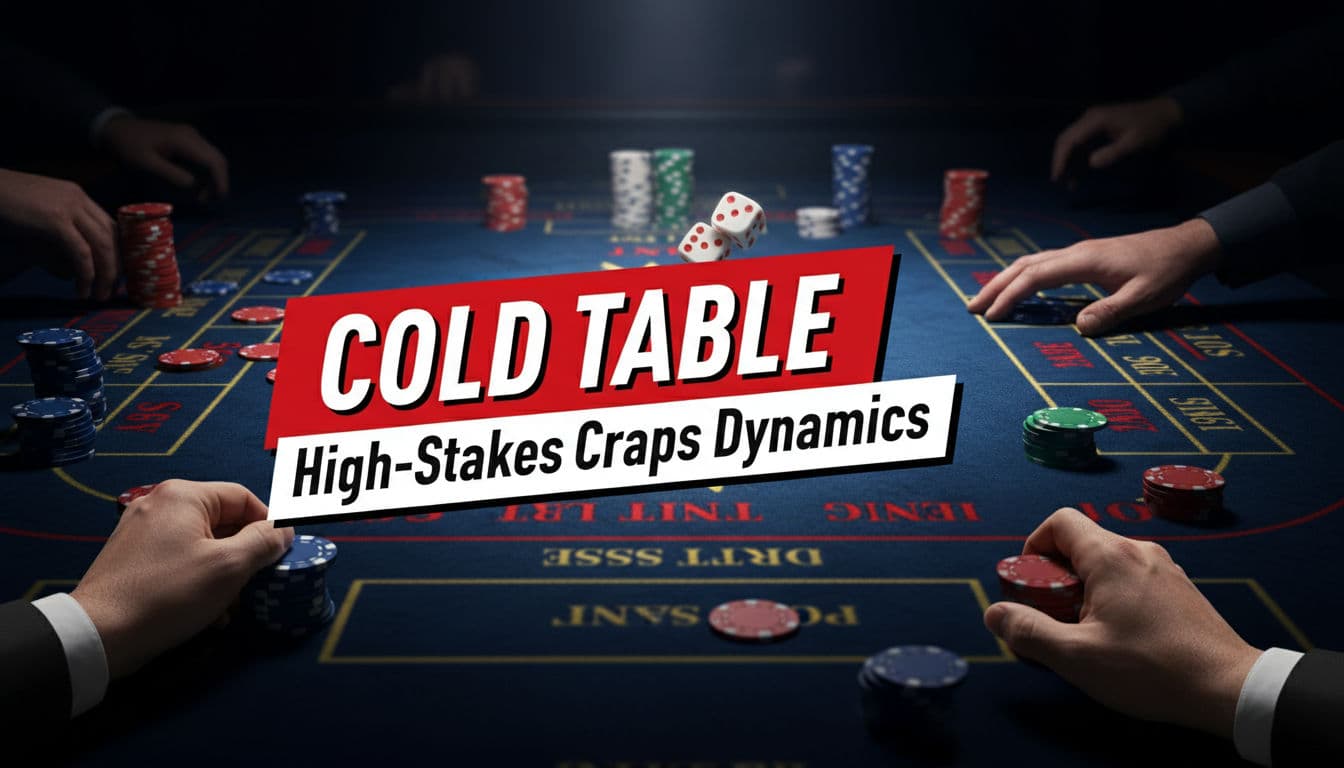
A cold table is a term every craps player dreads-or loves, depending on how they bet. It describes a situation in which the dice are 'cold,' meaning the shooter consistently fails to make their point number, resulting in frequent losses for players betting on the Pass Line. For savvy gamblers, however, a cold table presents a unique opportunity to bet against the shooter and potentially turn a profit by playing the 'dark side'.
Understanding the Cold Table in Craps
In the world of casino jargon, few terms capture the immediate feeling of a game like a cold table. While the term can be loosely applied to other games, its true home is at the craps table. A cold table in craps is the direct opposite of a hot table; it's a stretch of gameplay where the shooter repeatedly rolls a seven before establishing and hitting their point number, an event known as a "seven out."
When this happens, anyone betting on the Pass Line-the most common bet in craps-loses. These players are called "right" bettors because they are betting with the shooter. On a cold table, the dice just don't seem to cooperate, leading to quick turnovers and mounting frustration for the majority of players huddled around the felt.
Even when playing at a modern online casino, where a Random Number Generator or a live dealer handles the dice, you can still witness these streaks of "cold" outcomes, often prompting strategic players to switch their focus to "Don't Pass" bets to capitalize on the table's current momentum.
Identifying a Cold Table in Action
Spotting a cold table is more of an art than a science, as it relies on observing short-term trends. Here’s what to look for:
Frequent Seven Outs: The most obvious sign is the shooter failing to make their point. If you see multiple shooters lose their turn in quick succession, the table is likely cold.
A Subdued Mood: Unlike the cheering and high-fives of a hot table, a cold one is often quiet and tense. You'll see more shaking heads than celebratory shouts.
Growing Chip Stacks on the 'Dark Side': Look for players betting on the Don't Pass line. If these "wrong" bettors are consistently winning, it's a strong indicator that the table is cold.
It is crucial to remember the Gambler's Fallacy. Just because a table has been cold doesn't mean it will stay that way. Each roll of the dice is an independent event.
Strategies for Playing at a Cold Craps Table
While most players might walk away from a cold table, some see it as an opportunity. The key is to switch from being a "right" bettor to a "wrong" bettor.
Embracing the 'Dark Side': The Don't Pass Bet
The primary strategy on a cold table is to bet the Don't Pass Line. This is a bet against the shooter. You win if the shooter rolls a 2 or 3 on the come-out roll, or if they establish a point and then "seven out" before rolling that point number again. You lose if they roll a 7 or 11 on the come-out, or if they make their point. A roll of 12 is a push.
This bet has a slightly lower house edge (1.36%) than the Pass Line bet (1.41%), making it statistically attractive regardless of table temperature. On a cold table, where seven outs are frequent, this bet aligns perfectly with the current trend.
"While it can feel antisocial to be a 'wrong' bettor, you're not betting against the other players; you're betting with the math. On a cold table, the math is your best friend."
Comparing Hot vs. Cold Table Dynamics
The atmosphere and winning strategies differ completely between a hot and a cold table. Understanding these differences is key to adapting your play.
Feature | Cold Table | Hot Table |
|---|---|---|
Shooter's Luck | Consistently 'sevens out' before the point | Makes multiple points, enjoys long rolls |
Winning Bets | Don't Pass, Don't Come, Laying Odds | Pass Line, Come Bets, Placing Odds |
Table Mood | Tense, quiet, and often frustrated | Loud, exciting, and full of camaraderie |
Key Strategy | Betting against the shooter ('wrong') | Betting with the shooter ('right') |
The Social Etiquette of Wrong Betting
Playing the Don't Pass line on a cold table is a sound strategy, but it requires some social awareness. You will be winning when most others are losing. It's considered good etiquette to be discreet. Avoid loud celebrations when you win on a seven out. A simple, quiet chip collection is all that's needed. By being respectful, you can play your strategy without drawing negative attention from other players who are having a rough run of luck.
| Pros | Cons |
|---|---|
The primary 'wrong' bet, the Don't Pass line, has a slightly lower house edge than the standard Pass Line bet, making it a statistically sound choice. | As a 'wrong' bettor, you win when the majority of the table loses. This can create a socially isolating or tense atmosphere if not handled with discretion. |
This strategy allows players to take advantage of a shooter's losing streak, aligning bets with the immediate outcome of the game. | A cold streak can end on any roll. Relying solely on past outcomes is a logical fallacy, and the tables can turn 'hot' without warning. |
Related Casino Terms
(The) Cage
American Roulette
Banker
Bonus Hunting/Bonus Whoring
Call Bets
Casino
Chips
Cold Table
Color Up
Column Bet
Comp Points
Credit
Credit Button
Croupier
Dealer
Deposit
Deposit Bonus
Dozen Bet
Drop Percentage
European Roulette
Face
Ficheur
Final
Fixed Odds
Flash
Flat Betting
Four Corners
Hardway
High Bet
High Roller
House
House Edge
Jackpot
Keno
La Partage
Limit
Longshot
Low Bet
Nosebleed
On
Online Casino
Outside Bet
Overdrawn
Overdue
Payoff
Playthrough Requirement
Postage Stamp
Quarter Bet
Re-Bet
Return
Roulette Wheel
Scared Money
Self-Exclusion
Split Bet
Straight Bet
Street Bet
Virgin
Wager
Wagering Requirement
Best Online Casinos

Vave
4.6Welcome Bonus150% up to 1.5 BTCCashback BonusVariable- Welcome Bonus
- 150% up to 1.5 BTC
- FTD Bonus
- 150% up to 1.5 BTC
- Cashback Bonus
- Variable
- Extra Bonus
- Free Spins
- Platforms


- Browser Support
- Yes
- Mobile Support
- No
- Crypto Support
- Yes
- License
- Republic of Costa Rica
Game types
 No Blackjack
 Baccarat
 No Bingo
 No Craps & dice
 Crash games
 eSports betting
 Jackpot games
 No Keno
 Live games
 Roulette
 No Scratch cards
 Slots
Slots Sports betting
 No Video poker
Payment methods


LTC Casino
4.4Welcome Bonus250% First Deposit Bonus up to $750Cashback BonusNo Cashback- Welcome Bonus
- 250% First Deposit Bonus up to $750
- FTD Bonus
- 250% up to $750
- Cashback Bonus
- No Cashback
- Platforms
- Browser Support
- Yes
- Mobile Support
- No
- Crypto Support
- Yes
- License
- No License
Game types
BlackjackBaccaratNo BingoNo Craps & diceCrash gamesNo eSports bettingJackpot gamesNo KenoLive gamesRouletteNo Scratch cardsSlotsNo Sports bettingNo Video pokerPayment methods


Jack
4.6Welcome Bonus100 Free Spins + Risk-Free Sports BetCashback BonusUp to 30%- Welcome Bonus
- 100 Free Spins + Risk-Free Sports Bet
- Cashback Bonus
- Up to 30%
- Extra Bonus
- 100 Free Spins
- Platforms
- Browser Support
- Yes
- Mobile Support
- No
- Crypto Support
- Yes
- License
- Curaçao Gaming Control Board
Game types
BlackjackBaccaratNo BingoNo Craps & diceCrash gameseSports bettingJackpot gamesNo KenoLive gamesRouletteScratch cardsSlotsSports bettingNo Video pokerPayment methods


Duel
4.2Welcome Bonus50% Instant RakebackCashback BonusFix 50%- Welcome Bonus
- 50% Instant Rakeback
- Cashback Bonus
- Fix 50%
- Extra Bonus
- 100% RTP Games
- Platforms
- Browser Support
- Yes
- Mobile Support
- No
- Crypto Support
- Yes
- License
- License No. ALSI-202411026-FI1.
Game types
No BlackjackBaccaratBingoCraps & diceCrash gameseSports bettingJackpot gamesNo KenoLive gamesRouletteNo Scratch cardsSlotsSports bettingVideo pokerPayment methods

Stake US
4.6Welcome BonusFree 25 SC + 250K Gold Coins- Welcome Bonus
- Free 25 SC + 250K Gold Coins
- Extra Bonus
- 1 Stake Cash + 10,000 Gold Coins Free - Every Day
- Platforms
- Browser Support
- Yes
- Mobile Support
- No
- Crypto Support
- Yes
- License
- Sweepstakes (US Federal Law)
Game types
BlackjackBaccaratNo BingoCraps & diceCrash gamesNo eSports bettingNo Jackpot gamesNo KenoLive gamesRouletteScratch cardsSlotsNo Sports bettingNo Video pokerPayment methods

Shuffle US
4.7Welcome BonusFree 1 Shuffle Coin + 25,000 GC- Welcome Bonus
- Free 1 Shuffle Coin + 25,000 GC
- Extra Bonus
- Daily Log in Bonus
- Platforms
- Browser Support
- Yes
- Mobile Support
- No
- Crypto Support
- Yes
- License
- Sweepstakes Model — Munyon Canyon Ltd (BVI)
Game types
BlackjackBaccaratNo BingoNo Craps & diceCrash gamesNo eSports bettingNo Jackpot gamesNo KenoLive gamesRouletteNo Scratch cardsSlotsNo Sports bettingNo Video pokerPayment methods