Casino Shill: The House Player Explained

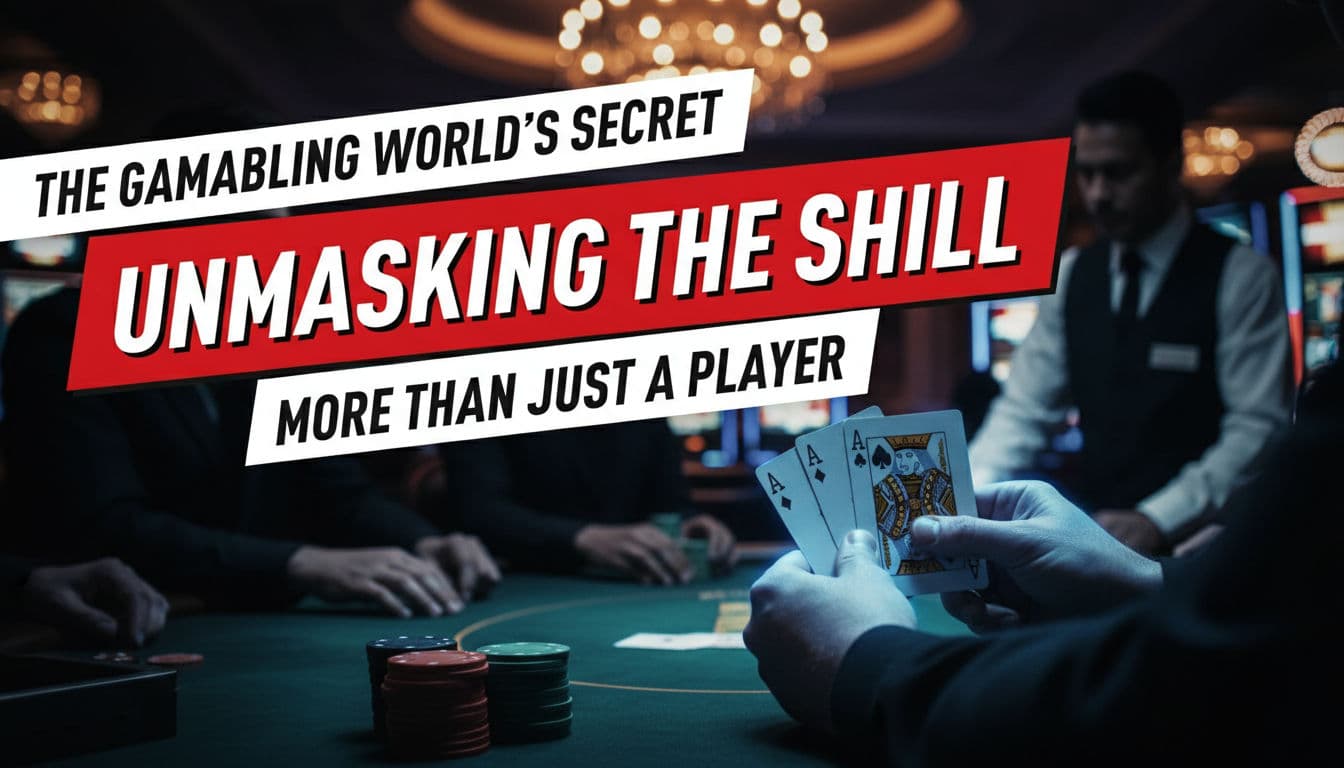
Have you ever sat at a half-empty poker table wondering how to get a game started? Meet the casino shill, a house-paid player whose job is to fill empty seats and keep the action going. They aren't there to take your money, but to ensure there's a game for you to play in the first place.
Unmasking the Casino Shill: More Than Just a Player
In the world of casino jargon, few terms are as misunderstood as the casino shill. A shill is an individual hired by a gambling establishment to participate in games, primarily to create the appearance of a full and active table. Their main purpose is to start shorthanded games or to prevent existing games from breaking up due to a lack of players. Think of them as game starters, paid by the house to generate action where there isn't enough.
It's crucial to understand that a table game shill is not there to cheat or gain an unfair advantage. They typically play with the casino's money, and any winnings go directly back to the house. Their presence is purely functional, aimed at improving the overall player experience by ensuring games are always available.
While this practice is a staple of land-based card rooms, it has largely disappeared from modern online casinos, where a global player base ensures tables fill instantly at any hour. In the digital space, transparency and automated systems have replaced the need for such "atmosphere-builders," providing a more direct and often more authentic interaction between the player and the house.
The Shill vs. The House Player vs. The Prop Player
While the terms are often used interchangeably, there are subtle but important distinctions between these roles.
Shill: Plays with the casino's money. They risk nothing and keep none of their winnings. Their sole purpose is to occupy a seat. This is the classic, though less common, definition today.
House Player: A broader term that often encompasses shills. A house player is any employee playing on behalf of the casino. Their compensation and rules can vary, but they represent the casino's interests at the table.
Proposition (Prop) Player: This is the most common model in modern poker rooms. A prop player is paid a flat hourly rate by the casino to start and fill games, but they play with their own money. They assume all the risk and keep any profits they make in addition to their hourly wage.
Where Do You Find a Shill?
The most common habitat for a casino shill or prop player is the poker room. Poker requires multiple players to be viable, and games can die out quickly if a few people leave. Shills ensure that a 4-player game doesn't break, giving new players a reason to join. By keeping the game running, they maintain the casino's revenue stream from the rake.
While most prevalent in poker, the concept can apply to other table games that might struggle to attract players, such as certain variations of Baccarat or Pai Gow Poker. However, their role in these games is far less common than in a typical poker room.
"The use of house players is a tool for game integrity and availability. It’s not about deceiving players, but about providing a consistent product. A game can't run with two players, so we use a prop to get it to a point where it's attractive for others to join." - Anonymous Casino Floor Manager
The Ethics and Legality of Using a Casino Shill
The practice of using shills or casino employee players is generally legal and regulated in most major gambling jurisdictions. Reputable casinos are often transparent about how they use these players. Some may even have a sign-up list where players can see who is a 'prop' for the house. The key is that a shill's play must be honest; they cannot engage in collusion or any form of cheating.
Their goal is not to win money from customers but to facilitate the game. Because they are not incentivized by profit (especially true shills playing with house money), they often play a very conservative, 'by-the-book' style that poses little strategic threat to skilled players.
How to Spot a Potential House Player
Identifying a casino shill or prop player can be difficult, as they are meant to blend in. However, there are a few potential tells:
Conservative Play: They often play a very tight, mechanical game, avoiding big risks.
Lack of Socializing: They might be quieter than other players and less engaged in table talk.
Sudden Departures: A house player will often be the first to leave the table as soon as a new, non-employee player sits down.
Familiarity with Staff: They may have a very strong, professional rapport with dealers and floor staff.
Ultimately, their presence shouldn't negatively affect your game. A game with a house player is better than no game at all, and they provide the liquidity needed to keep the cards in the air.
| Pros | Cons |
|---|---|
Shills ensure that poker and other table games don't shut down for lack of players, providing more opportunities for everyone to play. | Players who are unaware of the practice might feel misled or deceived when they find out they are playing against a casino employee. |
Fuller tables are more attractive to potential players. Shills help create the impression of an active, bustling casino floor. | The typically conservative and passive playing style of a shill can make the game less dynamic and potentially less profitable for aggressive players. |
Related Casino Terms
Best Online Casinos

Vave
4.6Welcome Bonus150% up to 1.5 BTCCashback BonusVariable- Welcome Bonus
- 150% up to 1.5 BTC
- FTD Bonus
- 150% up to 1.5 BTC
- Cashback Bonus
- Variable
- Extra Bonus
- Free Spins
- Platforms


- Browser Support
- Yes
- Mobile Support
- No
- Crypto Support
- Yes
- License
- Republic of Costa Rica
Game types
 No Blackjack
 Baccarat
 No Bingo
 No Craps & dice
 Crash games
 eSports betting
 Jackpot games
 No Keno
 Live games
 Roulette
 No Scratch cards
 Slots
Slots Sports betting
 No Video poker
Payment methods


LTC Casino
4.4Welcome Bonus250% First Deposit Bonus up to $750Cashback BonusNo Cashback- Welcome Bonus
- 250% First Deposit Bonus up to $750
- FTD Bonus
- 250% up to $750
- Cashback Bonus
- No Cashback
- Platforms
- Browser Support
- Yes
- Mobile Support
- No
- Crypto Support
- Yes
- License
- No License
Game types
BlackjackBaccaratNo BingoNo Craps & diceCrash gamesNo eSports bettingJackpot gamesNo KenoLive gamesRouletteNo Scratch cardsSlotsNo Sports bettingNo Video pokerPayment methods


Jack
4.6Welcome Bonus100 Free Spins + Risk-Free Sports BetCashback BonusUp to 30%- Welcome Bonus
- 100 Free Spins + Risk-Free Sports Bet
- Cashback Bonus
- Up to 30%
- Extra Bonus
- 100 Free Spins
- Platforms
- Browser Support
- Yes
- Mobile Support
- No
- Crypto Support
- Yes
- License
- Curaçao Gaming Control Board
Game types
BlackjackBaccaratNo BingoNo Craps & diceCrash gameseSports bettingJackpot gamesNo KenoLive gamesRouletteScratch cardsSlotsSports bettingNo Video pokerPayment methods


Duel
4.2Welcome Bonus50% Instant RakebackCashback BonusFix 50%- Welcome Bonus
- 50% Instant Rakeback
- Cashback Bonus
- Fix 50%
- Extra Bonus
- 100% RTP Games
- Platforms
- Browser Support
- Yes
- Mobile Support
- No
- Crypto Support
- Yes
- License
- License No. ALSI-202411026-FI1.
Game types
No BlackjackBaccaratBingoCraps & diceCrash gameseSports bettingJackpot gamesNo KenoLive gamesRouletteNo Scratch cardsSlotsSports bettingVideo pokerPayment methods

Stake US
4.6Welcome BonusFree 25 SC + 250K Gold Coins- Welcome Bonus
- Free 25 SC + 250K Gold Coins
- Extra Bonus
- 1 Stake Cash + 10,000 Gold Coins Free - Every Day
- Platforms
- Browser Support
- Yes
- Mobile Support
- No
- Crypto Support
- Yes
- License
- Sweepstakes (US Federal Law)
Game types
BlackjackBaccaratNo BingoCraps & diceCrash gamesNo eSports bettingNo Jackpot gamesNo KenoLive gamesRouletteScratch cardsSlotsNo Sports bettingNo Video pokerPayment methods

Shuffle US
4.7Welcome BonusFree 1 Shuffle Coin + 25,000 GC- Welcome Bonus
- Free 1 Shuffle Coin + 25,000 GC
- Extra Bonus
- Daily Log in Bonus
- Platforms
- Browser Support
- Yes
- Mobile Support
- No
- Crypto Support
- Yes
- License
- Sweepstakes Model — Munyon Canyon Ltd (BVI)
Game types
BlackjackBaccaratNo BingoNo Craps & diceCrash gamesNo eSports bettingNo Jackpot gamesNo KenoLive gamesRouletteNo Scratch cardsSlotsNo Sports bettingNo Video pokerPayment methods