

Transgender Poker Players: Does Gender Matter?


Over the past decade, few topics in sport have generated more discussion than the participation of transgender athletes. Swimming, athletics, cycling, boxing, and other physically demanding competitions have all faced difficult questions about balancing fairness with inclusion.
The reason is obvious. In many sports, physical characteristics such as strength, endurance, speed, or body composition can directly influence performance, which naturally complicates discussions about gender in poker and other competitive fields.
But what happens when the competition isn't physical at all?
Poker presents a fascinating case because success at the table depends almost entirely on the mind. A player doesn't win a tournament by running faster, lifting more weight, or throwing a harder punch. Instead, victories are built on decision-making, mathematics, psychology, discipline, and emotional control.
That simple fact makes poker one of the most interesting games in the broader conversation about gender in poker and modern competition. The debate surrounding transgender poker players isn't really about who can calculate pot odds better or who can bluff more effectively. Instead, it focuses almost entirely on women-only tournaments, such as the WSOP Ladies Championship, while the vast majority of poker events remain open to everyone regardless of gender.
So, when looking at transgender poker players, does gender actually matter at the table? The answer is more nuanced than many people expect.
Why Poker Is Different From Almost Every Other Sport
To understand why this discussion exists, it's important to first understand what makes poker unique. Unlike traditional sports, poker offers virtually no direct physical advantage.
Some of the qualities that determine success in different competitions:
Competition | Primary Advantage |
|---|---|
Boxing | Strength, speed, endurance |
Swimming | Physical conditioning and technique |
Athletics | Power, speed, stamina |
Weightlifting | Maximum strength |
Chess | Strategic thinking |
Poker | Decision-making and psychology |
Poker sits much closer to chess than to any other sport.
Nobody has ever won the World Series of Poker because they could bench press more weight.
Nobody has ever made a successful bluff because they were taller.
Nobody has ever won an all-in pot because they could run 100 meters faster.
At the poker table, every player has the chance to receive the same cards from the same deck. The difference lies in how those cards are played. Professional players often describe poker as a game of making the best possible decisions with incomplete information. That skill can only be developed through study, experience, and thousands of hours at the tables.
What Actually Makes Someone a Great Poker Player?
Many people outside the poker world assume the game is mostly about luck. Experienced players know otherwise. On a single hand, luck certainly matters. Over thousands of hands or hundreds of tournaments, however, skill becomes the deciding factor.
Elite players consistently outperform recreational players because they excel in areas such as:
probability and odds calculation
bankroll management
emotional discipline
reading betting patterns
adapting to different opponents
long-term strategic thinking
risk management
patience under pressure
None of these skills depends on physical strength. That is why men and women have competed together in open poker tournaments for decades.
Unlike many traditional sports, poker has never required separate men's and women's divisions at its highest level. The WSOP Main Event, the European Poker Tour (EPT), the World Poker Tour (WPT), and virtually every major international tournament are open competitions where everyone plays under exactly the same rules.
Why Women's Poker Tournaments Exist
At this point, a natural question appears: if poker is already open to everyone, why do women-only events exist at all? The answer is largely historical.
For many years, poker rooms were overwhelmingly male environments. Women represented only a small percentage of the player pool, especially in live tournaments. Organizers created women's events to encourage participation, build community, and make the game feel more accessible to newcomers.
Importantly, these tournaments were not created because women were considered less capable of competing in poker. The biggest female stars in the game have repeatedly proven they can succeed in open fields against anyone.
Players such as Vanessa Selbst, Kristen Foxen, Jennifer Harman, and Liv Boeree have all built elite-level careers in mixed-gender competition.
That is an important distinction: women's poker events were designed to increase participation, not to compensate for a competitive disadvantage.
The Debate Around Transgender Poker Players
Because open tournaments already include everyone, the discussion surrounding transgender poker players focuses almost entirely on women-only events like the WSOP Ladies Championship.
The central question becomes: Who should be eligible to enter tournaments created specifically for women?
This is where poker begins to resemble other sports - not because of physical performance, but because organizers must define eligibility rules. Different people approach that question in different ways.
Aubrey Williams: A Real-World Example
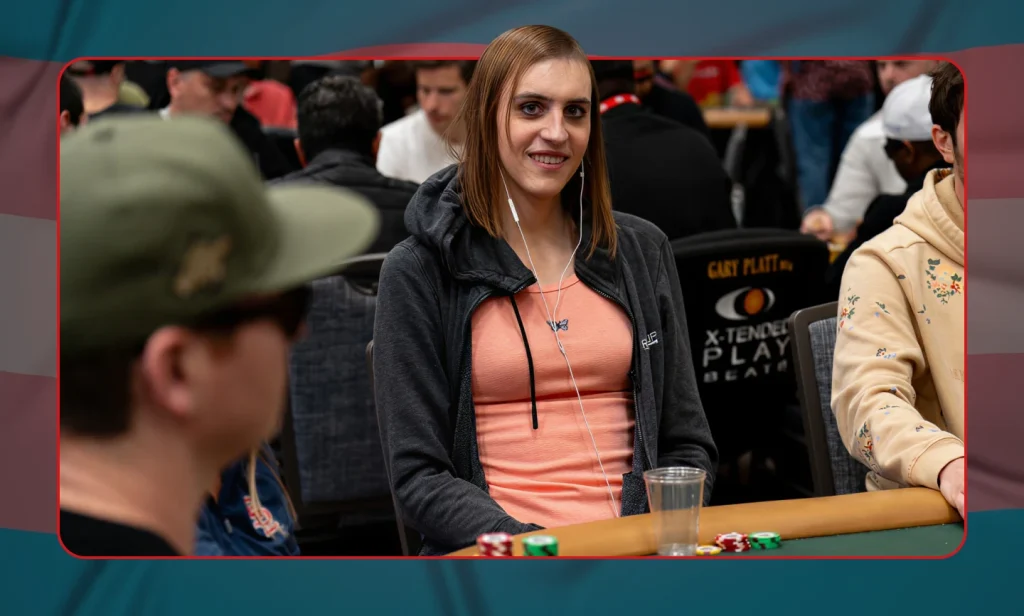
One of the most discussed recent examples involving transgender poker players centers around Aubrey Williams poker achievements.
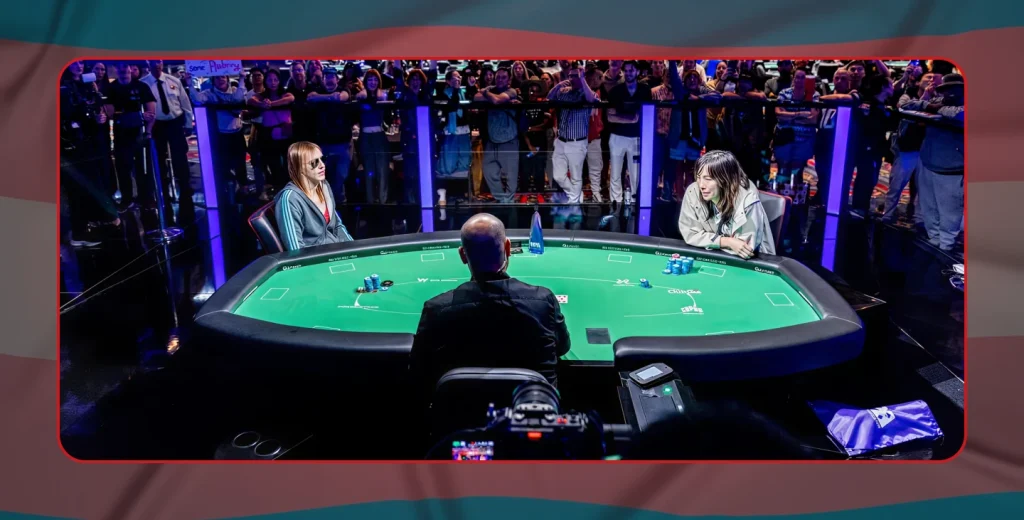
Williams, a transgender poker player, received significant attention during the 2026 WSOP Ladies Championship, where she made a deep run and finished runner-up at the final table. Her performance sparked extensive discussion across poker media and social networks.
What made the Aubrey Williams poker situation noteworthy was that the conversation extended beyond poker strategy. Some players and commentators viewed her participation as fully consistent with poker's inclusive nature, while others questioned how women-only events should define eligibility for transgender poker players.
At the same time, several competitors who played with Williams publicly emphasized respectful treatment and sportsmanship at the table, illustrating that the poker community itself does not hold a single unified view on the issue.
Arguments Supporting Inclusion
Those who support allowing transgender women to compete in women's poker events often make several key arguments:
Poker is a mind sport: Physical attributes such as strength, speed, and endurance provide little or no direct advantage.
The deck is equal: Everyone receives cards the same way, randomly from the same deck. Success depends on decisions, not body type.
Open events are already mixed: Transgender players have competed in poker for years without major controversy in open tournaments.
Inclusivity helps the game to grow: Many believe poker should remain welcoming to players from all backgrounds.
Arguments Supporting Eligibility Restrictions
Others focus less on poker skill and more on the purpose of women's events:
Historical intent: Women's tournaments were created specifically to increase female participation in a male-dominated space.
Biological criteria: Some players believe eligibility for gender-specific events should be based strictly on biological sex.
Clear rules are important: Organizers should specify straightforward rules before registration opens to avoid misunderstandings and tension.
Structure over ability: The debate is about event structure, not poker ability. Many people who support restrictions still acknowledge that transgender players can be strong, legitimate poker competitors.
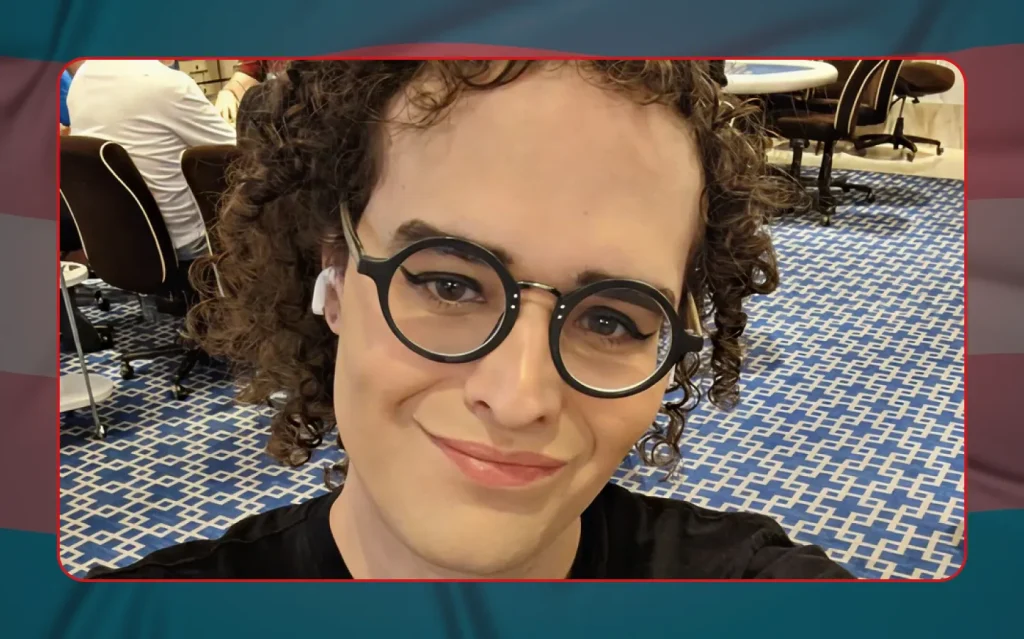
June Cuervo: Another Real-World Example
June Cuervo, a former successful video game designer in the San Francisco Bay Area (Android: Netrunner) who turned into a Las Vegas poker pro, stands as a living testament that strategic depth and intellectual edge know no gender boundaries. Transitioning from the analytical world of Magic: The Gathering to the poker tables, Cuervo competes as an openly transgender player not only for the chips in the pot but also for visibility and "trans literacy" within the community.
According to her experiences, the live poker scene is best characterized by a widespread "well-intentioned ignorance", though clear examples of institutional inclusivity also exist: at the famous World Series of Poker Ladies Event, staff accepted her ID without hesitation, allowing her to register at the standard $1,000 buy-in for women (avoiding the $10,000 "penalty" fee imposed on men).
Cuervo’s presence in Las Vegas card rooms cuts right to the heart of the article's core question: in modern poker, victory relies on Game Theory Optimal (GTO) strategy, a precise understanding of solvers, and mental discipline. Gender identity, therefore, has zero bearing on playing skill - serving instead only as a measure of the community's capacity for acceptance and inclusion.
Why This Debate Looks Different in Poker
Perhaps the most interesting aspect of this topic is that very few people argue that transgender poker players possess a measurable strategic advantage. When we analyze gender in poker, the mechanics of the game remain completely equal.
That separates poker from many physical sports, where debates often center on performance metrics such as speed, strength, or endurance. In poker, the disagreement usually concerns the purpose of women-only events rather than the mechanics of the game itself.
And that is exactly why the discussion remains so unique. Few competitive activities place men, women, and transgender players at the same table under identical rules as regularly as poker does.
What Does Science Say About Gender and Poker?
One of the most interesting aspects of this discussion is what scientific research actually suggests about performance in cognitive competitions.
Unlike sports, where physical characteristics directly affect results, poker success depends on a combination of learned and developed skills:
probability and mathematics
strategic thinking
emotional control
memory
pattern recognition
risk assessment
long-term decision-making
Current research has not demonstrated any inherent cognitive advantage that would cause one gender to consistently outperform the other in poker. Individual ability, experience, study habits, and emotional discipline appear to have a much greater impact than biological sex.
That doesn't mean every player performs the same. Personality, confidence, willingness to study, and access to competitive environments all influence results. But these factors vary greatly from individual to individual rather than along simple gender lines.
This is one reason poker has always been considered one of the most accessible competitive activities in the world.
Why Poker Is Already More Inclusive Than Many Sports
One overlooked fact is that poker has always allowed players from vastly different backgrounds to compete directly against each other.
At the same table, you might find:
an 80-year-old retiree
a 21-year-old online professional
a businessman
a university student
a woman
a man
a transgender player
a player using a wheelchair
Unlike most sports, the rules remain identical for everyone. No adjustments are needed. No separate equipment is required. No physical classifications exist. Everyone receives cards from the same deck, posts the same blinds, and plays under the same tournament structure.
That level of openness is rare in competitive activities.
The Future of Gender Discussions in Poker
As poker continues to expand globally, discussions surrounding inclusion are unlikely to disappear.
Tournament organizers may continue refining policies for special events such as women's championships, while open tournaments will almost certainly remain open to every eligible player, regardless of gender identity.
Because poker is fundamentally a mind sport, future debates will probably focus less on competitive advantage and more on the purpose of specific tournaments. Questions such as these are likely to remain central:
Should women-only events prioritize inclusion or historical purpose?
How should organizers define eligibility?
Can different goals coexist without unfairly excluding players?
What policies best encourage more women to enter poker?
These are organizational questions rather than questions about poker strategy itself.
Final Thoughts
The discussion surrounding transgender poker players is very different from debates taking place in athletics, swimming, weightlifting, or combat sports. When evaluating gender in poker, winning a tournament does not depend on being stronger, taller, or faster. Success comes from making better decisions than your opponents over thousands of hands.
That doesn't automatically resolve every discussion - particularly regarding events like the WSOP Ladies Championship, which were created with a specific purpose in mind. Those tournaments continue to generate thoughtful debate among players, organizers, and fans alike.
What remains clear, however, is that poker has long been one of the few competitive activities where people of different ages, backgrounds, and genders regularly compete against each other in open events on equal terms.
As the game continues to evolve, conversations about inclusion, fairness, and tournament structure will almost certainly continue as well. Rather than searching for simple answers, the poker community benefits most from informed, respectful discussion - one that considers both the spirit of the game and the goals of the events themselves.
Ultimately, whether someone is remembered as a great poker player (for example, gets into the WSOP Hall of Fame) has never depended on gender. It depends on how well they read situations, manage pressure, adapt to opponents, and make the right decisions when the stakes are highest.
About the Editor

Gyöngyi P. Tóth is Somuchpoker's Content Writer and Poker Stories Specialist, writing Side Pot features, WSOP storylines, and the site's Poker in Pop Culture and Legends of Poker series. She was introduced to poker 20 years ago through live tournament play, and what has kept her interest since is the psychology and human behavior behind the game as much as the cards themselves.
Related News
 Live PokerLifestyle
Off the Felt in Sanya: The Best Things to Do Away From the CPG Tables
Discover six outdoor things to do in Sanya away from CPG, from paddleboarding and surfing to rainforest walks and canyon stream trekking.
 LifestyleAsiaStories
Asia's Poker Revolution - Streams on the Felt: The Ultimate Guide to Asian Gambling Series
Discover the ultimate guide to Asian gambling series and shows. From Korean Asian casino dramas to intense Japanese gambling anime, explore high-stakes TV.
 Live PokerLifestyle
Is There Really Poker in China? Inside the Country’s Growing Tournament Scene
Is there really poker in China? Discover how CPG uses online qualification and organised competition to grow the country’s tournament scene.
 LifestyleAsiaStories
Asia's Poker Revolution - Cinema on the Felt: The Ultimate Guide to Asian Gambling Movies
Discover the ultimate guide to Asian gambling movies. From Hong Kong classics to intense Korean casino thrillers, explore high-stakes cinema on the felt.
 LifestyleStories
Poker in Pop Culture - Kakegurui and Poker: Why the Bet Series Appeals to Poker Fans
Discover why Kakegurui and Netflix's Bet appeal to poker fans through bluffing, psychology, risk-taking, and the strategic mind games that define both worlds.
 LifestyleStories
Poker in Pop Culture - Reality Poker TV Shows
Discover the best poker TV shows, from High Stakes Poker to Poker After Dark. Relive the poker boom and the unforgettable moments that captivated millions.