

The Winning Hand: Why High-Stakes Gamblers Make Great Investors

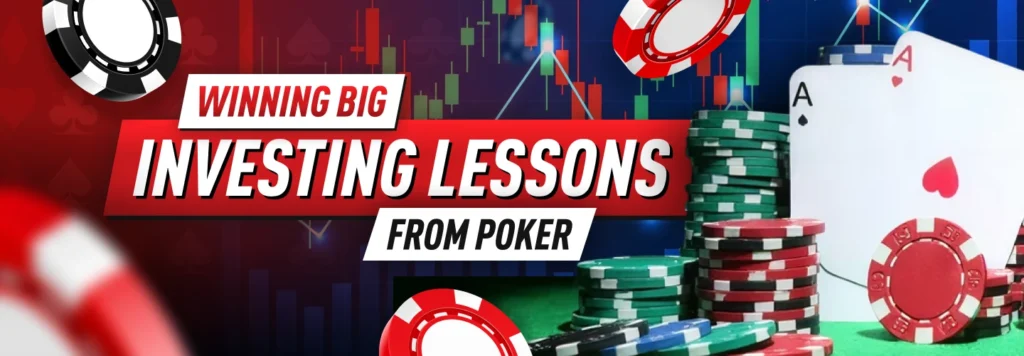
Walking into a high-stakes casino game in Vegas, you might be surprised by who is sitting at the felt. Venture capitalists, founders, and fund managers regularly rub shoulders with professional card players. This crossover between finance and gambling isn't an accident. It might be surprising, but one can take investing lessons from poker.
Over the past decade, the worlds of risk capital and professional card playing have quietly merged. When you look closely at the skills required for both, the similarities are striking.
Take Phil Hellmuth, for example. The legendary player holds 17 World Series of Poker bracelets and has built a lucrative second career as a financial advisor and investor. Similarly, poker star Alan Keating built a solid track record in finance before becoming a global gambling icon.
What Are The Top Investing Lessons From Poker?
The most critical skill shared by both arenas is dealing with incomplete information. Both games force you to commit your money before knowing the final outcome. Whether you are dealing with early-stage venture capital or reading hands on the felt, you have to act fast.
One of the greatest investing lessons from poker is learning to think in terms of expected value across many bets. You cannot obsess over a single bad beat, a busted draw, or a lost startup deal.
A successful venture fund often makes most of its money from a few massive wins, while losing on the majority of its picks. This is exactly how a winning gambling session works. You will lose most pots, but the ones you win must cover your losses and deliver a sizable return on your bankroll.
Mastering these investing lessons from poker requires patience and an understanding that the math eventually balances out. You have to trust the long-term process over short-term luck.
How Does Incomplete Information Shape Poker Table Strategy?
In the casino, you almost never have all the facts. You only see your hole cards and the community cards, leaving you to guess your opponent's exact holding. Embracing this unknown is a vital part of effective poker table strategy.
Most people wait for absolute certainty before making a major financial move. However, in both betting and early-stage finance, certainty almost never arrives in time. If you wait for a sure thing, you will miss the best hands and the most lucrative startup deals.
As Krishan Arora recently noted in a Forbes article,
"The discipline is not to keep gathering information until you feel safe. It is to size your commitment to the quality of information you actually have."
Your poker table strategy must revolve around sizing your bets based on genuine conviction, not just emotion. Making fifty solid, mathematically sound decisions is always better than getting lucky once.
Why Is Risk Management In Gambling So Crucial?
Another powerful crossover is the ability to spot fake confidence. Any experienced gambler knows how to look for tells when someone is bluffing at the table. This exact skill translates perfectly to reading a startup founder pitching a new tech company.
Effective risk management in gambling teaches you to notice when someone's confidence is an act rather than earned. When evaluating a pitch or an opponent across the table, watch out for how they handle difficult, unexpected situations. Usually, the loudest players at the table are the ones holding the weakest hands.
Solid risk management in gambling also means surviving variance. Poker players know they can play a hand flawlessly and still lose to a lucky river card. Investors must accept that their safest bet might fail, while a wild card investment might unexpectedly skyrocket.
How Can You Master High-Stakes Poker Variance?
Variance is simply the statistical difference between how you expect to perform and your actual short-term results. Mastering this concept is what separates amateurs from legends in high-stakes poker.
If you change your entire game plan after one bad beat, variance will ruin your bankroll. You have to keep your position sizing disciplined and diversify your wagers. In high-stakes poker, surviving a losing streak is just as important as maximizing a winning one.
Here is a quick summary of the core skills shared by professional gamblers and venture capitalists:
Skill | Poker Application | Investing Application |
|---|---|---|
Reading People | Spotting bluffs and nervous physical tells. | Seeing through a founder's performed confidence. |
Bet Sizing | Adjusting chip wagers based on hand equity. | Allocating venture capital based on conviction. |
Variance Control | Surviving bad beats and long downswings. | Building a diversified portfolio to survive failures. |
Emotional Discipline | Not going on "tilt" after a big loss. | Refusing to rewrite a long-term strategy after one bad deal. |
Can You Bet Well When The Future Is Uncertain?
At the end of the day, excellent judgment is everything. The pattern recognition that makes a successful card player is the exact same logic used in early-stage venture capital. In both spaces, the data is thin, the pressure is high, and your judgment calls dictate your ultimate survival.
The social graphs of these two rigorous industries have essentially merged. Today, a private high-stakes game is the new golf course. Deals are sourced, partnerships are formed, and young professionals learn the ropes one hand at a time.
By applying these investing lessons from poker, you can train yourself to make better decisions under pressure. The goal is never to win every single hand you play. The real objective is to stay at the table long enough to capitalize when the massive, life-changing winner finally arrives.
About the Editor

Beus Zsoldos is Somuchpoker's Senior Copywriter and Player Stories Editor, covering WSOP color moments, player profiles and poker personalities for the site's Stories section. She has spent more than 20 years around the game, first as a player, then as a live tournament director and localization manager for a major online poker room, before moving into full time poker writing.
Related News
 Side PotStories
Las Vegas Casino Photography Policy: Myth vs. Reality
Curious if taking photos in a casino is illegal? Discover the truth about the Las Vegas casino photography policy and how to safely snap your next selfie.
 Side PotLive PokerStories
The Ultimate Showdown: A Guide to the $250K WSOP Paradise Pro-Am
Get ready for the exciting $250,000 WSOP Paradise Pro-Am in the Bahamas! Learn the rules, schedule, and format of this 2026 gold bracelet event.
 Side PotStories
The Future of High Stakes: Inside the Deepstack Poker Show
Get ready for the new Deepstack poker show. Learn how advanced AI and poker heart rate monitoring will reveal the tension in high stakes poker.
 Side PotStoriesWSOP
WSOP 2026 - Moment of the Day - 15 June - Can you be quiet?
Martin Kabrhel and Martin Zamani shouting at each other, "Can you be quiet?" might be one of the worst nightmares of tournament personnel.
 WSOPSide PotStories
WSOP 2026 - Moment of the Day - 6 June - Family pot
Family pot of Kristen and Alex Foxen resulted in a sneak peak at the $25,000 event - Moment of the Day for 6 June WSOP 2026.
 Side PotStories
Rumours Confirmed: Caesars Entertainment Is Up for Sale!
The latest casino news shows that the massive $17.6 billion deal, as the Caesars Entertainment acquisition had been finalized, has drawn major attention.