

Chase Cokaliong: “When You Play Against the Best, Iron Sharpens Iron”

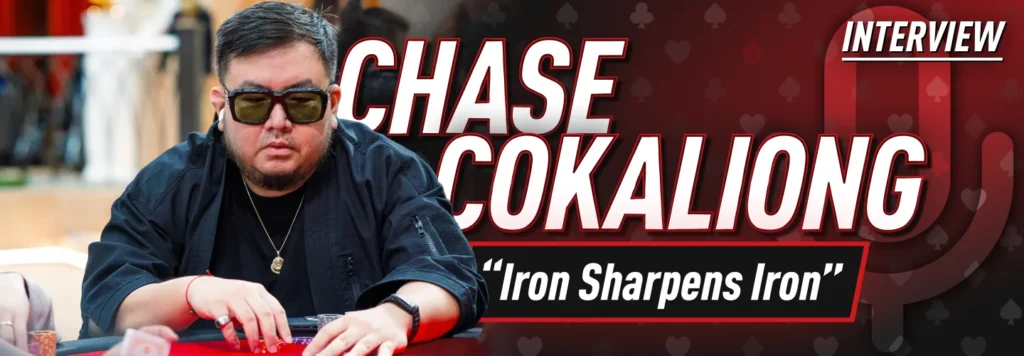
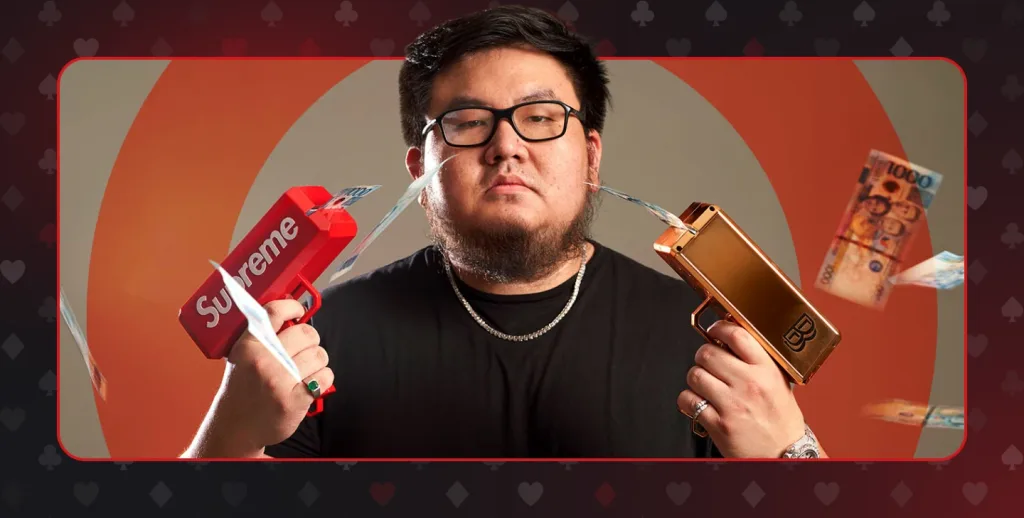
Chase Cokaliong is often portrayed firing bundles of cash from a money gun, an image that has reinforced his reputation as one of poker’s more flamboyant VIPs. Away from social media, however, the Filipino businessman is trying to build a different legacy: learning from the game’s best, supporting local talent, and chasing a Triton trophy. In this interview, he explains to Somuchpoker why “iron sharpens iron,” how poker taught him patience, and why his public persona reveals only one side of who he is.
– You started going to the port with your father regularly when you were only ten years old. How did growing up around the family business influence you? Did you ever question whether you wanted to follow this path?
– When I was a kid I had no weekends. Asian culture is different, especially in a Chinese family. We are basically Filipinos with Chinese heritage and mindset living in the Philippines. When there is a family business, the children - usually the eldest - are expected to help the family and the business. I am the eldest son of my generation.
From a young age, I was almost brainwashed into believing that I was supposed to finish my studies and then help the business. School was something I needed to complete because of social expectations, but practical experience mattered more to us. I was actually good academically. I secured a full scholarship to the National University of Singapore and was one of only a handful of students selected from the Philippines.
But the curriculum was different, so going to Singapore would have required another two years before university. If I studied at Ateneo de Manila University, I only needed four years. My father did not allow me to go to Singapore because he wanted me to save those two years and start working in the business sooner.
That shows how we viewed education: what you learned through practical experience in the business was considered more important. I can say with certainty that experience beats school any day.
– What did you learn from your father and from business that has also helped you in poker?
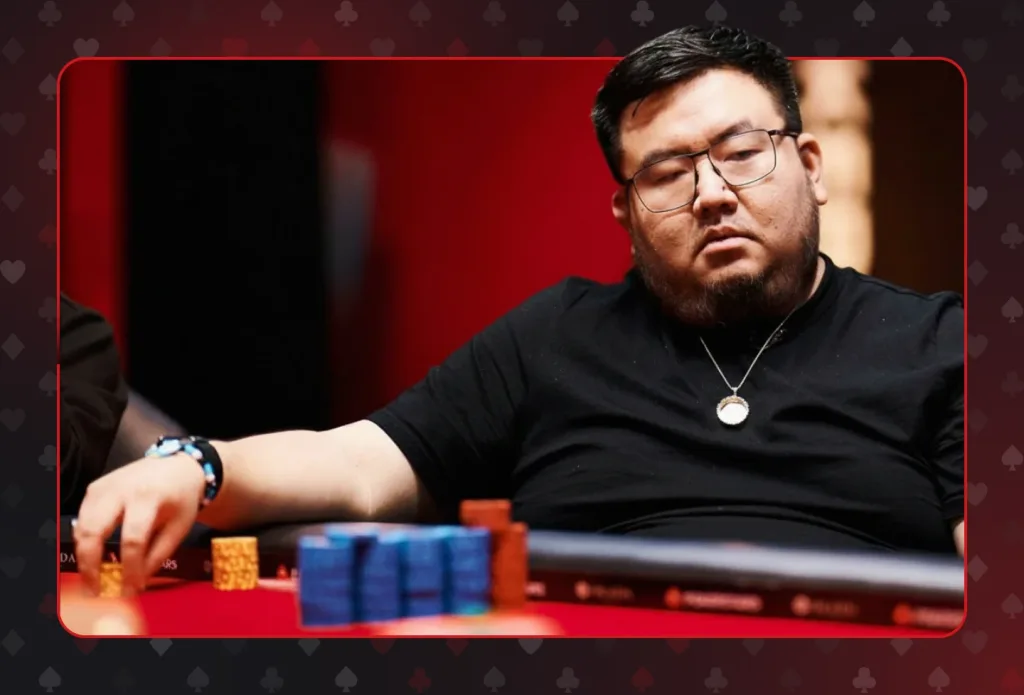
– Like life, poker isn’t fair. In business, you can do everything right. You can prepare, hire the right people, do the work and put in the necessary hours, but sometimes things still don’t go your way. It is the same in poker. You can get your money in with the best hand, but the other player may still have a 20 or 30 percent chance of beating you.
Another lesson is perseverance. Business takes time. It takes time to become good at it, learn the tricks of the trade, and understand everything. There are bad days, bad weeks, and sometimes even bad months. When I finished school and started working, that was when my eyes really opened. People see the awards, the money, the comfort, and the luxury, and they think you have an easy life. They don’t see the sleepless nights or the times when you’re awake for 72 hours straight trying to solve a problem.
Our main business is very service-oriented, so you need perseverance and a thick skin. In a family business, disagreements are unavoidable, especially when there are two alpha personalities running the same company. You learn not to take those disagreements personally. Everyone ultimately wants the same thing: to solve the problem, keep the business running smoothly, and make money. There will always be bumps along the road.
– Why was it important to you to build something of your own outside the family business?
– Our family name is very well known where I come from. My father founded the company and is also very involved in the local community. I’d probably be set for life even if I didn’t do anything, but that’s not who I am.
I want to be somebody in my own right. When I get older, I want to look back and be proud of myself. I didn’t want to be known simply as someone who inherited money and a business. I want Chase to be known as an individual.
That is why I have started several businesses of my own. I started a self-storage company in 2019, shortly before the pandemic. It was the first of its kind where I come from. I am also involved in kidney dialysis centers, CrossFit gyms, and bespoke tailoring, among other ventures.
Poker is definitely part of my identity. I’m the kind of person who wants to be the best, or at least one of the best, at anything I take on. I approach business that way, and I approach poker the same way.
From Business to the Poker Table
– How did poker first come into your life, and what attracted you to the game?
– I discovered poker around 2020 or 2021. At first, I played local cash games purely for fun. I played badly and gambled a lot. Honestly, I enjoyed giving somebody a bad beat and watching the agony on their face.
Around three years ago, I decided to take the game seriously because I wanted to become good at it. My first international tournament was an APPT event in Manila. As I continued playing, I realized how much there was to learn. When I started, I thought poker was mostly about luck. What eventually attracted me was how closely poker relates to life. Poker has helped me a lot personally, even if people sometimes laugh when I say that. I used to be extremely impatient. Successful businesspeople often want everything done immediately: no holidays, no breaks, just get it done right now. Poker taught me patience.
My biggest leak was that I tilted very easily and wanted to win immediately, just as I did in business. That began to change when I started working with coaches and professional players.
How Did Chase Cokaliong Improve His Poker Game?
– Who have you worked with, and what did you take from those different players?
– I have worked with Ben Heath, and I currently work with Thomas Boivin. I also have close friends who help me review hands, including Asian professionals such as Danny Tang and Punnat Punsri. Bryn Kenney is a good friend as well and has also helped me.
They all play different styles of poker. There are the GTO-oriented (Game Theory Optimal) players, the exploitative players, and the street poker players. I try to learn from each of those styles and combine elements of them into my own game.
– What were the biggest weaknesses in your game, and how did coaching change you?
– Tilt was my number-one enemy. If I suffered a bad beat, I could go on massive tilt and lose everything. I also played too many hands without understanding ranges properly. Once I began studying seriously, I started to fix those problems. Today, I can honestly say that I am close to being a complete player, both theoretically and mentally. Mentally, I am at my best.
What I still lack is volume: more hours at the table and more tournaments. I am a businessman, not a full-time poker professional, so I can only play about four international series a year. I usually choose a few Triton, APT, and APPT events, and I often cannot stay for an entire series. Sometimes I only play the high rollers. Montenegro was different because I played the whole Triton series, but it always depends on my schedule.
– If you had to choose one thing, what is the most important lesson you learned from your coaches?
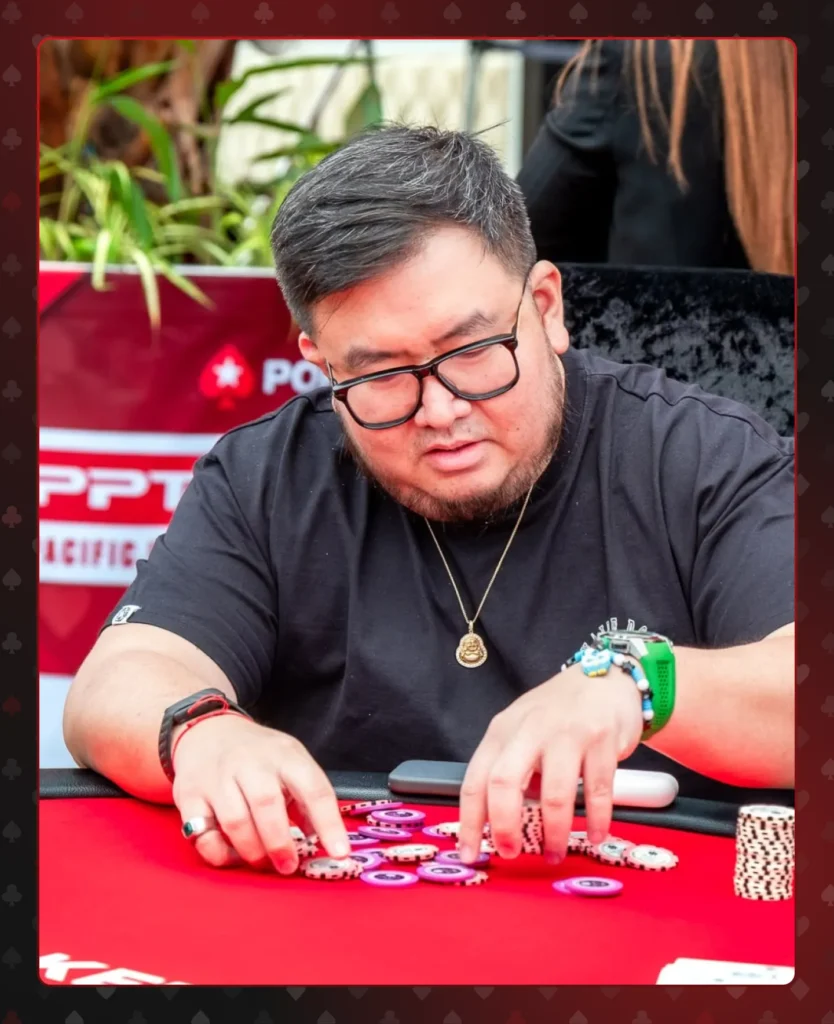
– Patience. That is number one for me in poker. You need the patience to wait for the right moment. Patience and timing go hand in hand, and patience probably covers everything else.
– How would you describe your playing style today?
– I would say I am probably one of the hardest players to read because I am capable of making highly polarized bets. If people watch my Triton or APT clips, they will see that I often either have a strong value hand or absolutely nothing. I am willing to go broke on a good bluff. I am never afraid of being eliminated from a tournament if I believe I made the correct play. If I think it is the right time to bluff, I will do it.
I also play very differently while re-entry is still available. I am known for going all-in blind, especially in large-field Main Events, because I want to build a stack while registration is open. I do not mind firing several bullets in that format. A high roller is different, although I sometimes do it there too. Once registration closes, the real game begins.
– You have repeatedly mentioned patience. Was that the hardest personal quality for you to develop as a poker player?
– Definitely. I developed it through sheer willpower and the desire to become better. Many people want to improve at something. You find people who are better than you and ask them what you need to do. Then, if you truly want to improve, you have to do what they tell you.
Patience was one of the things I was told I needed, so I made a conscious effort to develop it. Once I made that change, I saw the results.
The mathematical part of poker - the percentages and ranges - comes easily to me. I memorize things well and absorb information quickly. My real issue was emotional: my lack of patience and my personality. That was the leak I needed to fix, and I believe I have fixed it. Now I need to play more tournaments, get a better feel for variance, and hopefully win a major title soon.
– You have competed in some of the toughest high-stakes tournaments in the world, including APT high rollers and Triton events. What have those events taught you about your own game?
– When you play against the best players in the world, iron sharpens iron. You learn by watching what they do in different spots. The learning never stops. Keeping an open mind has helped me in business, poker, and every other venture. I never assume that I know everything. I believe there is always something to learn and some way to improve.
That mentality also comes from business. Everything changes in business. You need to improve, adapt, develop, and keep up with the times. If you do not, you get left behind.
Building Team Chase Your Dream
– You started Team Chase Your Dream in 2021. Why was it important to support other Filipino players?
– I believe there are many good Filipino players, although I have experienced ups and downs while building the team. Many players are talented, but some do not have the right mindset. Some are closed-minded, while others struggle financially and therefore cannot focus fully on the game.
There are players with real potential who simply need a bankroll and the chance to play. I have selected several players and given them opportunities at the mid-stakes level. If they perform well, they may move up to higher stakes. It works like a reward system.
I have also had bad experiences with players who were ungrateful or had a poor attitude, and I had to let them go.
– What qualities do you look for in a player?
– First, I look for somebody who is dedicated to the game and open-minded enough to understand that they are not the best. Winning a tournament does not mean you are the best; it only means it was your day. In poker, you can do everything correctly and still lose.
I know that firsthand. At APPT Manila, I recently bubbled two high rollers on back-to-back days. But I had zero tilt and suffered no emotional damage because I knew I had made the right plays. Things simply did not go my way.
I look for people who share that perspective and are willing to put in the time to study. Their lives outside poker also need to be in order: no gambling problems, no drugs, and no behavior that negatively affects their game. If you have a major tournament the next day, go to sleep early. Do not spend the night drinking.
– It sounds like running a poker team is a lot like running a business.
– Yes. Sometimes you need to let go of people who do not share your values. I now have a more close-knit team that I am trying to help. I want to use poker to improve the lives of Filipino players, but the people we help also need to help themselves. We can only do so much for them.
Chasing a Triton Trophy
– What is your next big goal in poker?
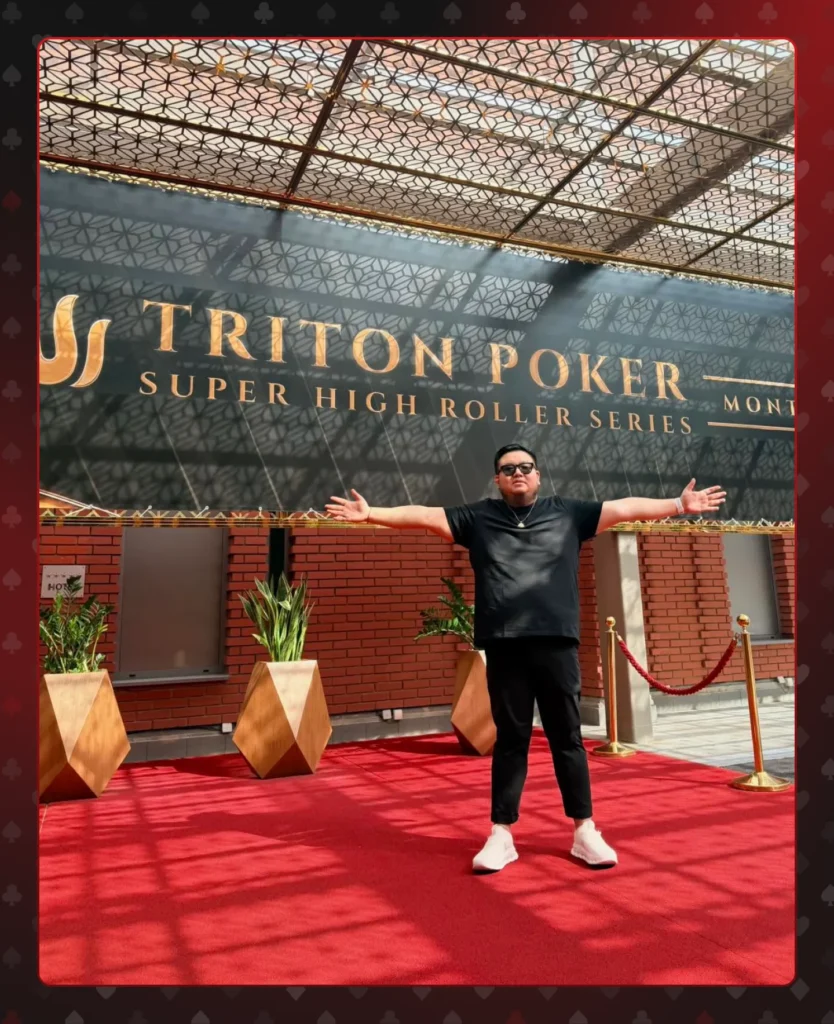
– I really want to win a Triton trophy. It is that simple. I have no plans to play the WSOP, and the bracelets do not appeal to me. I want a Triton trophy.
My second goal is an APT Mega Lion. Either one would make me happy. I have immense pride in myself, and even though I am a businessman and considered a VIP in poker, I want to become better than most of the professionals.
I want to be known as a VIP who has become a genuinely strong player and can compete at that level.
– That desire to improve seems to extend beyond poker as well.
– It does. My health is something I am working on seriously. I used to be very fit, and I own two CrossFit gyms. But after I got married, I focused on making money for my family and opening several businesses, and I gained a lot of weight. I had to sacrifice something to devote that much time to business.
Now that my businesses are stable and I am happy with where they are, I am getting my health back. What is money without health? What are poker achievements without health?
I have a performance coach, a nutritionist, and a mental coach. We need to listen to experts in their fields. I have already lost 56 pounds in about four months, and my goal is to lose around 90 pounds in total. I am in a very good place. Mentally, I feel amazing, and my body feels great. The only thing missing now is the Triton trophy.
Beyond the Social Media Image
– In many articles and photographs, you are shown firing bundles of cash from a money gun, creating a very flashy public image. But from our conversation, you do not seem like that kind of person. How much of that image is the real you?
– My social media persona began as an experiment during the pandemic, when we had nothing to do. I had a social media team working with my businesses, and they suggested building my own online presence. It was supposed to be fun, but it blew up. I started giving away cars, diamond rings, and money, attracted a huge following, and continued posting lifestyle content.
But that is only one side of me. The people close to me know that I am actually a relatively simple guy – although I cannot lie, I do enjoy luxury. When I travel, I want first-class flights and five-star hotels.
At home, however, I am usually working. I wear the same black T-shirt and pants every day. I have about 50 of those shirts, and they cost around $15 each. My pants are from Uniqlo and cost about $20. It is the same with food. I either want a Michelin-starred restaurant or street food. I do not care for anything in between.
I grew up with discipline. I was a student athlete and played basketball for my school. At university in Manila, I spent four years in a dormitory without air conditioning, so I know what it is like to live a simple life.
I still enjoy simple things: spending time with my family and friends and making the people close to me happy. Those are the most precious things in life. I own expensive watches and jewelry, but I can live without them. Most of the time, I do not even wear a watch.
My real personality is very different from my social media persona. Only my close friends and family truly know who I am, and I am happy with that. The rest of the world can see me as flamboyant or obnoxious. I am fine with that too.
About the Editor
Zsolt is SoMuchPoker’s Content Writer and Interview Specialist, exploring poker beyond the cards and the tables through stories, interviews, profiles, historical pieces and curiosities. He focuses on the people, places and ideas that have shaped the game, while looking at the wider world around poker, how it has evolved, what makes its culture unique, and how the people within it think, compete and make decisions.
Related News
 NewsLive Poker
Scheduled Maintenance: Live and Player Profiles Temporarily Offline
Somuchpoker is moving to a new server. Live and Player Profiles will be offline for a few days. Here is what to expect and when we are back.
 NewsOnline PokeriGaming
Road to Triton Cyprus: Win a $25,000 Seat at Titi Poker
Join the Road to Triton Cyprus at Titi Poker. Start free on Oct 6, climb the satellite ladder and win one of 3 guaranteed $25,000 tickets.
 NewsOnline PokeriGamingPromotion
GGPoker and Natural8 $18M October Giveaway
Win your share of $18M in the GGPoker and Natural8 giveaway this October. Cash drops, Halloween Party, leaderboards - plus a welcome bonus.
 NewsOnline PokeriGaming
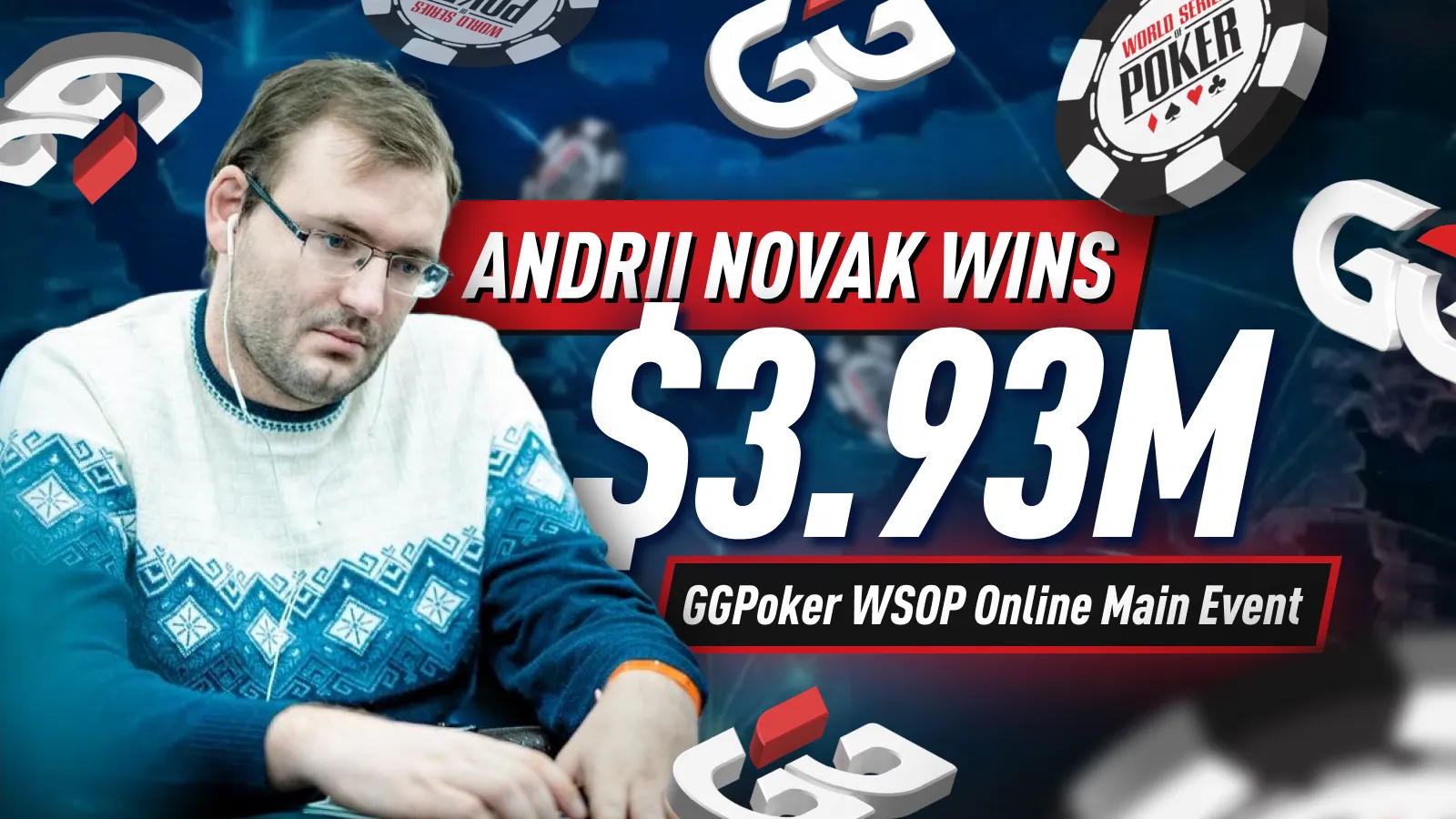
Andrii Novak Wins the GGPoker WSOP Online Main Event for $3.93M
Andrii Novak beats Simon Beckmann to win the 2026 GGPoker WSOP Online Main Event for $3.93M. Full final table results, payouts and stats.
 iGamingNews
PokerStars B2B Network Opens Its Doors: A Game-Changer for Online Poker
The PokerStars B2B network is officially open. Discover how this new white-label platform and shared liquidity will change the online poker industry.
 NewsOnline PokerLive PokeriGaming
QQPK Freeroll: Win a Poker Dream Malaysia Seat + $800
Win a MYR 3,200 Poker Dream Malaysia Main Event seat + $800 in the free Somuchpoker freeroll on QQPK. Sept 27 - sign up with code SMPBONUS.