

Poker for Beginners: Bluff Catchers, Blockers, and More - When to Stand Your Ground

There are very few better feelings in poker than catching someone with their hand in the proverbial cookie jar and proudly tabling your ace-high to scoop a pot after catching their flimsy attempt at a bluff. No matter how long you’ve been playing, that particular moment never gets old.
However, precisely because it is so satisfying, bluff catching in poker can be very dangerous. While standing your ground and keeping other players honest is a part of the game, you must not allow it to become the main reason why you play. If it does, this habit can be detrimental to your bankroll.
When done correctly, though, bluff catching can be quite profitable, but how do you find the right balance and pick the right spots?
The goal of this article is to help you better understand the concept of bluff catching, what types of hands represent bluff catchers, how to use blockers in poker to decide when to bluff catch, and more. So, let’s start at the top.
Bluff Catching in Poker: Why Should You Do It?
Before we move on to any more specific ideas, let’s first address the overarching question: why do we need to catch bluffs in the first place?
If you have some experience with poker, especially in the live setting, you probably know at least one or two players who almost never try to pick off bluffs. If they get to a river and don’t have a strong hand, they’ll usually fold to any reasonably sized bet, waiting for a better spot.
The problem with that approach, like so many other things in poker, is mathematical in nature.
If you don’t call on the river often enough, your opponents will be able to make a lot of money playing against you. Imagine there is a $20 pot that you each put $10 into. On the river, your opponent bets $5. Every time you fold, they win $10.
So, in this situation, if they know you’ll only call half the time, they can bet every single time without even thinking about it. Their total profit from those two hands will always be $5, and that number will grow significantly the more you play against each other.
Of course, this is a simplified explanation, but it paints a picture of why we must call river bets with hands that aren’t super strong, especially when the bet is small compared to the pot.
In the GTO poker world, this concept is known as the Minimum Defense Frequency (MDF), which is the minimum percentage of time we need to call in order to ensure the opponent cannot exploit us. In our previous example, MDF would be around 66% (two-thirds).
This makes it clear why bluff catching is needed in poker. It doesn’t, however, answer any questions regarding how you should go about picking your spots and choosing hands to bluff catch with. That’s coming next.
Choosing Your Bluff Catchers: What You Need to Know
In the context of this article, and in general poker terminology, bluff catchers are hands that aren’t very strong in the grand scheme of things, but you believe them to be ahead of what your opponent is holding.
Good examples of bluff catchers are hands like ace-highs or bottom pairs. These hands will never be good against any hands that your opponent would be betting for value, but they are still ahead of their bluffs, i.e., various busted draws or pure air they decided to blast off with.
Of course, what constitutes a bluff catcher also depends on the board texture. For example, on a four-flush board, even a strong top pair doesn’t do well against your opponent’s value range when they bet on the river.
With all this being said, the answer to the question of how to bluff catch in poker isn’t the one that can be answered in a vacuum. If you’re basing your decision only on the action on the river, you’ll often get it wrong. Instead, you need to consider the entire hand to figure out what might or might not be a good bluff-catching hand.
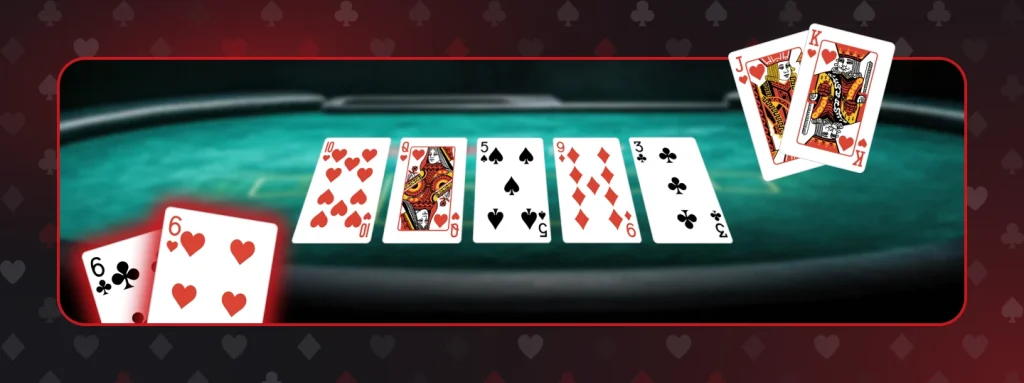
Let’s look at an example. A player opens from an early position, you defend from the big blind with 5s6s, and the flop comes 6♥7♥2♣. You check, they fire a continuation bet, and you call with your second pair.
We already know that this board texture doesn’t quite connect with the early position raiser’s range, and if they’re a decent player, they’ll know this. Of course, they could still have all the over-pairs that are ahead of us, but they could also have a fair number of flush draws and maybe some hands containing just the A♥.
The turn comes 3♦. We check, and they bet again. This is now very suspicious. The turn card is completely blank for their range, though it could potentially help us. If they had a hand like aces or kings, they might want to check back for some pot control.
The river comes 7♦, pairing the board. You check one last time, and they blast off for 1.5 times the pot. While they could be doing this with a big pocket pair, after getting called twice, and another bad card coming on the river, they’d be more inclined to check back.
This is a spot where our pair of sixes is an excellent bluff catcher. We beat all busted flush draws and random ace-high hands, and the opponent will show up with these holdings quite often. Their bet sizing is also very polarizing on a board where they can’t really have the nuts. So, this is a great spot to call with a hand that’s not very strong in absolute terms, but ranks quite well in this situation.
Bet Sizing Matters When Bluff Catching
In addition to knowing what hands to choose as bluff catchers, you also need to consider the bet sizing. As a general rule of thumb, you can go wider, facing smaller bets, and should tighten up as the bet size increases.
As an extreme example, you can afford to call a $1 bet into a $20 pot with an extremely wide range, because you only need to be right about once in 20 times. On the flip side, when they bet $20, you have to be right half the time to make the call break even in the long run.
Of course, tough players understand all this, so they won’t make it easy on you. They’ll often size up their river bets to put you in a difficult spot. So, you have to go back to the big picture and analyze the action throughout the hand.
Generally speaking, when players bet big, they are “polarized.” This means they represent a range that includes very strong hands and bluffs. Hands that fall in the middle tend to prefer moderate sizing.
So, the decision then boils down to whether they have more bluffs or value hands in their range, and you can figure that out by looking at their position, board structure, and how their opening range coordinates with that structure, as we explained in the example above.
Naturally, you will get this wrong every now and again, simply because not all players play the perfect GTO strategy. There are wild players who can show up with any hand from any position, and there are also extreme nits who’ll have very narrow ranges.
Figuring out player tendencies and finding ways to exploit them is an important part of playing winning poker. The more you play against a particular opponent, the more you’ll be able to do this. But, without reliable information to fall back on, you have to stick to the basics and give them the benefit of the doubt – until they prove you wrong.
So, when figuring out your bluff catching strategy, you need to consider:
How your opponent’s perceived range coordinates with the board texture.
If the hand you’re holding is strong enough to beat the bluffs in their range.
How often do you need to be correct compared to the bet size?
If there are any particular tendencies you’re aware of about the opponent (opening too wide, bluffing too much, etc.).
When you put all these pieces together, you’ll come up with a decision that should be close to optimal in most situations. You’ll still get it wrong some of the time, that’s just how poker is, but you’ll notice that, if you stick to this process, your bluff catching efforts will start to become much more successful.
Blockers in Poker: How to Use Them to Pick Off Bluffs
One final thing we’ll cover in this article on bluff catching in poker is the role of blockers in the process. Even if you haven’t done much studying, you’ve probably heard players talk about blockers and how important they are, although they are mostly discussed in terms of choosing bluff candidates.
However, you can also use them to select good hands to bluff catch with or, more precisely, which hands you shouldn’t consider calling with.
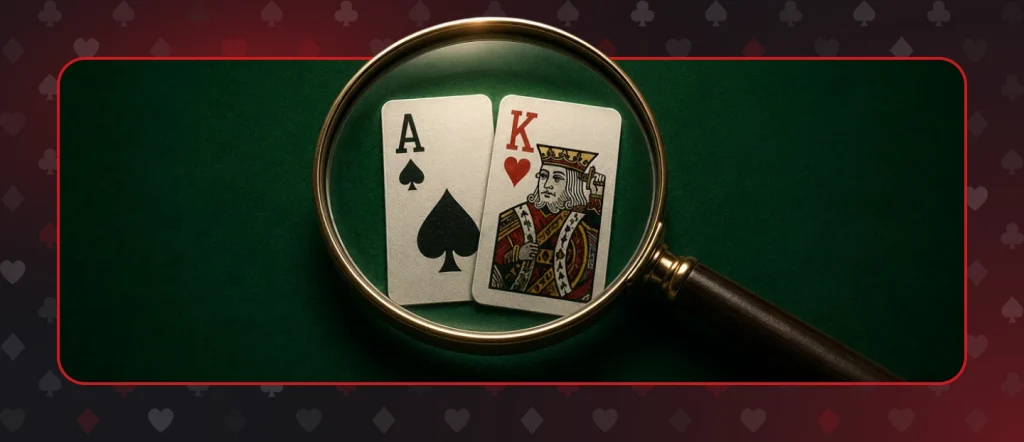
Let’s go back to our example where there is a flush draw on the flop, but instead of you defending 5♠6♠, you defend with A♥T♥. You choose to play the hand passively, calling on the flop and the turn, and your opponent continues to blast off on the river.
In some situations, ace-high can be a good bluff catcher, but this is not one of those situations. You’re holding a key card (a blocker) that you want your opponent to have. With you holding the A♥, it’s far less likely they have a flush draw, which leaves them with a very strong range, largely consisting of over-pairs.
Plus, even the ace-highs they may have turned into bluffs will have you beat.
So, if you’re wondering how to use blockers in poker when bluff catching, you need to consider if the card(s) you’re holding decrease the likelihood of your opponent having a drawing hand. If the answer is yes, you should recalibrate and lean more toward folding.
Of course, in some spots, blockers can also help you make the call.
Say you defend against the cutoff raise with pocket sixes, and the flop comes 3♥5♥8♦. You check-call the flop bet. The turn is a 2♦ and the action checks through. The river comes 9♠, and after you check, your opponent goes for a big bet.
As we’ve discussed before, big bets are usually polarized, so your opponent is representing a big hand here. However, you’re holding two key cards that they need to make a straight, which significantly reduces the likelihood that they have the nuts. With that, and with how the hand played out, your pair of sixes is a solid bluff catcher.
One caveat here is that some players give blockers in poker too much value. While having some blockers in your hand is a factor, you shouldn’t use them to justify calling too wide in spots where the other player can still have a variety of strong hands despite you holding one of the key cards. They can be helpful in the decision-making process, but they’re just one aspect in a much wider picture.
Summary: Bluff Catching Done Right
Bluff catching in poker is an extensive topic that can’t be fully explained in a single article. It is a mix of math, instinct, and your knowledge about your opponents’ general and specific tendencies. The better you are at putting all these pieces of the puzzle together, the more accurate your river calls will be.
This article should help you develop the right mindset when it comes to choosing the best hands to bluff catch with and understand that picking the right candidates is a process that involves breaking down the entire hand. In some spots, a bottom pair makes a much better bluff catcher than three of a kind – it’s all very situational.
One important takeaway that we’ll conclude with is that you should never bluff catch just for the sake of doing it. Your goal in poker should always be to make the decision that will make you the most money in the long run.
The best players aren’t flashy or loud when they pick off bluffs. They do it silently, rake in the chips, and keep their opponents in the dark about their reasoning. That way, they get to do it over and over again!
You can try your newly learned skills online, just register with our bonus code SMPBONUS at any of the online poker sites we reviewed.
About the Editor

Ivan Potocki is Somuchpoker's Content Writer and Poker Strategy Specialist, writing strategy guides, online poker rankings and US regulation coverage for the site. He spent more than five years as a professional poker player before moving into writing, and brings a mathematical, data driven approach to breaking down poker and casino concepts.
Related News
 StrategyOnline PokeriGaming
Mystery Bounty Poker Tournaments Explained: Rules, Strategy & Big Prizes (2026)
Learn how mystery bounty poker tournaments work, why players chase massive jackpot envelopes, and the best strategy adjustments to increase your EV in 2026.
 Strategy
Poker for Beginners: How to Learn Online Poker from Streams
Discover how to turn poker streams into your best study tool! Learn online poker basics like preflop action, pot odds, and bet sizing with this beginner guide.
 StrategyOnline PokeriGaming
Poker Psychology: The Ultimate Guide to Master the Mental Game
Transform your results with this comprehensive guide to poker psychology. Learn to master emotional control, eliminate tilt, build confidence, and more.
![[Poker Basics] Target Stack and Timed Tournaments: The Complete Strategy Guide](/_next/image?url=https%3A%2F%2Fimages.ctfassets.net%2Fo0c4x84rxbjm%2F6AlscPiq8eFWhuKT0DNpu5%2Fe5e2e24abc7323cb5f48f69fabeec2f9%2Ftarget_timed_featured.webp&w=3840&q=75) Strategy
Strategy[Poker Basics] Target Stack and Timed Tournaments: The Complete Strategy Guide
Learn how target stack poker and timed poker tournaments work, with practical strategy tips for both formats.
 StrategyOnline Poker
The Main Differences Between Poker Rebuy and Re-Entry Tournaments
Discover the main differences between a poker rebuy and a re-entry tournament. Learn how the rules, seat changes, and strategies affect your game.
 Side PotStrategyStories
Why Keeping Your Phone at the Poker Table Could Actually Save You Money
Think hiding your phone at the poker table is smart? Discover how keeping it handy can prevent you from playing trash hands and improve your win rate.