

USA Legislation Part 5 - Regulation on the federal level - talk about why it's not likely, what's stopping it

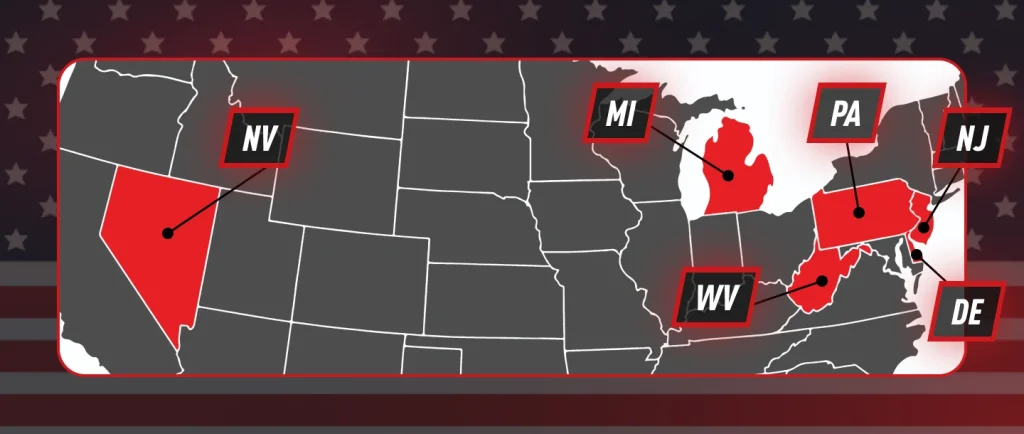
Regulated online poker arrived in the United States back in 2014. States like Nevada, Delaware, and New Jersey were among the first to attempt to fill the gap left by Black Friday and to provide players with access to safe, regulated poker sites. It's a valid question: what are the burdens of the US regulation of online poker at a federal level?
Over the following decade, a few more states joined, including Michigan, Pennsylvania, West Virginia, Connecticut, Rhode Island, and Maine. Many regulated states even joined forces by creating the Multi-State Internet Gaming Agreement (MSIGA), allowing them to share and combine player pools.
But despite all these efforts, federal US online poker remains but a pipe dream. While individual states have been given free rein to regulate online gambling however they see fit within their own borders, there have been no attempts whatsoever at a broader legislation.
In this article, we ask an important question: what is stopping the US online poker federal regulation and will US players ever see a country-wide network? Is there anything that can be done to start the process and finally build the momentum that all poker fans in the country could line up behind?
A Complicated Legal Landscape
Broadly speaking, it’s not easy to understand why there is no country-wide regulation for US online poker. It can be understood, to some extent, why the country banned offshore operators (albeit with moderate success), but why not have US-based sites that serve the entire country, adhere to strict US regulations, pay licensing fees, and contribute taxes?
To unpack this, we have to start at the top. On the federal level, gambling isn’t illegal, so that’s a good thing. However, the 2006 Unlawful Internet Gambling Enforcement Act (UIGEA) is a federal law that prohibits businesses from accepting internet payments for gambling of any kind.
So, that 20-year-old act creates a very complicated situation, making it impossible for any operator to set up a platform that could indiscriminately accept deposits from across the country.
Beyond this, although gambling isn’t illegal under federal law, no additional rules or US regulations are necessary to operate a lawful business.
Instead, all things gambling-related are handled at the state level. Each state has the right to pass its own gambling laws and establish relevant bodies to oversee related activities. There is no such thing as a “federal gambling commission”. Every state that offers any form of gambling has one or more organizations that oversee licensing, regulation, and player protection.
Gambling has been a state-level issue for decades in the US. The federal government has occasionally intervened, and the infamous PASPA (Professional and Amateur Sports Protection Act) was easily the biggest such intervention.
Passed in 1992, the Act made it illegal for all but a handful of US states to offer sports betting. PASPA remained in place until 2018, when it was finally overturned as unconstitutional. This led many US states to launch their own sports betting markets.
The PASPA issue hints at a much deeper problem with federal US online poker regulation.
There are certain states that are completely anti-gambling, and these states would not appreciate their residents suddenly being able to legally play on a federally-regulated site. Other states don’t mind gambling, but they want to keep all of the profits from the activity.
The bottom line is that, while players may benefit from a country-wide platform, states themselves do not. This would likely cut into their budgets, and, let’s be very clear here – filling budget gaps is the main (and often the only) reason for passing iGaming regulations to begin with.
Separating Poker from the Rest
When we talk about US regulations of online poker on the federal level from a player’s point of view, they differ greatly from lawmakers' views on the same topic.
To a player, poker is completely different from slots and casino table games. For the people making the decisions, however, that distinction does not exist. It is all online gambling, and, like we’ve seen on state levels, it is all handled by the same set of laws.
In theory, a federal US regulation that pertains exclusively to online poker could fly. There are solid arguments for it, as it would greatly benefit players and operators in many ways.
However, as long as poker remains jumbled with the rest of online gambling, this is a no-go.
For the states, sports betting and casino gambling are where it’s at. These are the main revenue generators. Online poker accounts for only a fraction of overall revenue. So, to put it bluntly, lawmakers don’t actually care about online poker, but they very much care about other revenue-generating gambling activities.
Separating online poker from the rest wouldn’t solve all the problems, but it would certainly be a good step in the right direction.
Lacking Political Will
For a federal US online poker regulation to happen, there would first need to be a serious political force backing it. And it’s no secret that such political forces are created by powerful lobbies that have vested interests in the matter.
Unfortunately, there is no such lobby in the United States at the moment.
If anything, companies behind land-based casinos are lobbying to protect their interests, hindering even state-level legislation. They don’t want to see their business diluted and their venues lose a big chunk of foot traffic because people are gambling at home in their pajamas instead of coming to the casino.
Again, poker is a really small part of the problem, but as long as it stays muddled with table games, slots, and the rest, it will remain a real stumbling block.
In the current landscape, where any type of federal-level legislation is mired in miles of red tape, it’s hard to envision any big company making a push for it. At best, the project would take many years to complete and require substantial resources to be invested in something with a very questionable future.
From a political perspective, this is hardly a hill any legislator would die on. While poker is quite popular in the US, it’s hardly the unifying force on which one could build a campaign. Online gambling remains a very divisive issue in the country, with many groups strongly advocating against it.
The Poker Players Alliance was the largest group advocating for online poker in the country. However, over the years, as its major supporters slowly lost interest, the organization faded away. Recently, there have been attempts to rebrand it and give it new life, but these remain very limited in scope.
The Verdict: Will US Federal Online Poker Ever Be a Thing?
Never is such a big word as it’s impossible to predict what may happen five, ten, or twenty years down the line, but as things stand right now, US online poker country-wide regulation will not be happening any time soon.
It looks like players are the only ones who actually want to see this happen. Lawmakers and major industry stakeholders haven’t shown any real interest thus far.
At the state level, appeals from players can certainly sway lawmakers and help pass relevant bills. But on a federal level, where there isn’t even a wide framework that would address the issue, players' voices simply won’t cut it.
On top of all this, the country is currently going through a rather tumultuous period, with many bigger fish to fry. Things like regulating online gambling seem irrelevant in comparison, even if that’s not really the case.
On the bright side, with legal obstacles out of the way, it looks like all regulated states are happy to join the MSIGA and combine player pools. Sites like WSOP Online and BetRivers Poker already have four-state platforms with expansion plans in the works.
Maybe this is the best way to achieve something similar to federal US online poker without actually passing laws to regulate it. Perhaps the game and the operators will find a way to backdoor their way into a state-wide network.
Of course, for this to really work, we’ll need to see at least a few more states regulating online poker first. If New York passes its regulation and joins the MSIGA, it would be a major development. That single thing would massively boost the existing network.
The bottom line is, there will be no quick developments. For changes in US regulations, poker players will have to remain patient for a while, but things are at least looking a bit better than they did a few years back. If a couple of key states like Florida and California were to finally find a way forward, we could have a proper mini poker boom on our hands.
About the Editor

Beus Zsoldos is Somuchpoker's Senior Copywriter and Player Stories Editor, covering WSOP color moments, player profiles and poker personalities for the site's Stories section. She has spent more than 20 years around the game, first as a player, then as a live tournament director and localization manager for a major online poker room, before moving into full time poker writing.
Related News
 Online PokeriGamingStories
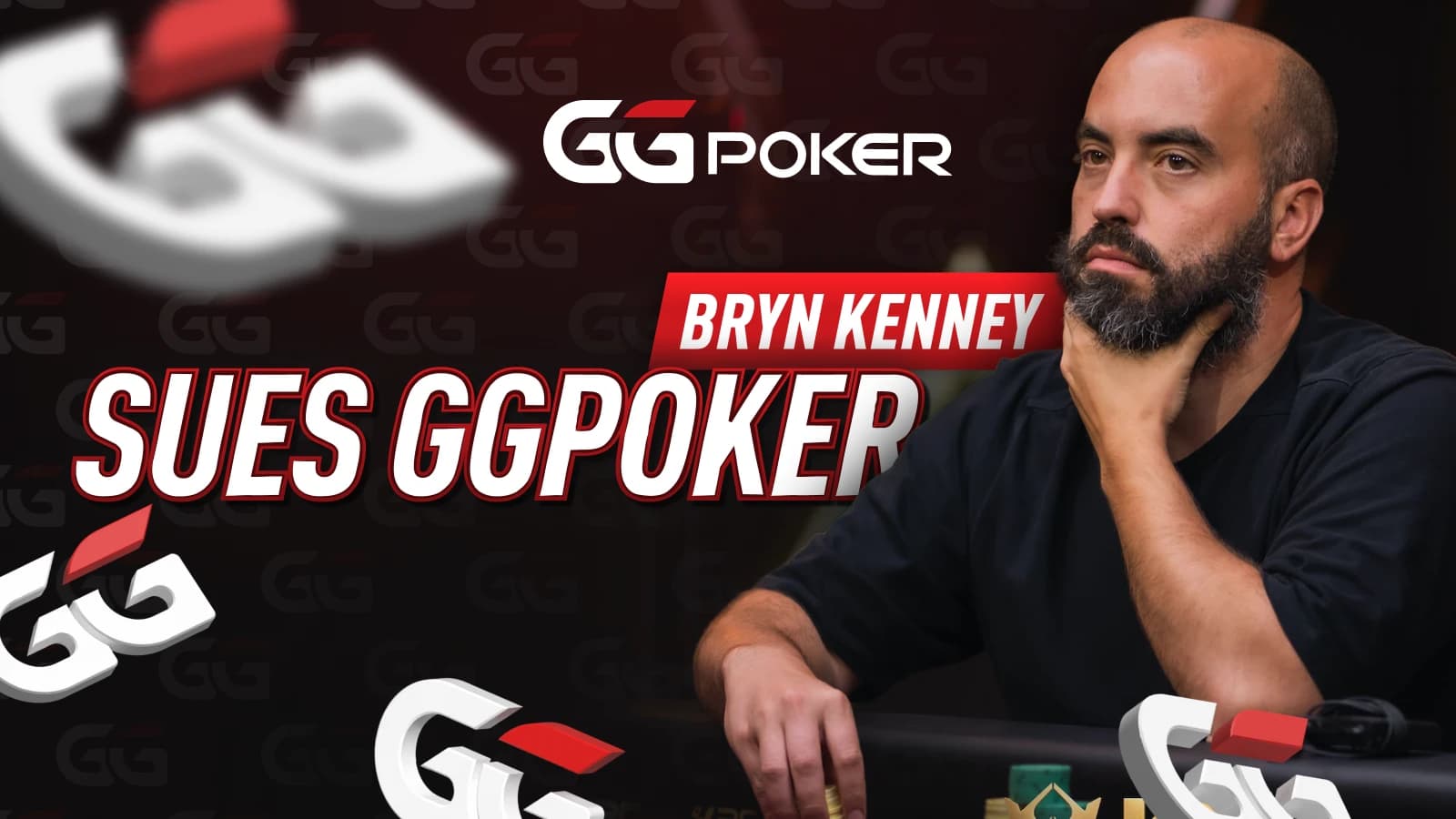
Bryn Kenney Sues GGPoker Parent Over 5% Stake and Millions in Commissions
Bryn Kenney sues GGPoker's parent over a 5% stake and unpaid commissions. A new filing also raises allegations involving player payments and security.
 iGamingOnline PokerPromotion
Natural8 Free $15 APT Online Ticket - Claim Yours
New to Natural8? Sign up with code SMPBONUS, verify before 1 November and get a free $15 APT Online ticket for the $40M GTD series.
 iGamingOnline Poker
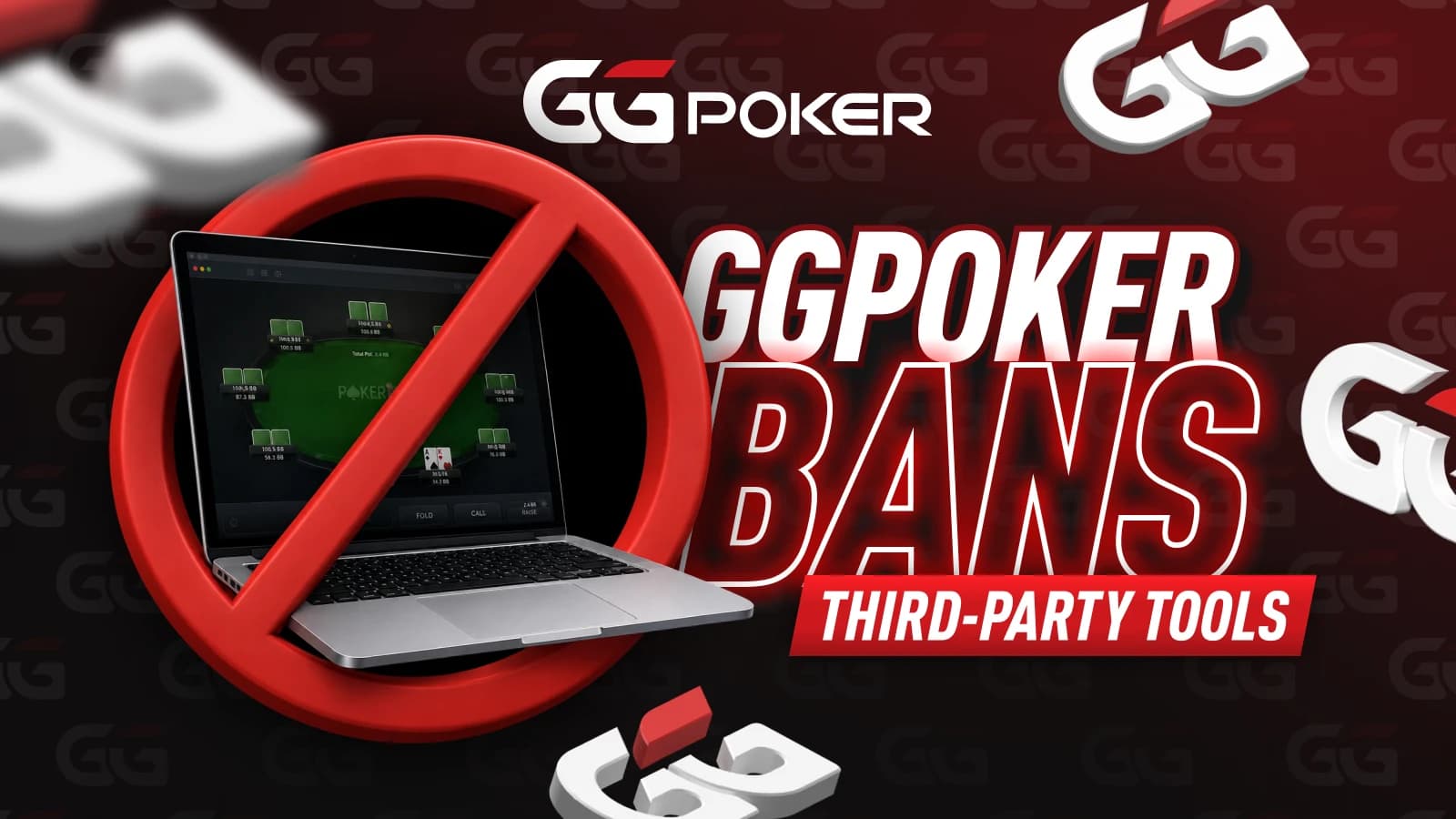
GGPoker Security Update Bans Third-Party Poker Tools
The GGPoker security update bans third-party poker tools, adds new client security features, and introduces detection for suspicious win rates.
 iGamingOnline Poker
Phenom Poker Launches Bellagio Mix Inspired by Bobby’s Room
Explore Phenom Poker’s Bellagio Mix, a 13-game rotation inspired by Bobby’s Room, featuring classic mixed games and two new capped pot-limit variants.
 iGamingOnline CasinoStories
SteveWillDoIt Net Worth 2026: Gamdom Deal, Casino Streams and Biggest Wins
SteveWillDoIt net worth in 2026 - why it's $20M+, his $3.2M a month Gamdom claim, biggest slot wins and casino streams.
 Online PokeriGaming
Natural8 Streamer Mode: 100% Cashback, Privacy & How to Apply
Learn how Natural8 Streamer Mode works, how to apply, who can qualify, and how streamers can earn 100% cashback on streamed poker games.