Slot Machine Guide: History, Types & How They Work

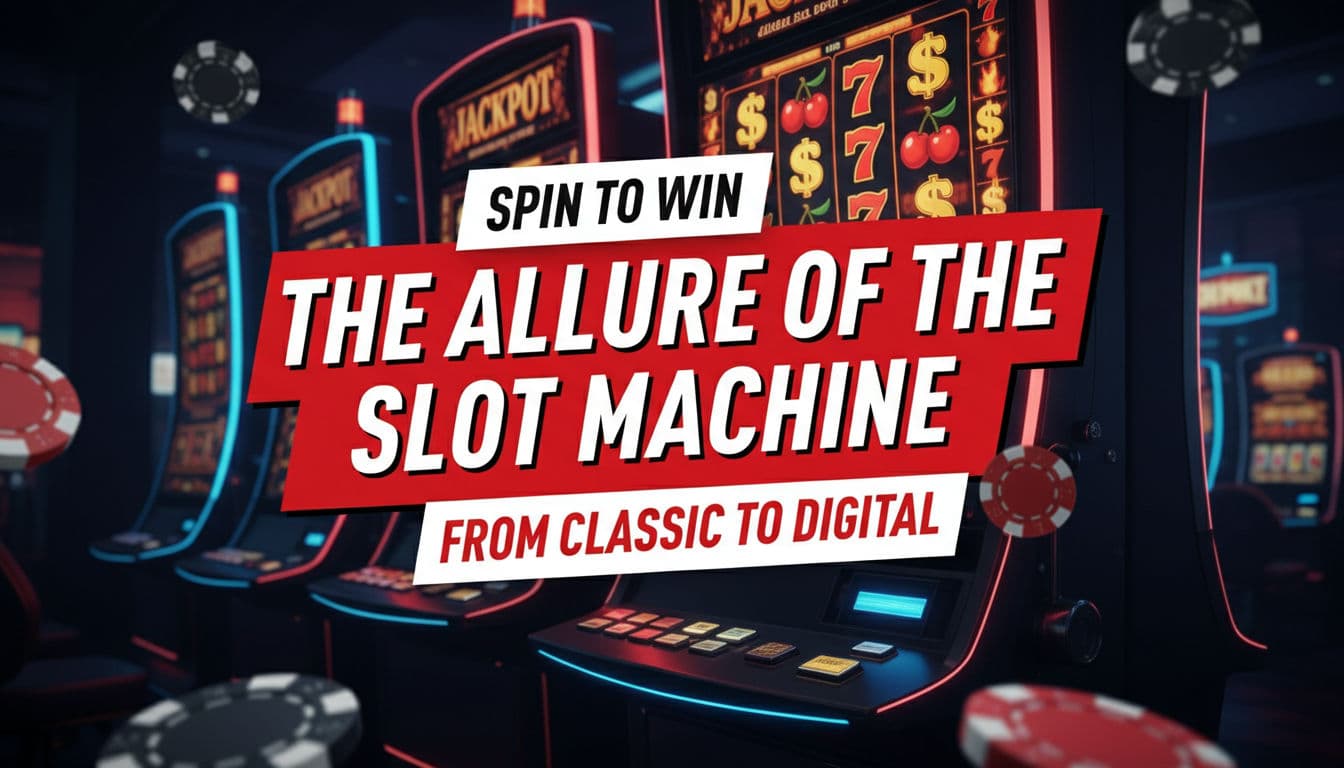
The slot machine is a cornerstone of any casino, known for its flashing lights, engaging sounds, and the potential for life-changing jackpots. Also called a fruit machine, a pokie, or a one-armed bandit, this game of chance involves spinning reels to match symbols along paylines. Understanding the core components, like the Random Number Generator (RNG), different slot types, and key terms like RTP, is essential for any player looking to enjoy these iconic games.
The Enduring Allure of the Slot Machine
The slot machine stands as the most iconic and popular game on any casino floor, whether physical or online casino. For many, it's the quintessential gambling experience, offering a simple yet thrilling form of entertainment. At its core, a slot machine is a gambling device with three or more spinning reels marked with various symbols. The objective is straightforward: insert a payment, spin the reels, and hope the symbols align on a winning payline.
From the classic fruit machine with cherries and lemons to complex video slots with intricate storylines, these games have evolved dramatically. This guide explores everything you need to know about how slots work, their history, and the different types you'll encounter.
From Liberty Bell to Digital Reels: A Brief History
The journey of the slot machine began in the late 19th century. In 1891, a New York company, Sittman and Pitt, developed a poker-based machine, but it was mechanic Charles August Fey who is widely credited with inventing the first true slot machine, the 'Liberty Bell', around 1895. This machine featured three reels, automated payouts, and symbols such as horseshoes, diamonds, spades, hearts, and a cracked Liberty Bell, which paid the highest amount.
Fey’s invention was an instant hit, paving the way for the mechanical 'one-armed bandits' that dominated bars and casinos for decades. However, the evolution didn't stop at gears and levers. In the early 20th century, anti-gambling laws led to the rise of fruit machines, in which the now-iconic cherry and melon symbols represented the flavor of the gum the machine would dispense as a prize.
The next major leap came in 1963 with Bally’s Honey Money, the first fully electromechanical slot. This allowed for larger hoppers and the ability to handle multi-coin bets. The digital revolution truly took hold in 1976 when Fortune Coin Co. developed the first video slot in Las Vegas, using a modified 19-inch Sony Trinitron color screen for the display. This transition was met with skepticism by players who missed the physical spinning reels, leading manufacturers to add 'virtual reel mapping' to bridge the gap between tradition and technology. Today, online slots have taken over, offering players worldwide unparalleled variety and 3D graphics.
How Does a Modern Slot Machine Work?
Contrary to old myths about weighted reels or predictable cycles, modern slots are governed by sophisticated technology. The outcome of every spin is determined by a computer chip, not mechanical parts. At the heart of every machine lies the Random Number Generator (RNG), a microprocessor that generates thousands of numbers per second, even when the machine is not being played.
When a player hits the Spin button, the RNG picks the most recent set of numbers to determine the symbols displayed. This means the result is decided in a millisecond, long before the animations on the screen stop. Two critical metrics define a slot's mathematical profile:
RTP (Return to Player): A theoretical percentage (usually between 92% and 97%) that indicates how much of the wagered money the machine will pay back to players over a long-term cycle consisting of millions of spins.
Volatility (Variance): This describes the frequency and size of payouts. High-volatility slots pay out less often but offer larger jackpots, while low-volatility games provide frequent, smaller wins.
Modern machines also utilize Virtual Reel Mapping. Even if a physical-looking reel has only 20 symbols, the RNG might map these to over 256 virtual stops. This allows developers to make certain high-value symbols (like a Jackpot) much rarer than others, while still maintaining the illusion of a simple mechanical spin.
The Power of the Random Number Generator (RNG)
The heart of every modern slot is the Random Number Generator. This is a microprocessor that constantly generates sequences of random numbers, thousands of times per second. When you press the spin button, the RNG selects the most recent sequence of numbers, which corresponds to a specific combination of symbols on the reels.
"The RNG ensures that every spin is an independent, random event. A machine is never 'due' to hit, and previous outcomes have zero influence on future results. It's the technology that guarantees a fair and unpredictable game for every player." - Gaming Technology Analyst
This means that there is no such thing as a 'hot' or 'cold' machine. Your odds of winning are exactly the same on every single spin, regardless of what happened before.
Exploring the Different Types
The world of slots is incredibly diverse. While they all share the same basic principle, they come in several distinct formats. Understanding these types can help you choose a game that suits your style.
Slot Type | Description | Best For |
|---|---|---|
Classic Slots (3-Reel) | Often called fruit machines, these are the simplest form, with three reels and limited paylines. They mimic the original mechanical slots. | Beginners and players who prefer straightforward, fast-paced gameplay. |
Video Slots (5-Reel) | The most common type found in online and land-based casinos. They feature five reels, multiple paylines, and often include bonus rounds, free spins, and special symbols. | Players seeking engaging themes, animations, and more ways to win. |
Progressive Jackpot Slots | These slots are linked across a network. A small percentage of every bet contributes to a massive, ever-growing jackpot that can be won by one lucky player. | Players chasing life-changing wins, who don't mind slightly lower base game payouts. |
Key Slot Machine Terminology
Payline: A line across the reels where winning symbol combinations must land for a payout.
Return to Player (RTP): The theoretical percentage of all wagered money that a slot will pay back to players over time. An RTP of 96% means the house edge is 4%.
Volatility: Also known as variance, this measures the risk of a slot. Low volatility slots pay out small wins frequently, while high volatility slots pay out larger wins less often.
Wild Symbol: A special symbol that can substitute for most other symbols to help form a winning combination.
Scatter Symbol: A symbol that typically triggers bonus features, such as free spins, regardless of its position on the paylines.
| Pros | Cons |
|---|---|
Slot machines require no prior knowledge or complex strategy, making them accessible to all players, including absolute beginners. | Unlike games like poker or blackjack, no amount of skill or strategy can influence the outcome of a slot machine spin. It is entirely a game of chance. |
From ancient Egypt and mythology to movies and pop culture, there is a slot machine theme to suit every interest, enhancing the entertainment value. | Compared to many table games, slot machines generally have a higher house edge (lower RTP), meaning the casino keeps a larger percentage of wagers over time. |
Progressive jackpot slots, in particular, offer the chance to win life-changing sums of money from a very small stake. | The speed of play can lead to rapid bankroll depletion if not managed carefully. It's easy to play hundreds of spins in a short amount of time. |
Related Casino Terms
Best Online Casinos

Vave
4.6Welcome Bonus150% up to 1.5 BTCCashback BonusVariable- Welcome Bonus
- 150% up to 1.5 BTC
- FTD Bonus
- 150% up to 1.5 BTC
- Cashback Bonus
- Variable
- Extra Bonus
- Free Spins
- Platforms


- Browser Support
- Yes
- Mobile Support
- No
- Crypto Support
- Yes
- License
- Republic of Costa Rica
Game types
 No Blackjack
 Baccarat
 No Bingo
 No Craps & dice
 Crash games
 eSports betting
 Jackpot games
 No Keno
 Live games
 Roulette
 No Scratch cards
 Slots
Slots Sports betting
 No Video poker
Payment methods


LTC Casino
4.4Welcome Bonus250% First Deposit Bonus up to $750Cashback BonusNo Cashback- Welcome Bonus
- 250% First Deposit Bonus up to $750
- FTD Bonus
- 250% up to $750
- Cashback Bonus
- No Cashback
- Platforms
- Browser Support
- Yes
- Mobile Support
- No
- Crypto Support
- Yes
- License
- No License
Game types
BlackjackBaccaratNo BingoNo Craps & diceCrash gamesNo eSports bettingJackpot gamesNo KenoLive gamesRouletteNo Scratch cardsSlotsNo Sports bettingNo Video pokerPayment methods


Jack
4.6Welcome Bonus100 Free Spins + Risk-Free Sports BetCashback BonusUp to 30%- Welcome Bonus
- 100 Free Spins + Risk-Free Sports Bet
- Cashback Bonus
- Up to 30%
- Extra Bonus
- 100 Free Spins
- Platforms
- Browser Support
- Yes
- Mobile Support
- No
- Crypto Support
- Yes
- License
- Curaçao Gaming Control Board
Game types
BlackjackBaccaratNo BingoNo Craps & diceCrash gameseSports bettingJackpot gamesNo KenoLive gamesRouletteScratch cardsSlotsSports bettingNo Video pokerPayment methods


Duel
4.2Welcome Bonus50% Instant RakebackCashback BonusFix 50%- Welcome Bonus
- 50% Instant Rakeback
- Cashback Bonus
- Fix 50%
- Extra Bonus
- 100% RTP Games
- Platforms
- Browser Support
- Yes
- Mobile Support
- No
- Crypto Support
- Yes
- License
- License No. ALSI-202411026-FI1.
Game types
No BlackjackBaccaratBingoCraps & diceCrash gameseSports bettingJackpot gamesNo KenoLive gamesRouletteNo Scratch cardsSlotsSports bettingVideo pokerPayment methods

Stake US
4.6Welcome BonusFree 25 SC + 250K Gold Coins- Welcome Bonus
- Free 25 SC + 250K Gold Coins
- Extra Bonus
- 1 Stake Cash + 10,000 Gold Coins Free - Every Day
- Platforms
- Browser Support
- Yes
- Mobile Support
- No
- Crypto Support
- Yes
- License
- Sweepstakes (US Federal Law)
Game types
BlackjackBaccaratNo BingoCraps & diceCrash gamesNo eSports bettingNo Jackpot gamesNo KenoLive gamesRouletteScratch cardsSlotsNo Sports bettingNo Video pokerPayment methods

Shuffle US
4.7Welcome BonusFree 1 Shuffle Coin + 25,000 GC- Welcome Bonus
- Free 1 Shuffle Coin + 25,000 GC
- Extra Bonus
- Daily Log in Bonus
- Platforms
- Browser Support
- Yes
- Mobile Support
- No
- Crypto Support
- Yes
- License
- Sweepstakes Model — Munyon Canyon Ltd (BVI)
Game types
BlackjackBaccaratNo BingoNo Craps & diceCrash gamesNo eSports bettingNo Jackpot gamesNo KenoLive gamesRouletteNo Scratch cardsSlotsNo Sports bettingNo Video pokerPayment methods