

Brandon Adams: The Man Behind the Cards

Brandon Adams and Phil Galfond have something in common: both brought a thoughtful, intellectual presence to poker. Each also found ways to share his understanding of the game beyond the tables.
Who Is Brandon Adams? |
|---|
Long story short: George Brandon Adams is an American poker professional, author, entrepreneur and former Harvard teaching fellow, known for his high-stakes play and appearances on High Stakes Poker and Poker After Dark. |
When watching Adams play, it helps to know how much game theory lies behind his decisions. While competing against some of the world’s strongest players in high-stakes cash games, he also taught game theory and behavioral finance to Harvard undergraduates. He has written books, too, while his podcast, now called The AI Metagame, explores learning and strategic adaptation.
How did he get here? Academic success was part of the story, but so were sporting ambitions, a family’s fresh start and a growing fascination with poker.
Brandon Adams: Biographical Details
Detail | Information |
|---|---|
Full name | George Brandon Adams |
Date of birth | December 12, 1978 |
Birthplace | New Orleans, Louisiana, United States |
Education | University of Florida; London School of Economics; doctoral studies at Harvard Business School |
Online alias | DrOctagon |
WSOP bracelet | 2019 |
Did you know? Although his first name is George, Adams has been called Brandon since birth. He was named George after his grandfather, but his parents agreed from the outset that they would use his middle name.
Early Life: A Competitive Streak Beyond the Classroom
Let’s start at the beginning. Adams was born in New Orleans and was eight when his family moved to Florida. They lived in Destin and West Palm Beach before settling in Pensacola, where he attended middle school and high school. He grew up with a younger brother and sister.
His father worked in real estate development and enjoyed considerable success at a young age. A downturn in New Orleans hit the business hard, however, and he wanted to start again somewhere else. After the move to Florida and several real estate jobs, he started a homebuilding company in the early 1990s. Adams later felt that he had inherited some of his father’s appetite for risk.
In a Card Player interview, Adams recalled a seemingly minor childhood moment that had stayed with him. During a car journey, his mother remarked that his younger brother was more naturally gifted at sports. Adams suspected she was trying to encourage him to put more energy into school. Instead, the comparison made him angry. He wanted to improve at sports and was willing to work at it.
Even later in life, he attributed his athletic ability to effort rather than natural talent. Academic work came more easily, although he did not always make the most of that advantage.
Graduating from College at 19
By his own admission, Adams was fairly lazy during his early high school years. Once he began putting more effort into his studies, the results and the satisfaction of doing well encouraged him to keep going. He took university courses while still in high school, then continued his education at the University of Florida. He graduated at 19.
Mathematics and economics interested him, but he had no firm career plan. A summer program at the London School of Economics in 1998 helped him find a direction. After that experience, he began thinking more seriously about academic research and doctoral study.He later returned to London for a master’s program before studying in Florida again. In 2001, he began doctoral studies at Harvard Business School.
How Did Brandon Adams Start Playing Poker?
By then, Adams was already interested in how mathematics and economics could explain players’ decisions. Poker had been a recurring topic in his game theory studies at the University of Florida: a game in which your choices depend partly on what you believe about an opponent’s cards and likely actions.
On one occasion, his girlfriend suggested a weekend trip to Biloxi. They enjoyed themselves, and playing in the poker room became the highlight of the visit. The people he met and the atmosphere of the game appealed to him as much as the strategic questions.
Learning Together at the Harvard Poker Club
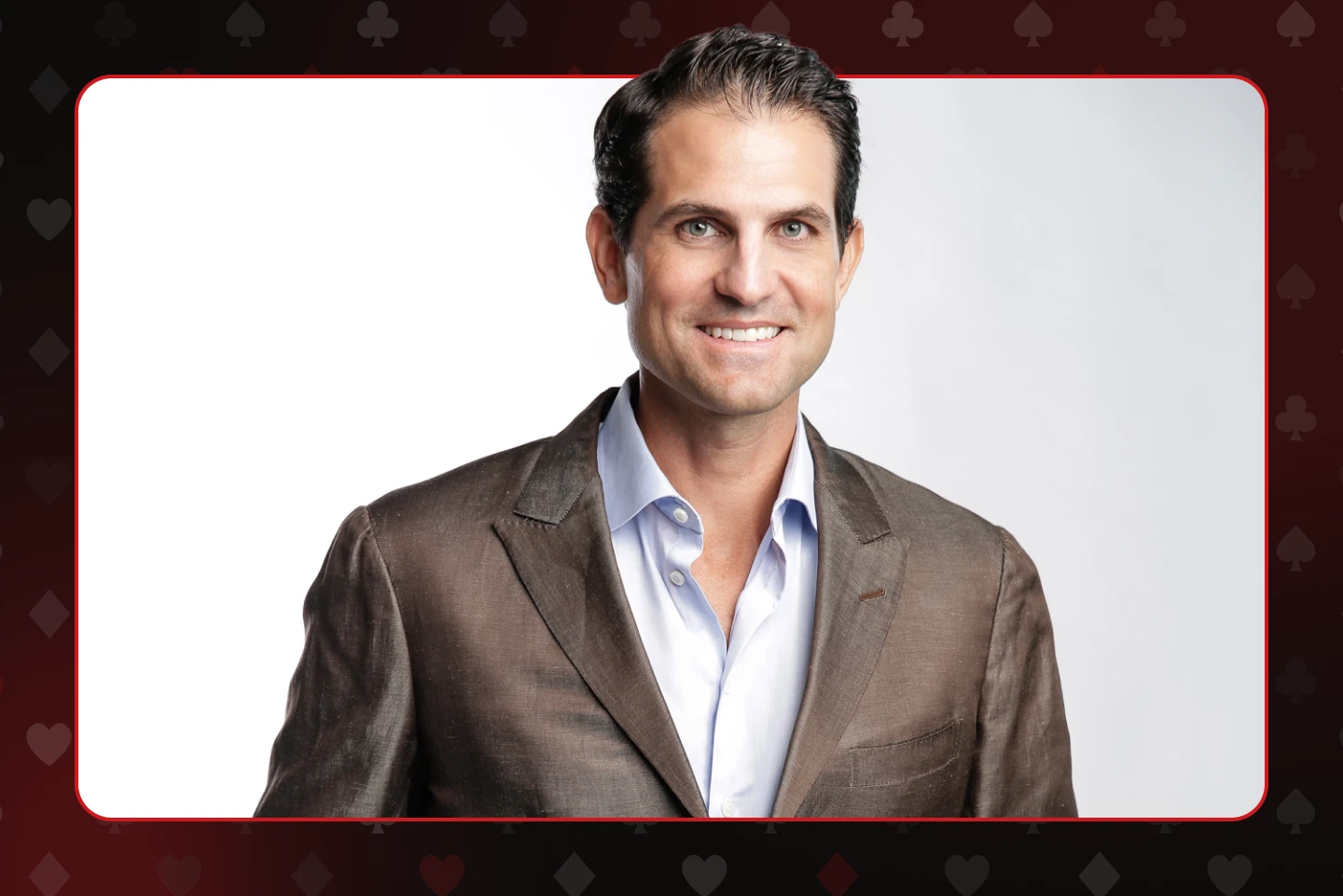
At Harvard, Adams found a group that took poker seriously. Members of the poker club met once a week to discuss theory and on another occasion to play. He also joined games around the business school.Trips to Foxwoods later added to that experience. The $5/$5 no-limit hold’em games seemed substantial to Adams at the time, particularly when he saw players sitting behind several thousand dollars in chips.
He was already keeping records of his results. Looking back, the three-figure sums in those early records seemed almost unfamiliar. At the time, though, they were enough to keep him interested.
Online poker became part of his life as well. A fellow member of the Harvard Poker Club had spoken enthusiastically about his results on PokerStars. Adams himself began playing on the site after Chris Moneymaker’s 2003 WSOP Main Event victory.
When Poker Became More Than a Side Pursuit
In the summer of 2005, Adams spent an extended period in Las Vegas, primarily playing cash games. His poker schedule became particularly intense between 2006 and 2008, even as he continued teaching. Appearances on High Stakes Poker and Poker After Dark introduced him to a wider audience. Televised poker gave viewers a chance to get to know the players as well as follow their decisions at the table.
He also proved himself in tournaments, winning a Poker Masters event in 2017 and his first WSOP bracelet in 2019. Poker, however, did not push out all his other interests.
Teaching Economics While Building a Poker Career
Adams taught undergraduate economics at Harvard for nine years as a teaching fellow, covering behavioral finance, game theory and international macroeconomics. He also discovered how much he enjoyed teaching.
Teaching behavioral finance meant examining how people make financial decisions when emotions and biases enter the picture. At the poker table, similar patterns can emerge when a player becomes overconfident after a winning session or takes greater risks to recover a loss. The settings were different, but both raised questions about how people judge risk and respond when money is at stake.
For a period, his routine involved spending the spring semester in Cambridge, then spending the summer and fall in the western United States, looking for poker games. Teaching and playing both had a place in his life.Alongside them, he also found time to write. His experiences at the tables would provide material for a novel.
Brandon Adams’s Books and Work with Michael Lewis
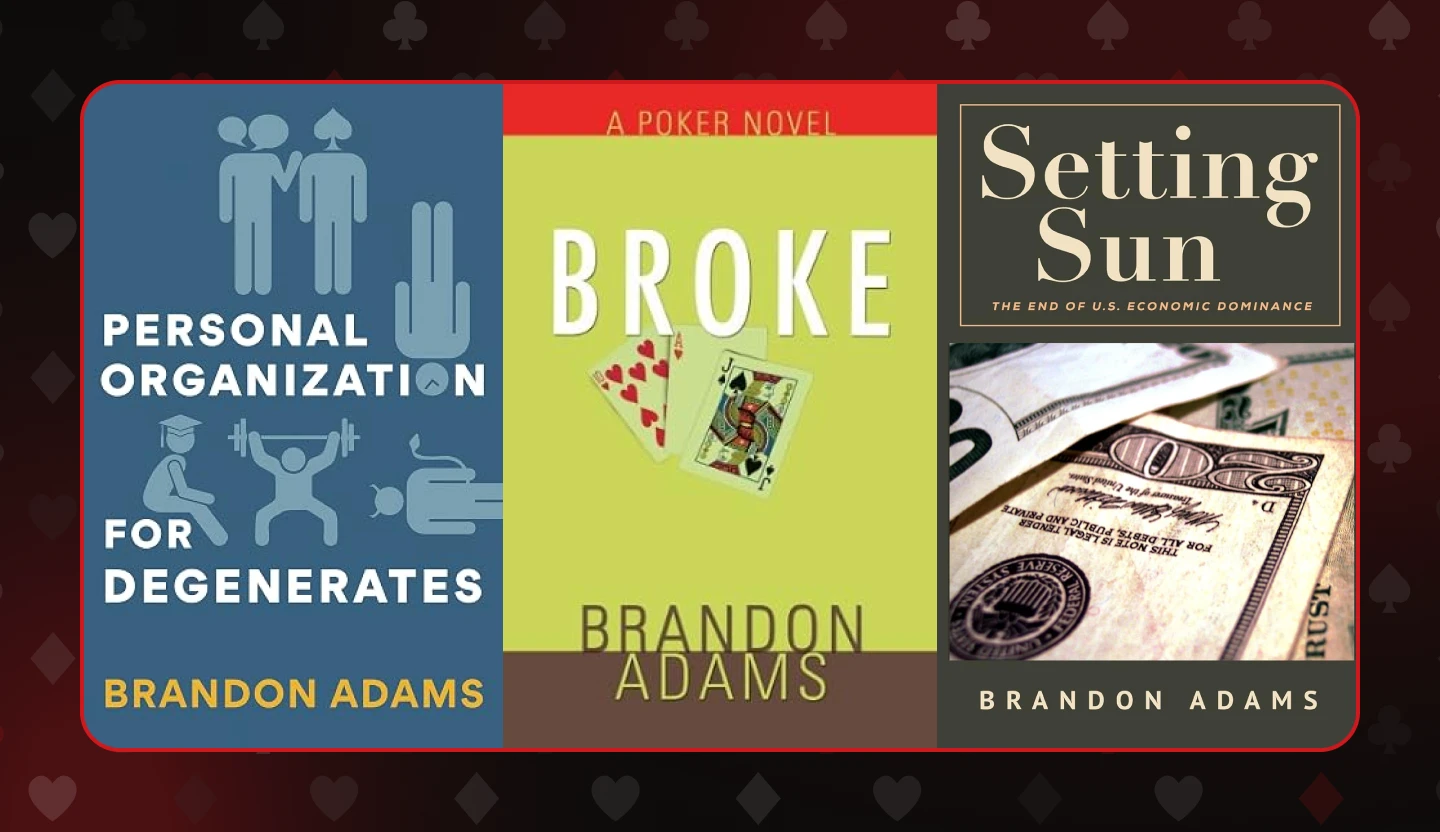
Writing gave Adams room to explore several of his interests. His books include a poker novel, an examination of economic decline and an unconventional guide to organizing your life. He wrote those three titles himself, while The Story of Behavioral Finance was a collaboration with Brian Finn.
Broke: A Poker Novel: fiction exploring poker’s darker side and the personal difficulties facing people who look to the game for success and a living.
The Story of Behavioral Finance: a book connected to his Harvard teaching, examining how human behavior and psychological biases affect financial decisions.
Setting Sun: The End of US Economic Dominance: an examination of declining American economic dominance and the relationship between economic and social change.
Personal Organization for Degenerates: a guide for people who struggle to follow conventional advice about organizing their lives.
Adams also contributed to another author’s work, serving as the lead research assistant for Michael Lewis’s The Big Short. The book’s examination of the financial crisis gave him another outlet for his economics background alongside teaching and his own writing.
Personal Organization for Degenerates
Personal Organization for Degenerates perhaps reveals more about Adams himself than the other titles. He wanted to write for people driven by adrenaline, for whom consistent routines and long-term planning might not come naturally.
He addressed money, health, relationships and communication, drawing on his own life and the mistakes he had seen around him. Younger players also approached him for advice. Those conversations helped shape the book as Adams gathered the lessons he thought might be useful to people living similar lives.
Expert Insight and Life Beyond the Classroom
Teaching also became a business opportunity for Adams. In 2011, he launched Expert Insight, a platform where users could book one-to-one video conversations with experts from different fields.The experts set their own rates and availability, while the site handled booking, payment and the call itself. Alongside economists and business specialists, users could learn from poker players including Tom Dwan and Patrik Antonius.
Adams offered consultations himself, but not exclusively about poker. He taught economics and finance to Dwan, Brian Hastings and other players. Poker professionals could therefore take part as both experts and students.
From The Brandon Adams Podcast to The AI Metagame
Adams later continued the conversations through podcasting. By 2026, the feed previously known as The Brandon Adams Podcast was publishing episodes titled The AI Metagame. These explore how people can change their thinking and working methods as the tools around them develop rapidly.
Guests have included familiar names from poker: Nate Silver, Haralabos Voulgaris and Bryan “PrimordialAA” Pellegrino.
This also connects with Adams’s newer venture, 5HC. He founded the company to help executives use artificial intelligence in practice through individual consultations focused on problems from their own work.
Family, Sport and Changing Priorities
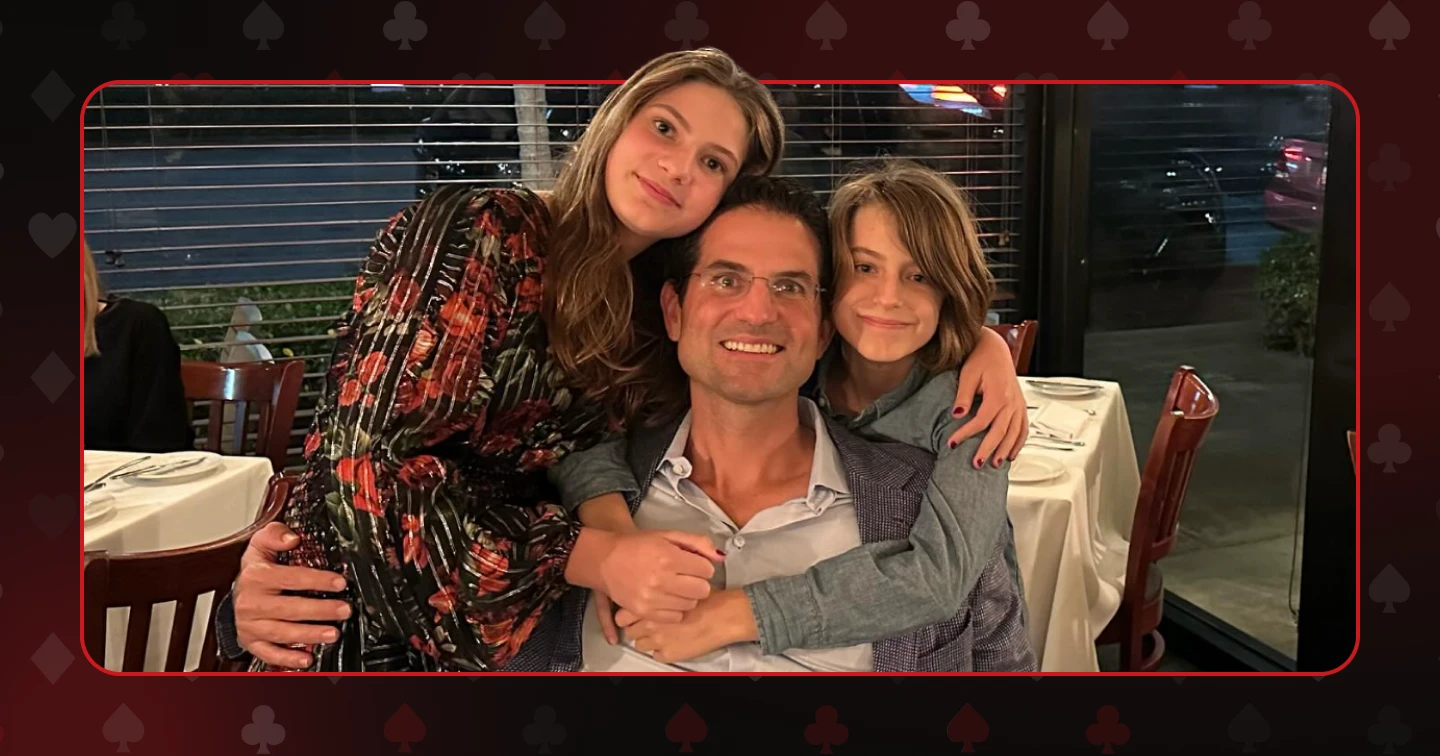
Adams married architect and designer Marisa Rose Fort in Miami in 2008. A Barnard College graduate, she earned her master’s degree in architecture at Harvard. Adams generally keeps his personal and romantic life out of the spotlight.Alongside his work and other interests, time with his family influenced how often Adams played tournaments.
In a 2017 interview, he spoke about his two children and explained that he spent considerable time with them in Miami. He remained involved in cash games, but tournaments presented a different problem: fixed schedules and travel could force him to choose between playing and family time.
He was reluctant to make that sacrifice. Playing fewer tournaments did not necessarily mean he was moving away from poker. Other priorities were shaping his calendar, too.
Tennis and Daily Fantasy Sports
His childhood sporting ambitions never entirely disappeared. As an adult, Adams continued working hard to become a better tennis player and made bets on his own sporting performance.
Sport found another place in his life through daily fantasy sports, which he began playing in 2014. He particularly enjoyed the analysis and research involved. The task was to build lineups based on the expected performances of real athletes; his conference biography highlighted golf, NFL and MLB as his favorite sports.
Tennis, fantasy sports and poker demanded different skills. The opportunity to improve interested him in all three, much as it had when he first decided he wanted to prove himself at sports.
Brandon Adams on Social Media
Follow Adams’s conversations, projects and interests through his public channels:
X: @badams78
Instagram: @brandonadams78
Podcast: The AI Metagame
About the Editor
Zsolt is SoMuchPoker’s Content Writer and Interview Specialist, exploring poker beyond the cards and the tables through stories, interviews, profiles, historical pieces and curiosities. He focuses on the people, places and ideas that have shaped the game, while looking at the wider world around poker, how it has evolved, what makes its culture unique, and how the people within it think, compete and make decisions.
Related News
 Legends of Poker
Brandon Adams Net Worth: Harvard, High Stakes and Big Pots
Explore Brandon Adams’s net worth, recorded poker earnings, biggest pots, Harvard background and heads-up matches against Phil Galfond and Sammy Farha.
 Legends of Poker
Phil Galfond: The Man Behind OMGClayAiken
Follow Phil Galfond’s rise from online poker as OMGClayAiken to three WSOP bracelets and Run It Once, and read about his life with Farah Fath Galfond.