

Billy ‘The Croc’ Argyros Wants Poker’s Character Back

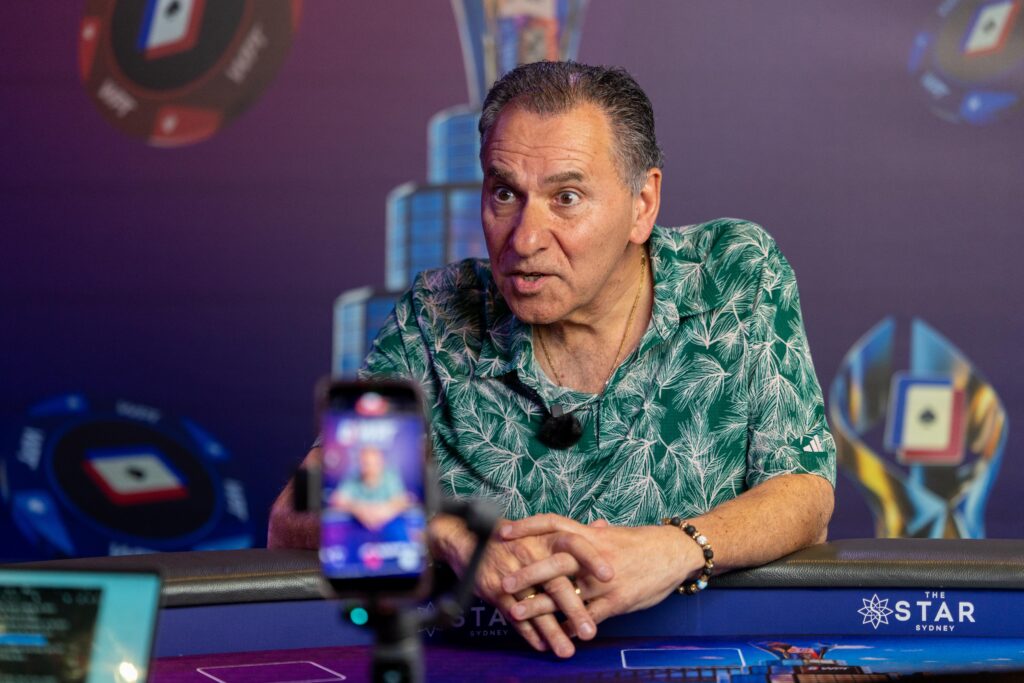
Billy “The Croc” Argyros has watched poker change considerably since he first travelled from Australia to Las Vegas in the late 1980s.
The players have improved and no-limit hold’em has become a far more deceptive game. According to the Australian Poker Hall of Fame member, however, some of the character that once defined poker has been lost along the way.
“Back then, people would always clown around and talk and ask, ‘Where are you from, son?’ and have a conversation,” Argyros told Somuchpoker during WPT Australia 2026 at The Star Sydney. “Now the guys try to stare you down. I think it’s really bad for poker.”
For Argyros, poker has always been about more than results. It offers him a chance to compete against the best players while enjoying the social atmosphere around the game.
“It’s always been a hobby for me. I just love the competition and going out and having the social atmosphere of it,” he said. “As a tennis player, you have to be the best, but I can sit down with the best poker players and hopefully compete with them, which is really good.”
How Billy Became ‘The Croc’
[instagram-reel url="https://www.instagram.com/reel/DdYu0CGiC2d"]
Argyros has told the story behind his nickname many times, but it remains one of the best tales from his early years in poker.
During a trip to Las Vegas with Mel Judah in the late 1980s, Argyros won approximately USD 14,000 in a tournament at the Las Vegas Hilton. It was the largest amount of money he had seen at that point, and he was too excited to sleep.
He got up at around 8:30am the following morning, had breakfast and discovered that one seat remained in a USD 1,000 satellite for the WSOP Main Event.
“I said, ‘I just won fourteen.’ I pulled off one thousand and put it in,” Argyros recalled.
Approximately three hours later, with half an hour remaining before the Main Event, Argyros was heads-up against three-time WSOP Main Event champion Johnny Moss.
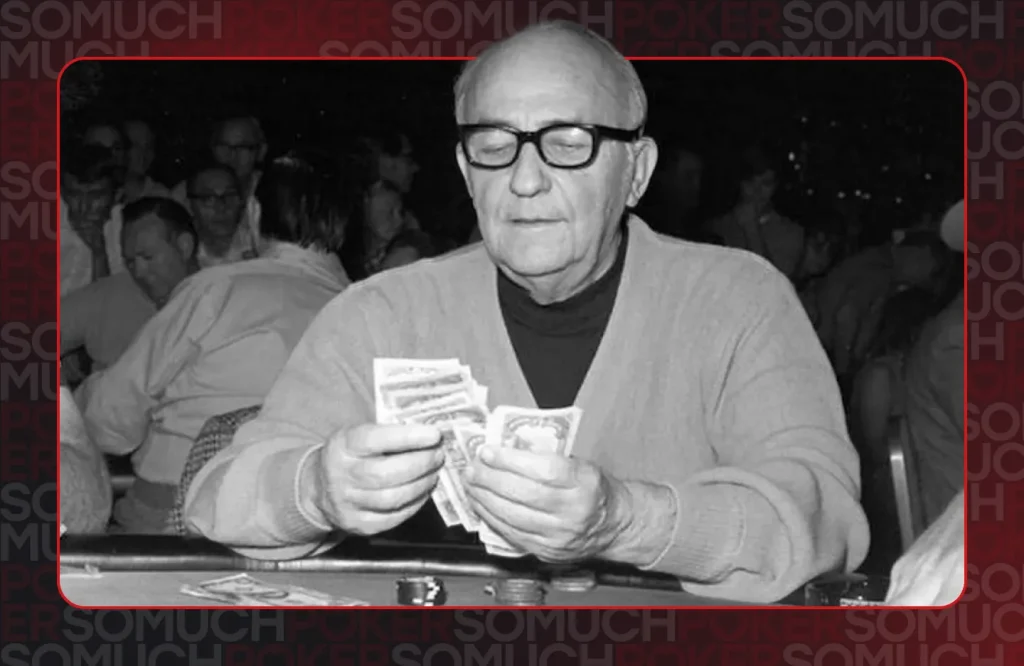
Argyros held approximately 60 percent of the chips, while Moss had the other 40 percent. The Australian proposed taking the seat and giving Moss 10 percent of his Main Event action.
“I said, ‘Johnny, would you like to do a deal?’ He looked at me and goes, ‘What kind of deal do you want to do, boy?’ I said, ‘I’ve got 60 percent. You’ve got 40. I’m more than happy for you to play, and I’ll take 10 percent of you.’”
Moss got up and walked away. Argyros knew little about backing arrangements at the time, but believed Moss had gone to speak with somebody before returning with a counteroffer.
“He comes back and looks at me and goes, ‘I’ll tell you what I’m going to do, boy. I’m going to give you four thousand cash. It’s a good deal. You play okay, but I’m a triple world champion.’”
Moss put out his hand and asked, “Deal?”
Argyros rejected the offer immediately.
“Deal? Deal the cards!”
The growing crowd wanted to know who the unknown Australian was. One spectator suggested he must be Crocodile Dundee.
“All the crowd was watching, and they go, ‘Who the hell is that guy?’ One of the guys said, ‘That’s Crocodile Dundee from Australia."
Argyros defeated Moss approximately ten minutes later to secure his place in the Main Event. When someone approached and asked his name, he had a new answer ready.
“I said, ‘Crocodile Bill.’ All of a sudden, I’m playing the Main Event at the World Series. That’s it.”
A nickname created on the spot has followed him throughout his poker career.
The Characters Who Made Poker Entertaining
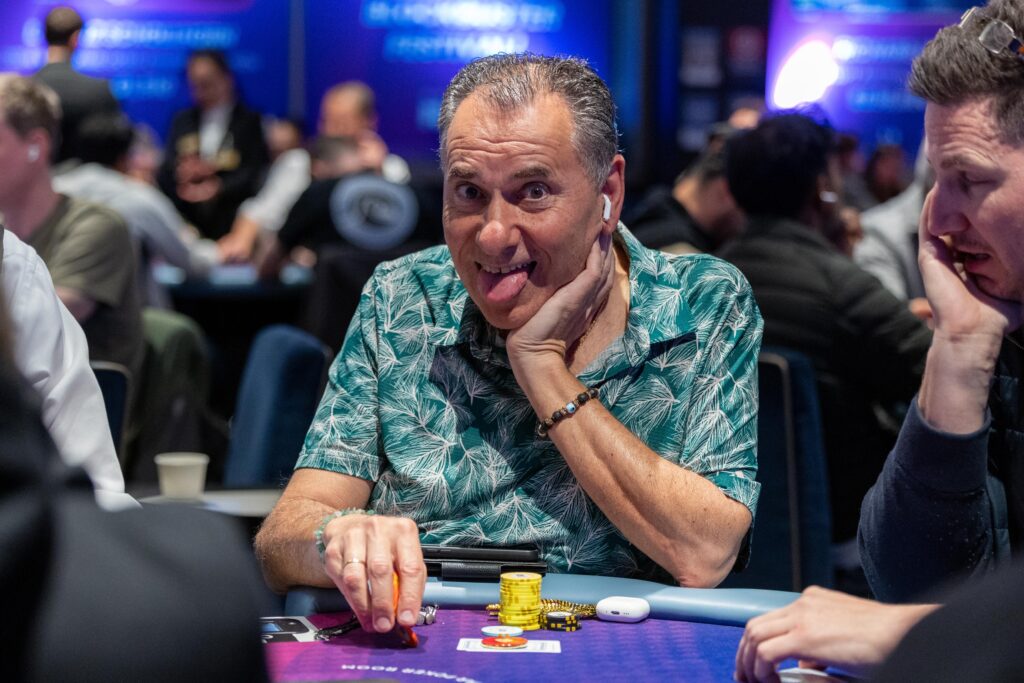
Argyros has played through different generations of poker, but he has no doubt which period he enjoyed most.
“My era, definitely. The early days in Vegas, the early ’90s,” he said. “I got to play with Puggy Pearson, Scotty Nguyen and Mike Sexton. I was actually good friends with Mike.”
Las Vegas tournaments were smaller and the players knew one another. Conversations continued at the bar after the cards had been put away, while tournaments that now run for days were regularly completed within one or two.
“It was very friendly. Everyone sort of knew each other back then,” Argyros said. “We’d sit at the bar and talk about the situations. Tournaments would finish in a day and a half. They used to be one-day tournaments, and then they became a final table on the second day.”
The players were also well looked after by the casinos.
“I remember every night at 7pm there would be a huge seafood buffet for all the players in Vegas,” he said. “The rooms were very inexpensive. Everyone took really good care of us.”
Argyros sees the modern World Series as an entirely different operation.
“I always call it the Costco of poker now. It’s become a real big churning assembly plant.”
When asked what the players from his generation possessed that many modern professionals are missing, Argyros needed only one word.
“Character.”
That does not mean he dismisses the ability of today’s players. Argyros believes the standard has risen considerably since the period when he regarded himself as one of Australia’s leading players.
“Back in the ’90s, I probably would have regarded myself in the top five poker players in Australia,” he said. “I wouldn’t regard myself in the top 50 these days. The young kids have become really good.”
He has also watched the strategy behind no-limit hold’em change over time.
“The competition is excellent. The way no-limit hold’em has changed over the years, it’s become a very deceptive game,” Argyros said. “In the past, people would play their hands and you could actually read them face up.”
Do Not Chase Away the Recreational Players
[instagram-reel url="https://www.instagram.com/reel/DdbSHfeFYV5"]
Argyros knows that some younger opponents regard him as a poker dinosaur, but he continues to adjust his game and believes he can still deceive them at the table.
“A lot of people think I’m a bit of a dinosaur in poker,” he said. “Some of the young kids sort of realise that I’m a little bit deceptive at times. I enjoy the game, I change and I have a lot of fun.”
There is one lesson he believes modern professionals should learn from the old-school gamblers.
“Don’t chase away the fish. That’s probably one of the biggest things I can say.”
Argyros dislikes seeing professionals criticise recreational players for their decisions, particularly after an unconventional call.
“I see so many players criticise a player and they go, ‘How can you call with that rubbish?’ To me, you’re belittling somebody. All of a sudden, you’re embarrassing them,” he said.
His preferred response is much simpler.
“Quietly just say, ‘Nice hand, well played,’ and move on. Don’t belittle the fish, you so-called champions.”
Conversation With a Purpose

Argyros remains one of the most talkative players at any table, but the conversation is not purely for entertainment.
When asked whether he speaks to opponents to collect information or simply to have a chat, his answer was straightforward.
“A combination of both.”
Asking where someone comes from and why they are playing can reveal valuable information about their experience and approach to the tournament.
“I’d say, ‘Where are you from?’ ‘I’m from Ireland.’ ‘Are you on holiday?’ ‘No, I’m actually doing the circuit.’ Okay, so you’re doing the circuit. You’re actually a pro,” Argyros explained.
He can also learn something from how an opponent entered the tournament.
“How did you get in here? ‘I won a satellite.’ Okay, obviously the money means a lot more to you,” he said. “You’d be a person who is going to play pretty tight and isn’t going to try to bluff me, that sort of stuff. But also be friendly as well, so you can pick up information.”
Bankroll Management Before Everything Else
When asked for the most important advice he could offer poker players, Argyros immediately turned to bankroll management.
“Probably the most important thing I could tell all the players out there is bankroll management.”
Satellites played a major role in the beginning of his own WSOP career. Rather than paying the USD 10,000 Main Event entry directly, Argyros repeatedly qualified through smaller tournaments.
“If you really want to play and, like in the early days, you can’t afford it, play a satellite,” he said. “If you’re good enough, you’ll win a satellite and parlay that up.”
Argyros recalled winning his way into each of his first five WSOP Main Event appearances.
“I think my first five events at the WSOP Main Event, I won a satellite every single year,” he said. “Every single year. I never paid one for ten thousand dollars.”
For anyone starting in poker, Argyros recommends learning about the game and building up gradually. He recalled reading Doyle Brunson’s book, originally released as How I Made Over $1,000,000 Playing Poker before becoming better known as Super/System.
“Educate yourself. Do it slowly. Build back up.”

Players must also understand that tournament results rarely follow a smooth upward line.
“The thing with poker these days is that a tournament is probably one of the weird graphs that you’ll see in an Excel spreadsheet,” Argyros said.
He contrasted tournament poker with cash games, where a successful player’s graph can trend upwards more consistently.
“If you’re in a cash game, your graph will go upwards. It will trend northerly,” he said. “Most tournament players are going to find that their tournament graph is definitely going south most of the time until you strike something big.”
The possibility of turning a relatively small investment into a major prize is part of tournament poker’s appeal.
“You’re investing a small amount of money trying to win a large amount of money,” Argyros said. “That’s probably why it’s become so popular, where they can invest in a satellite of one hundred dollars, parlay it up to a two-thousand-dollar tournament.”
Argyros followed that path during his first several visits to the World Series, playing USD 100 and USD 200 satellites at Binion’s Horseshoe before taking his shot at the Main Event.
“That’s basically the first four or five times I played the World Series,” he said. “I used to play the one-hundred-dollar and two-hundred-dollar satellites at the Horseshoe and then have a shot at trying to win the one-million-dollar WSOP Main Event.”
More Than a Hall of Fame Resume
Argyros remains modest about his place in Australian poker history.
“I don’t even know if I was entitled to be in the Hall of Fame. I’m more of a character of poker than ability-wise,” he said.
Despite those doubts, the recognition meant a great deal to him.
“I felt really proud.”
Argyros joined players including Jeff Lisandro, Mel Judah and Tony G in the Australian Poker Hall of Fame.
His results and longevity form part of that legacy, but so does the personality he has brought to poker throughout his career.
Argyros may be older than many of the players he now shares a table with, but he still enjoys spending time with the younger generation.
“I’m probably older than I look because I hang around with a lot of young kids,” he said. “My wife goes all the time, ‘What are you doing hanging around 28-year-olds and 30-year-olds? You’re an old man.’ I said, ‘They enjoy my company.’”
Judging by the stories that still follow The Croc into every poker room, it is difficult to disagree.
All images courtesy of The Star Poker.
About the Editor

Kai Cocklin is Head of Live Poker at SoMuchPoker, overseeing live tournament coverage, reporting teams and festival partnerships across the Asia Pacific region and beyond. Before joining SoMuchPoker he worked with PokerNews at major festivals including the World Series of Poker and the European Poker Tour, where he managed live reporting teams and helped develop new writers.
Related News
 NewsLive Poker
Scheduled Maintenance: Live and Player Profiles Temporarily Offline
Somuchpoker is moving to a new server. Live and Player Profiles will be offline for a few days. Here is what to expect and when we are back.
 Live PokerTeaser
GOP Incheon 2026 II: The Labyrinth Trail Returns With KRW 600M Main Event
GOP Incheon 2026 II returns to Paradise City from October 30-November 8 with 76 events, five Gauntlets and a KRW600M Main Event.
 Live PokerRecap
Tarun Guwalani Wins First Baby Zodiac Classic at APT Jeju 2026
APT Jeju 2026 Day 11 sees Tarun Guwalani win the first Baby Zodiac Classic, while Jiaxian Pan leads 41 into the High Roller Ultra Stack final showdown.
 Live PokerTeaser
KPC Poker Jeju Series Reveals New Mixed Games Rewards, RDPT Partnership and KRW 50M JPF Cash Reward Match
KPC Poker Jeju starts October 10; KRW3.1B guaranteed, Xuan Liu joining as ambassador, and KRW50M JPF Cash Reward Match.
 Live PokerRecap
APT Jeju 2026 Day 10: Scott Margereson Wins APT High Roller; Inaugural Baby Zodiac Debuts
Scott Margereson wins the APT High Roller, Leonard Ng leads Baby Zodiac, and Masao Ushida captures the Ultra Stack at APT Jeju 2026
 Live PokerRecap
Scott Margereson Claims Richest-Ever Korean-Based APT High Roller Title in Jeju for KRW 252.85M (~USD 190K)
Scott Margereson wins the richest-ever Korean APT High Roller at APT Jeju 2026, earning KRW 252.85M and the Rose Gold Mega Lion trophy.