

Behind the Scenes of The Incredible Lodge Poker Club Scandal


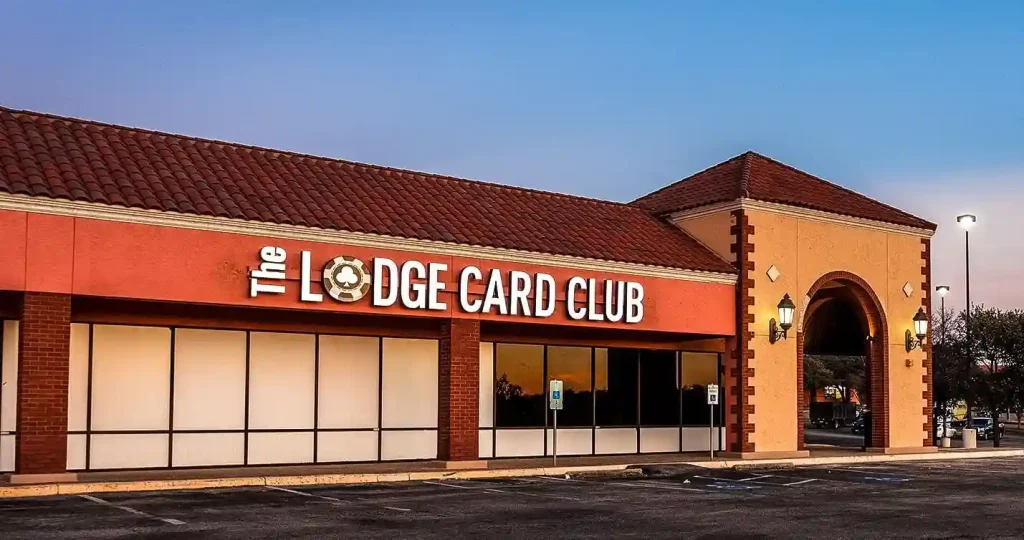
The modern era of live poker has been defined by the explosive growth of the southern market, but the recent Lodge Poker Club raid has brought that momentum to a devastating standstill. For years, players and investors flocked to the Lone Star State, relying on specific interpretations of Texas poker laws to operate massive, thriving card rooms. At the absolute forefront of this industry was The Lodge Card Club in Round Rock. Co-owned by high-profile poker celebrities, it was the gold standard for operations. However, the unprecedented Lodge Poker Club raid executed by local law enforcement and the Texas Alcoholic Beverage Commission (TABC) in March 2026 shattered the illusion of safety.
This deep dive into the Poker Club raid will examine the timeline of events, starting from the early days when Doug Polk first became co-owner of the Lodge Poker Club, the shocking Lodge money-laundering charges that followed, and the existential threat to the legality of Texas poker rooms. As we analyze every Doug Polk Lodge update and the intricate details of gambling laws, it becomes clear that it is not just a localized news story; it is a battle for the future of the game in America.
Part 1: The Execution of the Lodge Poker Club Raid
In early March 2026, the poker community was sent into a frenzy when breaking news confirmed the raid on the Lodge Poker Club. According to eyewitness accounts and official TABC statements, law enforcement entered the massive Round Rock facility and immediately paused all cash games and tournaments. For patrons inside, the Lodge was a scene of confusion and intimidation. The authorities executed sweeping search warrants, focusing heavily on the cage, server rooms, and back-office financial records.
The immediate question on everyone's mind regarding the Lodge was simple: Why now? For years, the legality of Texas poker rooms had been anchored by a widely accepted loophole in Texas poker laws. Under Chapter 47 of the Texas Penal Code, gambling is illegal unless it occurs in a private place, the chances of winning are equal, and no one receives an economic benefit other than personal winnings. By charging membership and seat fees instead of a rake, clubs believed they were strictly adhering to gambling laws.
However, the Lodge signaled a drastic shift in how state authorities interpret these rules. By utilizing the TABC, the state found a regulatory entry point. The TABC's involvement in the raid at the Lodge was a tactical masterstroke by law enforcement, allowing them to freeze operations under the guise of liquor license violations before dropping the real hammer: the investigation into Lodge money-laundering charges.
In the chaotic hours following the initial Lodge Poker Club raid, the industry waited with bated breath for a Doug Polk Lodge update. The vocal co-owner eventually issued an initial statement confirming the law-enforcement action. In his first crucial Doug Polk Lodge update, he urged the poker community to remain calm while their legal team assessed the scope of the search warrants. However, the tone of subsequent statements would soon darken as the reality of the Lodge's money-laundering charges came to light, fundamentally challenging the legality of Texas poker rooms.
The collateral damage of the Club raid was immediate. The highly anticipated World Poker Tour (WPT) festival, a monumental event for the state, was indefinitely postponed. This cancellation, following the Poker Club raid, was a massive blow to the local economy and a clear signal that the legality of Texas poker rooms was in severe jeopardy.
Part 2: Asset Forfeiture and Lodge Money Laundering Charges
As March turned into April, the aftermath of the Lodge Poker Club raid transitioned from a physical shutdown to a complex financial siege. Unsealed search warrants and subsequent legal filings revealed the state's aggressive strategy: pursuing severe money-laundering charges against Lodge.
How do Lodge money laundering charges apply to a poker room? The prosecution's theory relies on invalidating the accepted interpretation of gambling laws. The state argued that the membership and time fee model does, in fact, constitute an illegal economic benefit. If the underlying business model is deemed illegal under Texas poker room law, then every dollar generated by the club is considered illicit proceeds. Therefore, depositing those funds, paying staff, or running the business can trigger money-laundering charges under the Lodge.
The application of Lodge's money laundering charges following the raid was a calculated maneuver to cripple the club's defense. By alleging these financial crimes, authorities were authorized to pursue civil asset forfeiture. The Lodge's bank accounts, containing millions in operating capital, tournament guarantees, and player funds, were frozen in their entirety. As detailed in a subsequent, highly emotional Doug Polk Lodge update on the PokerNews Podcast, the asset freeze was a death blow to daily operations.
In this specific Doug Polk Lodge update, the reality of the situation was laid bare for the poker world. Polk explained that, without access to their funds due to the Lodge's money-laundering charges, the club could not afford to pay its staff, maintain its lease, or fund its legal defense against the state's aggressive interpretation of Texas poker laws. This financial strangulation is a common tactic in organized crime investigations, but its application in the Poker Club raid left legal experts stunned regarding the future of Texas poker room legality.
The resulting tragedy of the raid and the ensuing Lodge money laundering charges was the human cost. Unable to operate, The Lodge was forced to close permanently, resulting in massive layoffs. Hundreds of dealers, floor staff, security personnel, and waitstaff lost their jobs overnight. As fellow co-owner Andrew Neeme detailed the additional threats facing the club, the poker community rallied, but the damage was already done. Players and industry veterans alike began calling the situation a "witch hunt".
The aggressive nature of the raid and the heavy-handed Lodge money laundering charges felt like a targeted political assassination of a successful business rather than a genuine enforcement of gambling laws. Every new Doug Polk Lodge update painted a bleaker picture of a state government intent on destroying the social club model. If the largest, most transparently operated room could be taken down by the Lodge Poker Club raid, what did this mean for the rest of the state? The very legality of Texas poker rooms was now hanging by a thread, awaiting a courtroom battle that could take years to resolve.
Part 3: The WPT Fallout and Player Reactions to the Lodge Poker Club Raid
The ripple effects of that Club raid extended far beyond Round Rock, Texas. When the World Poker Tour (WPT) announced the indefinite postponement of its highly anticipated festival, the national spotlight suddenly shone on the precarious legal status of poker rooms in Texas. The WPT event was supposed to be a crowning achievement for the state, a massive series that would validate the social club model under Texas poker laws. Instead, the raid forced the cancellation of a multi-million-dollar festival, leaving thousands of traveling players and local grinders devastated. In the wake of that raid, player reactions flooded social media and forums like TwoPlusTwo and Reddit.
The overarching sentiment was clear: this was a sad state of affairs and objectively bad for poker. Players who had spent years grinding legally and safely under the protections they believed were afforded by gambling laws were suddenly questioning their security. Every new Doug Polk Lodge update was met with equal parts support and anxiety. The community recognized that if the state could successfully prosecute Lodge on the money laundering charges, no player, dealer, or operator would be safe from the fallout. The introduction of the Lodge money laundering charges specifically terrified the player base. If authorities deemed the club's funds as illicit, players worried about the safety of their own bankrolls, chips, and locker contents.
During a pivotal Doug Polk Lodge update, the co-owner had to address these exact fears, attempting to calm a community panicked by the aggressive Lodge Poker Club raid. Polk's transparency in every Doug Polk Lodge update helped maintain a baseline of trust, but the reality of the Lodge's money-laundering charges meant the state was playing hardball, weaponizing the law to freeze out the region's largest operator. The impact on Texas poker room legality was no longer a theoretical debate; it was an active crisis destroying livelihoods.
Part 4: Podcasts, PR, and the "Witch Hunt" Narrative
As the legal timeline dragged into late April 2026, the ownership group's strategy shifted heavily toward public relations and community mobilization. A critical component of this strategy was the regular dissemination of the Doug Polk Lodge update through the PokerNews Podcast network. In episodes 945, 949, and 955, Polk and fellow co-owner Andrew Neeme detailed the grueling reality of the Lodge Poker Club raid. Through these podcasts, the owners provided a vital Doug Polk Lodge update directly to the players, bypassing traditional media to explain the nuances of Texas poker room legality and the severity of the Lodge money laundering charges.
During these broadcasts, Andrew Neeme detailed the additional threats facing the club beyond just the initial ones. He explained how the state's sudden, aggressive reinterpretation of gambling laws was not an isolated incident but part of a broader, coordinated attack. This sentiment quickly morphed into what industry insiders labeled the "Texas poker room witch hunt". Operators across the state began to view that raid as a warning shot. The staggering severity of the Lodge money-laundering charges was seen as a deliberate tactic to intimidate other clubs into voluntarily shutting down, without the state ever having to pass new legislation clarifying the legality of Texas poker rooms.
The "witch hunt" narrative gained massive traction following a particularly fiery Doug Polk Lodge update. Polk argued that The Lodge had operated with total transparency, paid substantial local and state taxes, and worked directly with local municipalities to ensure strict compliance with the law. For the state to suddenly execute the Lodge Poker Club raid and levy money-laundering charges against Lodge without warning felt entirely punitive. It was a stark reminder that, as long as the interpretation of Texas poker laws remains subjective, the concept of permanent legal status for Texas poker rooms is an illusion. That raid proved that local prosecutors hold the power to destroy legitimate businesses overnight.

Part 5: The Loophole Under Fire and the Future of the Texas Game
At the absolute core of the Lodge Poker Club raid is the famous Texas poker card clubs loophole. For years, the industry relied on a specific reading of Chapter 47 of the state's penal code. The legality of Texas poker rooms rested on the idea that eliminating the traditional "rake" and replacing it with membership and time fees brought the clubs into compliance with poker laws. The state's aggressive pivot, culminating in the raid and subsequent money-laundering charges against Lodge, is a direct assault on this loophole.
Legal analysts reviewing the raid note that the state is taking a massive gamble. If prosecutors fail to make the Lodge money laundering charges stick in court, it could inadvertently solidify the legality of Texas poker rooms forever. A ruling in favor of The Lodge would establish binding precedent, validate the social club model, and cement the current interpretation of Texas poker laws. Conversely, if the state wins, the Lodge Poker Club raid will simply be chapter one in the complete eradication of live poker in Texas. Every single club operating under the time-fee model would face immediate closure and crippling Lodge money-laundering charges.
The ultimate resolution to the crisis sparked by this Club raid may not come from a courtroom, but from the Texas State Capitol. The ambiguity surrounding the legality of Texas poker rooms can only be permanently resolved if lawmakers draft clear, unambiguous amendments to the gambling laws. Until then, the industry remains in a terrifying state of limbo. In his final Doug Polk Lodge update before the case headed into a prolonged blackout period, the message was clear: the fight for The Lodge is the fight for the entire state.
This raid may have shut its doors and laid off its dedicated employees, but it also awakened a sleeping giant. The poker community is now hyper-aware of the fragility of Texas poker room legality. The battle lines have been drawn by the devastating Lodge money laundering charges, and the fate of the Texas poker boom hangs in the balance. The legacy of that raid will ultimately determine whether the state embraces its booming poker economy or forces it back entirely into the dangerous, unregulated underground.
To truly capture the full scope of this unprecedented event and achieve our comprehensive goal, we must delve into the granular details of the warrants, the chronological podcast communications, and the broader economic ramifications.
Part 6: Deconstructing the TABC Statement and the Search Warrants
When analyzing the Lodge Poker Club raid, one of the most critical pieces of evidence is the official statement released by the Texas Alcoholic Beverage Commission (TABC), coupled with the unsealed search warrants. Initially, the public was confused as to why the TABC - an agency focused on liquor licenses - was the tip of the spear in a gambling investigation. The details surrounding that raid, as revealed by search warrants, revealed a highly coordinated, multi-agency effort.
The TABC statement issued after the Lodge Poker Club raid claimed that the agency was acting on "complaints of illicit financial activities" linked to the club's alcohol-serving premises. This was the Trojan horse. By citing potential violations under their immediate jurisdiction, TABC agents secured the necessary warrants to breach the property. However, the search warrants themselves painted a much broader picture. They explicitly authorized the seizure of servers, computer hard drives, physical cash from the cage, player lockboxes, and years of accounting ledgers. This proved that the authorities were not merely looking for liquor violations; they were aggressively building a case against Lodge for money laundering.
The search warrants specifically targeted the mechanics of Texas poker laws. Investigators demanded documents proving how time fees were collected, how memberships were tracked, and, crucially, how the funds were disbursed to the owners and staff. The state's hypothesis, driven by these Lodge money-laundering charges, is that if the original collection of the time fee violates the spirit of gambling laws, then the subsequent banking of those funds constitutes a felony.
In a crucial Doug Polk Lodge update following the unsealing of these warrants, the stark reality set in. The state was not attempting to issue a fine or a temporary suspension; it was aiming to permanently dismantle the club's financial infrastructure. The sheer breadth of items seized during this raid demonstrated a terrifying blueprint that state prosecutors could easily copy and paste against any other room in the state, bringing the legality of poker rooms in Texas into question.
Part 7: The PokerNews Podcast Chronicles (Episodes 945, 949, 955)
The crisis timeline can be most accurately tracked through the ownership group's official communications, specifically the PokerNews Podcast. In an era when corporate PR usually dictates silence, the continuous stream of Doug Polk Lodge updates provided an unprecedented, real-time look at a business fighting for its life against aggressive Lodge money-laundering charges.
Episode 945: The Initial Fallout
In the immediate aftermath of the Lodge Poker Club raid, PokerNews Podcast Episode 945 featured the first major Doug Polk Lodge update. At this stage, Polk was cautious. He detailed the chaotic nature of the Club raid, confirming that armed officers cleared the room and seized assets. However, at this juncture, the full weight of the Lodge money laundering charges had not yet been formally leveled. Polk expressed a genuine belief that they could navigate the regulatory hurdle, citing their longstanding compliance with the accepted interpretation of the poker laws. He reassured players that the fight for Texas poker room legality was just beginning and that they had retained top-tier legal representation.Episode 949: The Realization of the Witch Hunt
By Episode 949, the tone of the Doug Polk Lodge update shifted from cautious optimism to grim determination. This episode marked the period where the phrase "Texas poker room witch hunt" truly entered the lexicon. Polk discussed the severe escalation of the investigation. The state was no longer just asking questions about Texas poker laws; they were freezing bank accounts. This Doug Polk Lodge update was vital because it explained the mechanism of civil asset forfeiture. Polk detailed how the impending Lodge money laundering charges were being used to drain the club's resources. Without access to its capital, the club was forced to pause operations indefinitely. The psychological toll of the Lodge Poker Club raid was becoming evident, not just on the owners but on the entire staff, who were now facing extreme financial uncertainty.Episode 955: Asset Forfeiture and Heartbreak
The most devastating Doug Polk Lodge update arrived in Episode 955. This was the broadcast where Polk, alongside statements from Andrew Neeme, confirmed the worst-case scenario: The Lodge Card Club was officially shutting its doors, and all employees were being laid off. The asset forfeiture, driven entirely by the Lodge money laundering charges, was complete. The club literally had zero dollars available to pay its lease, its utilities, or its hundreds of employees. During this emotional Doug Polk Lodge update, Polk lamented the state's failure to protect legitimate businesses. He pointed out the immense irony that an operation paying millions in taxes, generating massive tourism, and providing safe, well-paying jobs was destroyed by a draconian, bad-faith interpretation of laws. The Lodge Poker Club raid was no longer just a legal battle; it was an economic tragedy.
Part 8: The Economic and Cultural Impact on the Texas Poker Ecosystem
To fully understand the gravity of this raid, we must zoom out to examine the macroeconomic and cultural impacts on the Texas poker ecosystem. The Lodge was not merely a local card room; it was the crown jewel of the southern poker boom. It hosted millions of dollars in tournament guarantees, attracted international high-stakes cash game players, and legitimized the concept of legal Texas poker rooms on a global scale.
The sudden closure following the Lodge Poker Club raid cost the local economies of Round Rock and Austin millions of dollars. Consider the collateral damage: local hotels that housed traveling tournament grinders, restaurants that fed the staff and players, and the ride-share drivers who ferried patrons to and from the club. The economic vacuum created by that Club raid was immense.
Furthermore, the layoffs were a devastating blow to the industry's workforce. Dealers, many of whom relocated to Texas specifically because of the protections they believed existed under Texas poker laws, were left stranded. Unlike traditional casinos in Texas, where employees might simply move to another property, these dealers are now terrified to work at any Texas room, fearing they could be caught up in the next wave of Lodge money laundering charges or arrested in a future raid. The "witch hunt" atmosphere has created a chilling effect on employment within the sector.
From a cultural standpoint, the Lodge Poker Club raid has forced the poker community to confront a harsh reality about the legality of Texas poker rooms: the "loophole" is essentially worthless if the state decides to ignore it. The Texas poker card clubs loophole was built on a delicate gentleman's agreement between local municipalities and operators. That raid proved that the state government - specifically through agencies like the TABC - can override local tolerance whenever it chooses.
As we look to the future, every single Doug Polk Lodge update serves as a rallying cry for legislative action. The poker community has realized that fighting the Lodge money laundering charges in court is only half the battle. The true war is in the Texas State Capitol. Pro-poker lobbying groups are now mobilizing, arguing that the only way to prevent another raid is to pass definitive, crystal-clear legislation that formally legalizes the social club model. They are demanding that politicians stop weaponizing antiquated Texas poker laws and instead embrace the massive economic engine that poker provides.
Until that legislation is passed, the shadow of the Lodge Poker Club raid will loom over every single hand dealt in the Lone Star State. The fight for The Lodge has become the ultimate test case for Texas poker room legality, and the entire poker world is watching, waiting to see if the boom will be reborn or buried forever under a mountain of Lodge money laundering charges.
About the Editor

Gyöngyi P. Tóth is Somuchpoker's Content Writer and Poker Stories Specialist, writing Side Pot features, WSOP storylines, and the site's Poker in Pop Culture and Legends of Poker series. She was introduced to poker 20 years ago through live tournament play, and what has kept her interest since is the psychology and human behavior behind the game as much as the cards themselves.
Related News
 Side PotStories
Las Vegas Casino Photography Policy: Myth vs. Reality
Curious if taking photos in a casino is illegal? Discover the truth about the Las Vegas casino photography policy and how to safely snap your next selfie.
 Side PotLive PokerStories
The Ultimate Showdown: A Guide to the $250K WSOP Paradise Pro-Am
Get ready for the exciting $250,000 WSOP Paradise Pro-Am in the Bahamas! Learn the rules, schedule, and format of this 2026 gold bracelet event.
 Side PotStories
The Future of High Stakes: Inside the Deepstack Poker Show
Get ready for the new Deepstack poker show. Learn how advanced AI and poker heart rate monitoring will reveal the tension in high stakes poker.
 Side PotStoriesWSOP
WSOP 2026 - Moment of the Day - 15 June - Can you be quiet?
Martin Kabrhel and Martin Zamani shouting at each other, "Can you be quiet?" might be one of the worst nightmares of tournament personnel.
 WSOPSide PotStories
WSOP 2026 - Moment of the Day - 6 June - Family pot
Family pot of Kristen and Alex Foxen resulted in a sneak peak at the $25,000 event - Moment of the Day for 6 June WSOP 2026.
 Side PotStories
Rumours Confirmed: Caesars Entertainment Is Up for Sale!
The latest casino news shows that the massive $17.6 billion deal, as the Caesars Entertainment acquisition had been finalized, has drawn major attention.