

The Ultimate Guide to Unconscious Betting Architecture

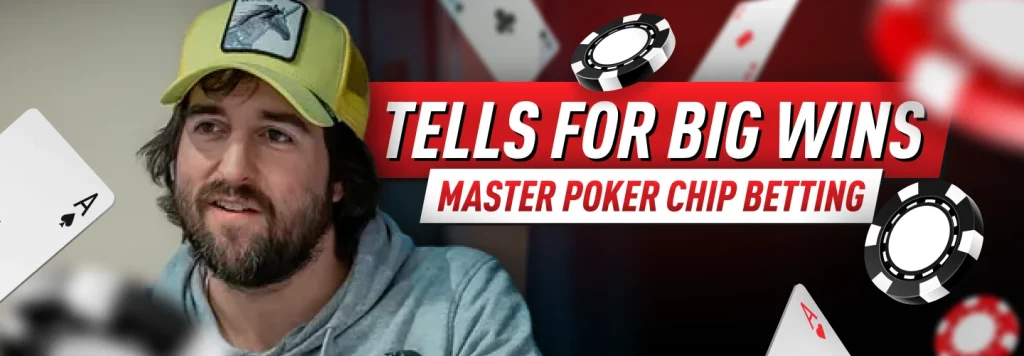
Are you tired of staring at your opponents, wondering what cards they are holding? Every summer, thousands of players head to the tables hoping to make the right reads and walk away with massive profits. However, most players today are strictly focused on math, solver outputs, and Game Theory Optimal (GTO) strategies. What if I tell you you can also look for poker chip betting tells and get an advantage from them?
Because everyone is so focused on the math, the human element of the game is being completely ignored. Human beings still leak information constantly, especially under intense pressure. By paying close attention to human psychology, you can gain a massive advantage over the competition.
After five years of researching unconscious habits at the tables, Nacho Cuesta developed the MasterPokerTells methodology. He discovered that even world-class professionals leak information through their physical actions. One of his most fascinating discoveries concerns how players construct their bets with chips.
The Evolution of Strategy and Poker Behavior
In the modern era of the game, players are taught to randomize their bluffs and calculate their equity. This means that many grinders play like robots, relying strictly on pre-flop charts and bet-sizing algorithms. Despite this mechanical approach, human psychology always finds a way to reveal the truth.
When a person is put in a high-stress environment, their unconscious poker behavior takes over. Even if a player is incredibly skilled at hiding their facial expressions, their hands and body language will often betray them. The brain has to process a lot of stress, and it naturally defaults to comforting physical habits.
Understanding this natural poker behavior allows you to look past the math. Instead of guessing if your opponent is bluffing based on statistics, you can physically see the stress in their movements.
Why Most Players Miss Live Poker Tells
When players try to get a read on their opponents, they almost always look at the wrong things. People focus on eye movements, heavy breathing, or nervous chatter. While these can be helpful, they are also the easiest habits for experienced players to hide.
Almost nobody pays attention to how a player physically handles their chips. Because this area of study is so ignored, it offers some of the most reliable live poker tells available today. Players simply grab their chips and slide them forward, completely unaware of the information they are broadcasting.
You cannot hide a leak if you do not even know it exists. That is exactly why these physical betting habits persist, even among elite professionals. If you know what to look for, these hidden live poker tells will become a goldmine for your win rate.
Microtells vs. Macrotells: Decoding Poker Hand Strength
In the MasterPokerTells system, physical reactions are divided into two main categories. The first category is microtells, which are small pieces of information that add up over a hand. On their own, microtells might not mean much, but combining several of them gives you a clear picture.
The second category is macrotells, which are massive behaviors that immediately polarize a player's range. A strong macrotell can strongly dictate a player's true poker hand strength all by itself. Betting architecture - the way chips are structured into a pile - is often a highly reliable macrotell.
By analyzing the structure of the bet, you are no longer making wild guesses. Instead, you are using a structured framework to determine your opponent's exact poker hand strength. This allows you to make hero calls or big laydowns with ultimate confidence.
What Are Poker Chip Betting Tells?
Most players simply toss chips into the middle without a second thought. However, the physical architecture of those chips is known as poker chip betting tells. It is the unconscious construction of a bet using different chip denominations.
For these tells to be valid, the player must use at least three different chip values in their bet. When multiple denominations are used, the brain has to decide how to stack them. This split-second decision is entirely driven by the player's underlying comfort level.
If you want to master poker chip betting tells, you need to observe the base, middle, and top of the betting stack. The ratio of high-value chips to low-value chips will tell you everything you need to know. Let's look at the two most common patterns you will see at the table.
Sometimes things get really wild, but most cases are much simpler than the chip stacking of CzechRaiseCharles, who even gives you a tutorial on what to do with your giant stack when you get bored:
The Perfect Pyramid: A Sign of True Confidence
The most positive physical pattern you will encounter is called the "Perfect Pyramid." This happens when a player builds a highly harmonious, balanced stack of chips. Unconsciously, they create a perfect value pyramid from the bottom up.
Why does this happen? When a player is holding a monster hand, they feel comfortable, relaxed, and safe. A relaxed brain naturally drifts toward harmony, order, and fluidity.
Here is what a Perfect Pyramid looks like when using four different chip values:
Position in Stack | Number of Chips | Chip Denomination | Total Value |
|---|---|---|---|
Bottom (Base) | 4 Chips | $5,000 (High) | $20,000 |
Lower Middle | 3 Chips | $1,000 (Medium) | $3,000 |
Upper Middle | 2 Chips | $500 (Low) | $1,000 |
Top (Peak) | 1 Chip | $100 (Lowest) | $100 |
If you see this beautifully balanced structure, watch out! It is a massive indicator of strength and confidence. Your opponent is likely holding the nuts and hoping for a call.
The Inverted Pyramid: Spotting Hidden Weakness
The exact opposite of the Perfect Pyramid is the "Inverted Pyramid." This structure is top-heavy, awkward, and completely lacks harmony. The player uses fewer high-value chips on the bottom and more low-value chips on top.
Here is an example of an Inverted Pyramid structure:
Position in Stack | Number of Chips | Chip Denomination | Total Value |
|---|---|---|---|
Bottom (Base) | 1 Chip | $5,000 (High) | $5,000 |
Middle | 2 Chips | $1,000 (Medium) | $2,000 |
Top (Peak) | 3 Chips | $500 (Low) | $1,500 |
Because the structure feels unnatural and unbalanced, it correlates with a stressed brain. The player is unconsciously broadcasting weakness, discomfort, or a heavy bluffing range. When you spot an Inverted Pyramid, it is a prime opportunity to apply pressure with a raise.
A Real-World Example: High-Stakes Triton Poker
You might be thinking that these patterns only happen in low-stakes games. However, a perfect example of the Inverted Pyramid happened during a high-stakes Triton Poker tournament. Professional player Wai Kiat Lee was caught on camera, unconsciously building a reverse pyramid.
On the turn, Kiat Lee constructed a bet using 1 chip of 100,000, 2 chips of 25,000, and 3 chips of 5,000. He was making a value bet with second pair and top kicker. However, the commentators noted that his bet was incredibly weak, and he would likely fold to any raise.
This perfectly illustrates how a player can be betting for value while simultaneously displaying underlying weakness. Even though Kiat Lee had a decent pair, his brain knew he was vulnerable. That vulnerability manifested physically in his awkward, top-heavy chip stack.
Maximizing Your Edge With Poker Chip Betting Tells
The greatest leaks in the modern game are the ones players don't even realize they have. By understanding these subtle cues, you can separate yourself from the average grinder. It completely changes the way you process live information.
Context is always important, so make sure to establish a baseline for your opponents. If a player always stacks their chips in a weird way, the tell loses its value. You are looking for sudden deviations from their normal routine when the pot gets big.
Start watching your opponents closely during your next poker session. Pay attention to their betting architecture, look for those poker chip betting tells, and watch your profits soar!
Via pokernews.com
About the Editor

Beus Zsoldos is Somuchpoker's Senior Copywriter and Player Stories Editor, covering WSOP color moments, player profiles and poker personalities for the site's Stories section. She has spent more than 20 years around the game, first as a player, then as a live tournament director and localization manager for a major online poker room, before moving into full time poker writing.
Related News
 Side PotStories
Las Vegas Casino Photography Policy: Myth vs. Reality
Curious if taking photos in a casino is illegal? Discover the truth about the Las Vegas casino photography policy and how to safely snap your next selfie.
 Side PotLive PokerStories
The Ultimate Showdown: A Guide to the $250K WSOP Paradise Pro-Am
Get ready for the exciting $250,000 WSOP Paradise Pro-Am in the Bahamas! Learn the rules, schedule, and format of this 2026 gold bracelet event.
 Side PotStories
The Future of High Stakes: Inside the Deepstack Poker Show
Get ready for the new Deepstack poker show. Learn how advanced AI and poker heart rate monitoring will reveal the tension in high stakes poker.
 Side PotStoriesWSOP
WSOP 2026 - Moment of the Day - 15 June - Can you be quiet?
Martin Kabrhel and Martin Zamani shouting at each other, "Can you be quiet?" might be one of the worst nightmares of tournament personnel.
 WSOPSide PotStories
WSOP 2026 - Moment of the Day - 6 June - Family pot
Family pot of Kristen and Alex Foxen resulted in a sneak peak at the $25,000 event - Moment of the Day for 6 June WSOP 2026.
 Side PotStories
Rumours Confirmed: Caesars Entertainment Is Up for Sale!
The latest casino news shows that the massive $17.6 billion deal, as the Caesars Entertainment acquisition had been finalized, has drawn major attention.