Tom Dwan’s Biography: How “durrrr” Became a High-Stakes Poker Star

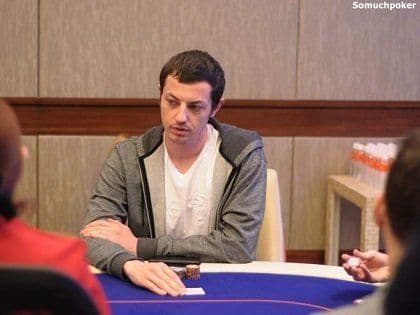
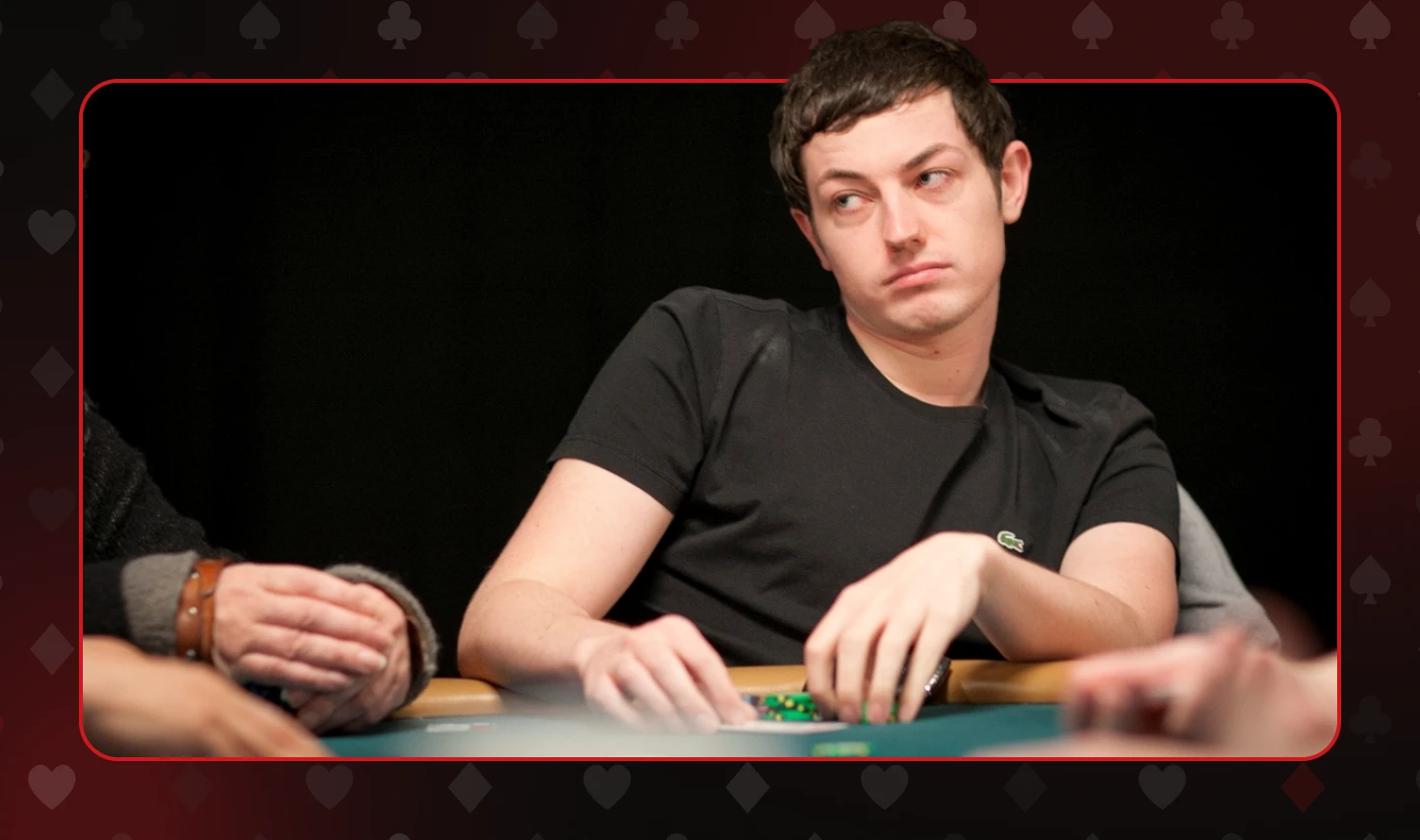
Some poker fans know him as “durrrr,” others as Tom Dwan. Both names belong to the American professional who rose through the online ranks before becoming a familiar face in televised high-stakes cash games.
Born on July 30, 1986, in Edison, New Jersey, Dwan built his reputation playing no-limit hold’em and pot-limit Omaha against some of the strongest opponents in the game. His career took him from a small online deposit and engineering studies at Boston University to the Full Tilt tables, High Stakes Poker, and the private games of Macau.
Dwan’s public image often centers on enormous pots and unconventional bluffs. But how did his poker career begin, and what shaped the player behind those headline-making hands?
Tom Dwan | Key Facts |
|---|---|
Born | July 30, 1986 |
Hometown | Edison, New Jersey, United States |
Best-known online screen name | durrrr |
Education | Studied engineering at Boston University before leaving to pursue poker |
How Did Tom Dwan Start Playing Poker?
Dwan began playing online at his parents’ computer, starting with a $50 deposit on Paradise Poker. As he explained to CardPlayer in 2009, the money came from his Christmas savings. His father made the deposit for him, but Dwan doubted he could easily persuade him to reload the account if he lost it.
He started with $6 sit-and-go tournaments, eventually building his bankroll to around $300 before moving into cash games. An early milestone was winning $100 in a day at $0.25/$0.50 no-limit hold’em, an amount he still remembered years later.
What is Tom Dwan's Net Worth? |
|---|
This biography is the first of a two-part profile of Tom Dwan. Part two will explore his later career in live high-stakes poker, and what tournament records, televised pots and reported cash-game results can tell us about his earnings and net worth. |
As his bankroll grew, he moved to PokerStars and began playing several tables at once. He spent considerable time reviewing his decisions, trying to understand which choices were making him money and which needed to change.
He also acknowledged that good fortune had helped him move up quickly, allowing him to win in games where he might otherwise have struggled.
Dwan later recalled that players had fewer study resources available, but the games were also softer. Much of his learning came through playing and examining his own decisions.
From the Classroom to a Poker Career
Long before he was questioning an opponent’s bets, Tom Dwan was questioning his teachers. Getting the right answer in mathematics was not always enough: he was expected to show his work in a particular way, and he wanted to know why.
Recalling those exchanges in his I Am High Stakes Poker interview with Lee Davy, Dwan described being told that he would not always have a calculator available. Even then, he found that explanation unconvincing. He could follow rules, but he wanted them to make sense.
When he left New Jersey to study engineering at Boston University, poker was already part of his life. He was earning enough to consider a professional career, although leaving his studies was far from an immediate or obvious decision.
By the end of his freshman year, missed classes and exams had caught up with him. He recalled having to attend summer school while continuing to spend more time at the online tables.
The question was becoming practical: were his poker results strong enough to justify choosing a different future?
Dwan later described examining his results at $2/$4 no-limit hold’em, where a standard 100-big-blind buy-in was $400. Seeing how many buy-ins he had won helped him decide whether those results justified leaving university.
He eventually left to pursue poker professionally, but his education continued at the tables.
Why Is Tom Dwan Called “durrrr”?
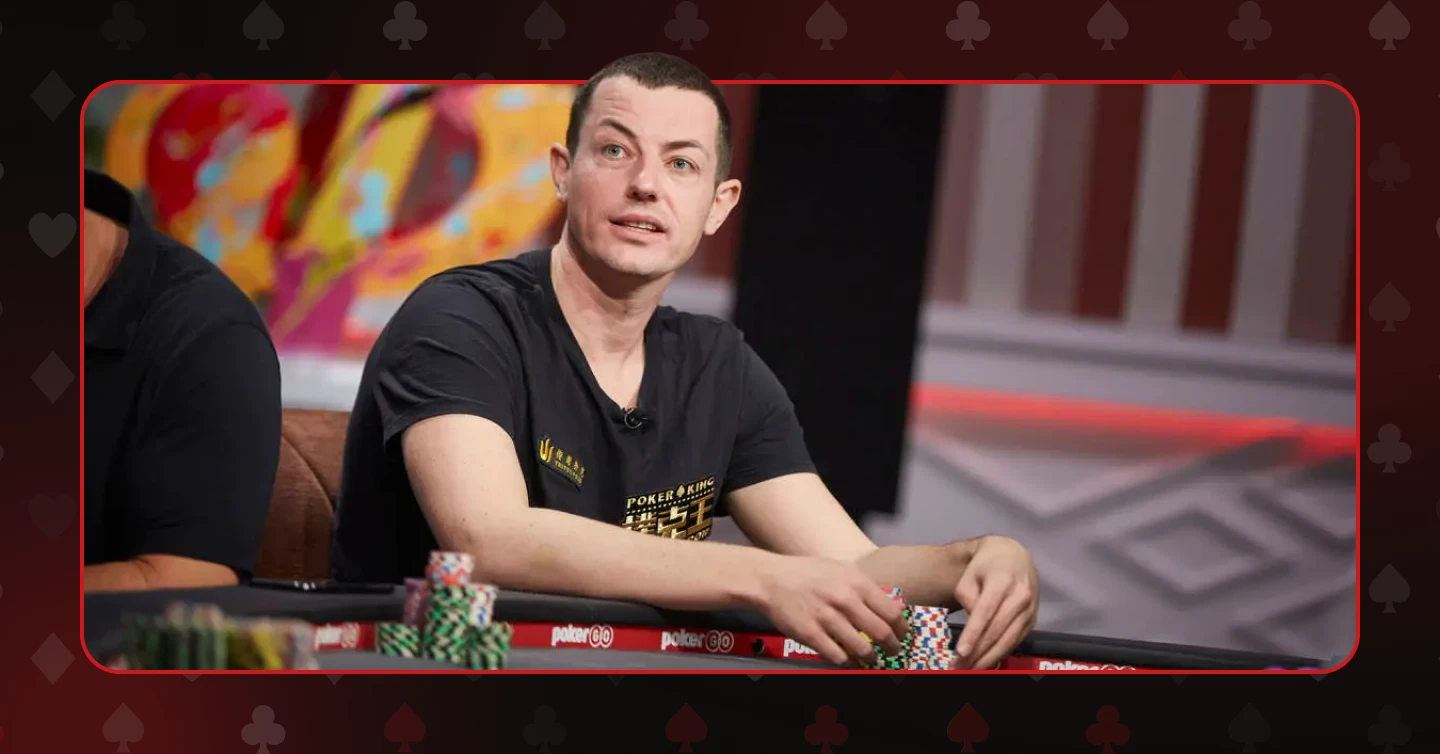
Tom Dwan’s nickname “durrrr” comes from an online poker screen name he chose because he wanted something goofy. He used variations of the name with different numbers of “r”s across poker sites, but it became most closely associated with his high-stakes play on Full Tilt Poker.
What began as a quickly chosen online handle eventually became the name associated with his televised appearances and his public heads-up challenge.
Learning the Game: Friends, Feedback and Moving Up
Dwan’s early progress came largely through his own efforts, but discussing hands with other players accelerated his development. David Benefield, Phil Galfond, Di Dang and Hac Dang became some of his most important poker friends.
Dwan later recalled being hesitant to share strategic ideas, particularly with players he might face at the tables. With this group, however, he felt the discussions were honest and mutually useful.
While helping Di Dang learn pot-limit Omaha, Dwan found himself explaining why he played certain situations one way rather than another. Answering those questions sometimes revealed alternatives he had not considered himself.
His friendship with Benefield also extended beyond poker discussions. In 2006, the two bought a house in Fort Worth, Texas, as both were moving into increasingly expensive games.
The move up was not a steady climb. CardPlayer’s 2009 profile described a four-month downswing during which Dwan lost more than $2 million. His bankroll had previously reached roughly $3 million while he was playing as high as $200/$400.
He attributed the losses to both poor play and bad luck. To rebuild, he moved back down to $25/$50, still substantial stakes, but far below the games he had been playing.
Early Tournament Results Beyond the Online Tables
While Dwan was building his reputation online, live tournaments offered a different test. Before turning 21, he could enter events in Europe while still being too young to play in Las Vegas casinos.
In 2005, aged 19, he finished 12th in the EPT London Main Event for £7,000. It was an early result on an international tour, although cash games remained his main focus.
He turned 21 in July 2007. Later that year, he reached the televised final table of the WPT World Poker Finals at Foxwoods, finishing fourth for $324,244.
More results followed in 2008. He finished runner-up in a $5,000 no-limit hold’em event at the Borgata Winter Open. At his first World Series of Poker, he finished seventh in the $10,000 World Championship Mixed Event and eighth in the $5,000 No-Limit 2-7 Draw with Rebuys.
In 2010, he came within one place of a WSOP bracelet, finishing second in a $1,500 no-limit hold’em event for $381,885.
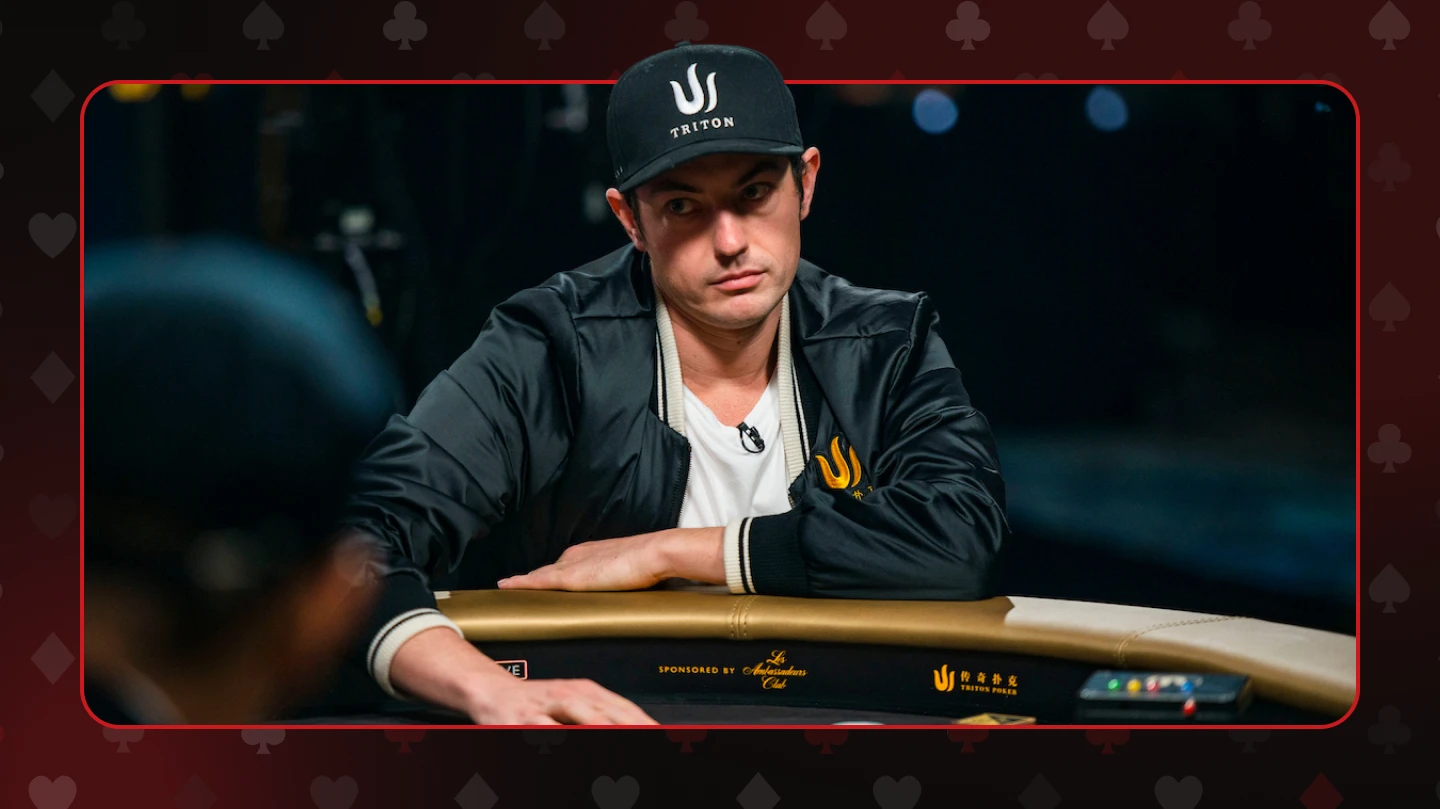
Tom Dwan’s Early Live Tournament Results
Year | Tournament | Finish |
|---|---|---|
2005 | EPT London Main Event | 12th |
2007 | WPT World Poker Finals, Foxwoods | 4th |
2008 | Borgata Winter Open $5,000 No-Limit Hold’em | 2nd |
2008 | WSOP $10,000 World Championship Mixed Event | 7th |
2008 | WSOP $5,000 No-Limit 2-7 Draw with Rebuys | 8th |
2010 | WSOP $1,500 No-Limit Hold’em | 2nd |
These performances showed that Dwan could compete beyond his familiar online cash games.
From Online “durrrr” to Televised Poker
Online spectators knew “durrrr” through his screen name and the money moving across the Full Tilt tables. Television put a face to the name and allowed viewers to watch him challenge players they had followed for years.
Dwan joined High Stakes Poker for its fifth season, which began airing in 2009. Sitting alongside Doyle Brunson, Daniel Negreanu and Barry Greenstein, he quickly became one of the table’s most active players.
One hand against Greenstein and reigning WSOP Main Event champion Peter Eastgate captured the pressure he could create.
The hands:
Tom Dwan: Q♣ T♣
Barry Greenstein: A♥ A♣
Peter Eastgate: 4♥ 2♦
How the hand unfolded:
Preflop: Greenstein raised to $2,500. Dwan and Eastgate were among the players who called.
Flop — T♦ 2♣ 2♠: Dwan had tens and deuces, Greenstein had aces and deuces, and Eastgate held trip deuces. Greenstein bet $10,000. Dwan raised to $37,300, and both Eastgate and Greenstein called.
Turn — 7♦: Eastgate and Greenstein checked. Dwan bet $104,200. Eastgate folded his trips, and Greenstein folded his aces.
Result: Dwan won without a showdown. No river was dealt.
Eastgate later explained that he was not thinking only about the turn bet. With deep stacks still in play, Dwan could follow it with a much larger river bet. By betting into two opponents, Dwan also made his bluff more convincing. Viewers could see what the players could not: both opponents had folded stronger hands.
The durrrr Challenge and the Isildur1 Battles
Television brought Dwan’s aggressive style to a wider audience. In 2009, he also backed his confidence with a public offer to the poker world.
What Was the durrrr Challenge?
The durrrr Challenge was Tom Dwan’s 2009 offer to play 50,000 hands of heads-up no-limit hold’em or pot-limit Omaha against any opponent except his close friend Phil Galfond, at stakes of $200/$400 or higher.
The cash-game results were only part of the proposition. Dwan offered an additional side bet on unequal terms:
If his opponent finished ahead: Dwan would pay an extra $1.5 million.
If Dwan finished ahead: his opponent would pay him $500,000.
The side bet was separate from the money won or lost at the tables.
Patrik Antonius was the first to accept. Their match began in 2009, and Dwan eventually built a substantial lead. Antonius later bought out of the challenge before they reached the scheduled 50,000 hands.
Daniel “Jungleman” Cates stepped forward in 2010. This time, Dwan fell behind. Cates built a lead of around $1.2 million, but the match stalled well short of the agreed 50,000 hands.
Black Friday interrupted play in 2011. Although the pair subsequently resumed, they never completed the match. Delays and disagreements over the outstanding arrangements developed into a prolonged public dispute.
In June 2025, Dwan and Cates appeared together in a GTO Wizard video to discuss their differences. The conversation signaled an easing of their personal conflict; it did not mark the completion of the original match.
Facing Isildur1
The durrrr Challenge was a formally arranged contest. Dwan’s encounters with “Isildur1,” the online player later identified as Viktor Blom, were a separate series of high-stakes battles.
In late 2009, their sessions became some of the most closely followed action on Full Tilt Poker. Dwan, already accustomed to facing elite opponents, suffered heavy losses against the Swedish player.
Looking back in his 2012 BLUFF interview, Dwan acknowledged that Blom had been better than he initially expected. He had nevertheless welcomed the action and believed the games were worth playing.
He also felt bad luck had contributed to his losses, while acknowledging that its precise role was debatable.
After Black Friday, Dwan spent more time in live high-stakes games, including the private tables of Macau. His career continued, but much of the action became harder for the public to follow.
Social Media & Online Presence
About the Editor

Zsolt is SoMuchPoker’s Content Writer and Interview Specialist, exploring poker beyond the cards and the tables through stories, interviews, profiles, historical pieces and curiosities. He focuses on the people, places and ideas that have shaped the game, while looking at the wider world around poker, how it has evolved, what makes its culture unique, and how the people within it think, compete and make decisions.