

Poker for Beginners - The Complete History of Poker: From Ancient Roots to the Digital Age

Poker is far more than just a card game. It is a thrilling blend of psychological warfare, mathematical strategy, and the unpredictable element of chance. From dimly lit saloons in the Wild West to multi-million-dollar online tournaments, poker has captured the imagination of players around the globe. But how did a simple game of bluffing and betting become a worldwide phenomenon?
Understanding the history of poker requires stepping back in time. The game didn't just appear overnight. Instead, it was shaped by centuries of cultural exchanges, wars, and technological advancements. In this comprehensive guide, we will journey through the rich history of the game, exploring its earliest precursors, its explosion across the American frontier, and its modern-day dominance. And then comes the modern-day poker boom, powered by the Moneymaker Effect.
Where Did Poker Originate? The Earliest Ancestors
One of the most common questions newcomers ask is: Where did poker originate? The truth is that there is no single inventor or definitive moment of creation. The game is a melting pot of various ancient betting games that evolved over hundreds of years. To trace the true origins of poker, we have to look at several global influences that laid the groundwork for the modern game.
The Persian Connection: As-Nas
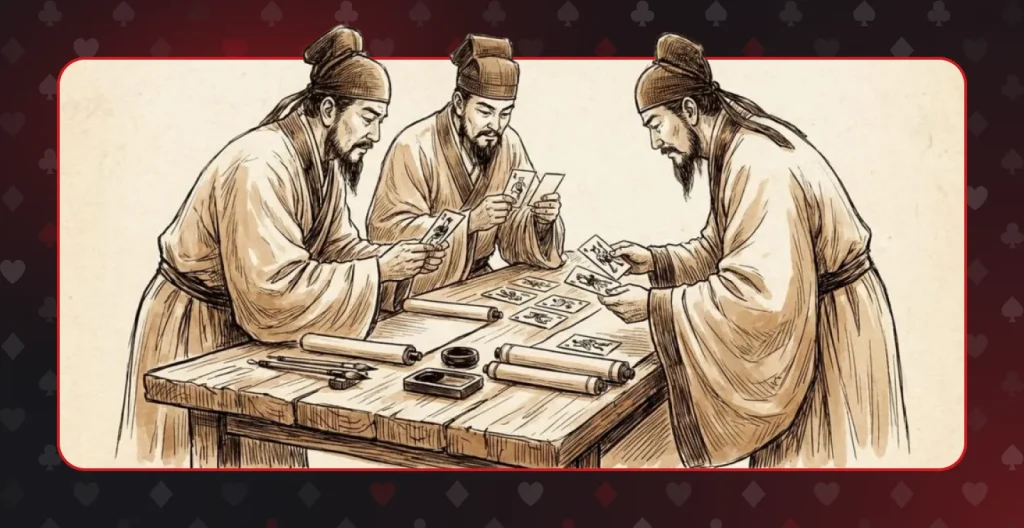
Many historians point to the 16th-century Persian card game known as As-Nas as one of the earliest direct ancestors of poker. Played with a 25-card deck containing five distinct suits, As-Nas featured rules that closely mirror today’s game. Players would engage in rounds of betting, aiming to form simple combinations like pairs, two pairs, or three-of-a-kind.
More importantly, As-Nas introduced the concept of bluffing. Players had to decide whether to match bets or raise them without drawing new cards, making psychological dominance just as important as the cards in their hand.
European Influences: Primero, Poque, and Pochen
While the Persian influence is notable, the European roots of the game are undeniable. During the 16th century Renaissance, a Spanish game called Primero gained immense popularity. Primero involved dealing three cards to each player, and players could bluff or increase their bets while holding poor cards. Because of this betting structure, Primero is often referred to as the "mother of poker."
As the centuries progressed, Primero gave rise to local variations across Europe. In the 17th century, the French began playing a game called Poque, while the Germans developed a highly similar game known as Pochen. Both games emphasized the art of the bluff. When French colonists eventually sailed across the Atlantic to settle in North America, they brought Poque with them. This transatlantic journey marked a major turning point in the origins of poker.
The Evolution of Poker in America
If Europe and Asia provided the ingredients, America was the kitchen where the game was cooked to perfection. The evolution of poker accelerated rapidly in the early 19th century, thanks to a unique blend of cultures, expanding territories, and the American pioneering spirit.
The New Orleans Melting Pot
To specifically answer this question: where did poker originate in its modern form, one must look to New Orleans, Louisiana. In the 1820s, this bustling port city was a melting pot of French, Spanish, and American cultures. French colonists introduced Poque to the local saloons and gambling halls. Over time, the name was anglicized to "poker."
English actor Joseph Cowell recorded one of the earliest written accounts of poker being played in New Orleans in 1829. In these early games, four players used a stripped-down, 20-card deck. The goal was simple: bet on who held the strongest five-card hand. There were no drawing or community cards, just raw betting and bluffing.
Steamboats and the Mississippi River
As commerce grew, giant steamboats began traveling up and down the Mississippi River, carrying goods, merchants, and wealthy travelers. These riverboats also became floating casinos. Poker proved to be the perfect way to pass the long, tedious hours on the water.
During this era, the game underwent significant structural changes:
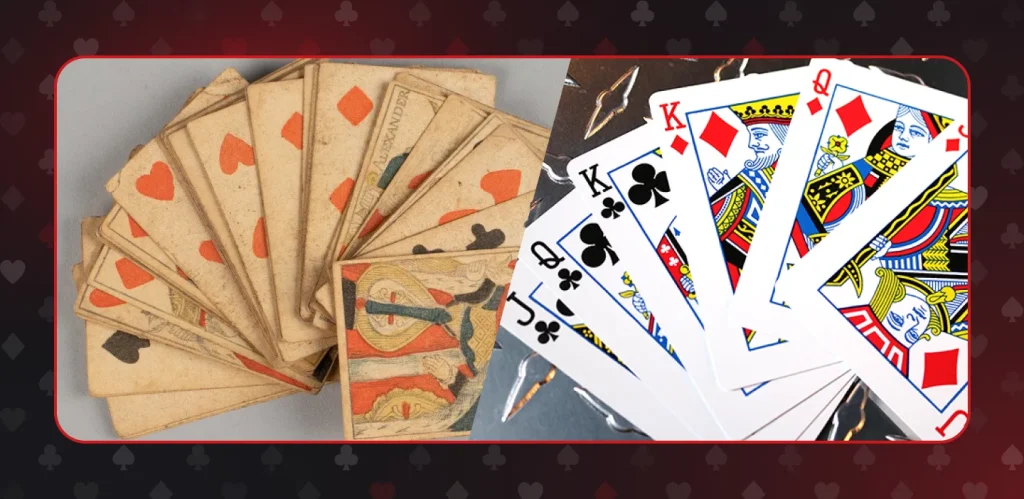
The 52-Card Deck: To accommodate more players at a single table, the 20-card deck was replaced by the standard 52-card French deck.
New Hand Rankings: With more cards in play, new hand combinations, such as the "flush" (five cards of the same suit), were introduced to the game.
The "Draw": First referenced in the 1850s, the concept of "Draw Poker" allowed players to discard cards and draw new ones to improve their hand. This added an entirely new layer of strategic depth.
The Civil War and the Wild West Era
The American Civil War (1861–1865) played an unintentional but massive role in the evolution of poker. Soldiers on both sides of the conflict played the game in their camps to pass the time. When the war ended, these veterans returned home, taking poker to every corner of the expanding United States.
By the late 19th century, poker had become synonymous with the Wild West. Saloons in mining towns and frontier settlements hosted endless games of Stud and Draw poker. The era birthed legendary icons and lore that are still celebrated today:
Wild Bill Hickok: The legendary lawman and gambler was famously shot in the back while playing poker in Deadwood, South Dakota, in 1876.
The Dead Man's Hand: At the time of his death, Hickok was holding two pairs: black aces and black eights. To this day, this specific hand is known as the "Dead Man's Hand".
The Railroad Expansion: As the transcontinental railroad connected the country, poker traveled with it, cementing its status as America's national card game.
The Birth of Modern Poker
The 20th century transformed poker from a rugged frontier pastime into a structured, globally recognized sport of skill. This era saw the introduction of standardized rules, new game variants, and the glamor of Las Vegas.
Standardizing the Rules
For a long time, poker rules varied drastically from town to town. If you wanted to play, you had to learn the local "house rules." However, as the game grew, the need for standardization became apparent. Books like Hoyle's Rules of Games were updated to include definitive rules for poker, hand rankings, and betting structures. This standardization allowed players from different regions to sit at the same table and play a fair, uniform game.
The Rise of Texas Hold’em
While Five-Card Draw and Seven-Card Stud dominated the early 20th century, a new variant was brewing in the background. According to the Texas State Legislature, the game of Texas Hold'em was officially invented in the small town of Robstown, Texas, in the early 1900s.
Texas Hold'em introduced "community cards." Instead of only relying on the cards dealt to their hand, players received two private "hole cards" and shared five community cards dealt face-up in the center of the table. This format drastically increased the strategic complexity of the game, as players had to calculate probabilities and predict their opponents' hands based on shared information.
In 1963, Texas Hold'em made its way to Las Vegas. Professional players like Doyle Brunson and Amarillo Slim quickly realized the game's potential, and it soon replaced Stud as the favored game of high rollers.
Las Vegas and the World Series of Poker (WSOP)
The most pivotal moment in the modern history of poker occurred in 1970 when casino owner Benny Binion invited the world's best players to the Horseshoe Casino in Las Vegas for the first-ever World Series of Poker (WSOP).
Initially, the WSOP was just a handful of players voting on who the best player was. However, it quickly evolved into a freezeout tournament. By making the main event a $10,000 buy-in No-Limit Texas Hold'em tournament, Binion established the pinnacle of poker achievement. Winning the WSOP Main Event bracelet became the ultimate dream for every poker player.
A Brief Poker Timeline
To help visualize how the game developed over the centuries, here is a quick poker timeline outlining its major milestones:
Year / Era | Milestone in the History of Poker |
|---|---|
16th Century | The Persian game As-Nas and the Spanish game Primero introduce basic betting and bluffing mechanics. |
17th Century | The French play Poque and the Germans play Pochen, refining the rules of early card-vying games. |
1829 | Actor Joseph Cowell documents a 20-card game of "poker" being played in New Orleans, Louisiana. |
1850s | The 52-card deck becomes standard; the "Draw" and the "Flush" are introduced on Mississippi riverboats. |
1861–1865 | The American Civil War spread poker across the US as soldiers played in their camps. |
1876 | Wild Bill Hickok is killed holding Aces and Eights, forever known as the "Dead Man's Hand". |
Early 1900s | Texas Hold'em was invented in Robstown, Texas, introducing community cards to the game. |
1970 | Benny Binion hosts the first World Series of Poker (WSOP) in Las Vegas, Nevada. |
1998 | The cult-classic poker movie Rounders is released, sparking mainstream interest in Texas Hold'em. |
2003 | Amateur Chris Moneymaker wins the WSOP Main Event, igniting the global "Poker Boom". |
The Poker Boom and the "Moneymaker Effect"
If you look at any comprehensive poker timeline, the year 2003 stands out as a seismic shift in the game's popularity. This era is widely referred to as the "Poker Boom".
Prior to 2003, poker was growing steadily, aided by the invention of under-the-table "hole-cams" that allowed TV audiences to see the players' hidden cards. This transformed poker into a highly entertaining spectator sport. Viewers could finally see the bluffs, the math, and the dramatic tension unfold in real time.
However, the true explosion occurred thanks to an unassuming amateur player from Tennessee with the incredibly fitting name of Chris Moneymaker. An accountant by trade, Moneymaker entered an $86 online satellite tournament on PokerStars. He won the satellite, earning a $10,000 seat at the 2003 WSOP Main Event.
Against a massive field of seasoned professionals, Moneymaker bluffed and battled his way to the final table, eventually defeating poker pro Sam Farha heads-up. He walked away with a life-changing $2.5 million prize.
The media dubbed this the "Moneymaker Effect". The fairy-tale narrative that an average person could invest $86 online and become a multi-millionaire world champion captivated the public. Almost overnight, millions of people flocked to casinos, home games, and online platforms to try their hand at Texas Hold'em.
The Digital Age: The Online Poker Revolution
The Moneymaker Effect wouldn't have been possible without the advent of the internet. In the late 1990s and early 2000s, online poker revolutionized the industry.
Online platforms offered players unprecedented convenience. You no longer had to travel to a casino or gather friends for a home game; you could play from your living room at any hour of the day. Online poker allowed players to compete in multiple games simultaneously (multi-tabling), meaning players could see more hands in a single month online than a live pro might see in an entire lifetime.
This rapid volume of play forced poker strategy to evolve at a breakneck pace. Players began utilizing software to track statistics, calculate complex odds, and refine their play using Game Theory Optimal (GTO) strategies.

Today, poker continues to thrive globally. It is recognized as a profound "Mind Sport" by organizations like the International Mind Sports Association (IMSA). Whether played in a high-stakes Macau casino, a friendly Friday night home game, or on a smartphone app, poker's intricate balance of skill, psychology, and chance ensures it will remain relevant for generations to come.
Conclusion
The history of poker is a testament to human ingenuity and our universal love for competition. What started as a simple parlor game of vying over cards has evolved into a highly respected, multi-billion dollar mind sport. From the Persian Empire and the steamboats of the Mississippi River to the dazzling lights of Las Vegas and the global connectivity of online platforms, poker has continuously adapted to the times. The next time you sit down at the felt and peel back your hole cards, remember that you are participating in a rich, centuries-old tradition that is still writing its history today.
Resources:
World Poker Federation (WPF) - "The History of Poker: Its Origins and Development Through Time"
Poker.org - "The history of poker"
PokerStars Learn UK - "Origins, history and evolution of poker: from As-Nas to Texas Hold'em"
Encyclopedia Britannica - "Poker: Principles, Types, Rules, Strategy, & History"
About the Editor

Beus Zsoldos is Somuchpoker's Senior Copywriter and Player Stories Editor, covering WSOP color moments, player profiles and poker personalities for the site's Stories section. She has spent more than 20 years around the game, first as a player, then as a live tournament director and localization manager for a major online poker room, before moving into full time poker writing.
Related News
 Live PokerLifestyle
Off the Felt in Sanya: The Best Things to Do Away From the CPG Tables
Discover six outdoor things to do in Sanya away from CPG, from paddleboarding and surfing to rainforest walks and canyon stream trekking.
 LifestyleAsiaStories
Asia's Poker Revolution - Streams on the Felt: The Ultimate Guide to Asian Gambling Series
Discover the ultimate guide to Asian gambling series and shows. From Korean Asian casino dramas to intense Japanese gambling anime, explore high-stakes TV.
 Live PokerLifestyle
Is There Really Poker in China? Inside the Country’s Growing Tournament Scene
Is there really poker in China? Discover how CPG uses online qualification and organised competition to grow the country’s tournament scene.
 LifestyleAsiaStories
Asia's Poker Revolution - Cinema on the Felt: The Ultimate Guide to Asian Gambling Movies
Discover the ultimate guide to Asian gambling movies. From Hong Kong classics to intense Korean casino thrillers, explore high-stakes cinema on the felt.
 LifestyleStories
Poker in Pop Culture - Kakegurui and Poker: Why the Bet Series Appeals to Poker Fans
Discover why Kakegurui and Netflix's Bet appeal to poker fans through bluffing, psychology, risk-taking, and the strategic mind games that define both worlds.
 LifestyleStories
Poker in Pop Culture - Reality Poker TV Shows
Discover the best poker TV shows, from High Stakes Poker to Poker After Dark. Relive the poker boom and the unforgettable moments that captivated millions.