

Poker for Beginners: Transitioning from No Limit Hold’em to Pot Limit Omaha

Texas Hold’em has long been the go-to game for most online poker players. In recent years, however, we’ve seen some changes, as games have gotten tougher to beat, even at lower stakes. Many players are looking for an alternative, and Pot Limit Omaha seems to be the top choice.
In 2026, many people are transitioning from NLHE to PLO in search of greener pastures. Resources for PLO are still not as widely available, making games significantly softer, resulting in higher win rates across the board.
In this article of our Poker for Beginners series, we'll look into the key differences and give you some useful tips for moving to PLO from No Limit Hold’em.
Although the two variations seem quite similar on the surface, there are significant differences between them, and those who make the move without proper preparation often find themselves in hot water.
In this guide, we bring you simple but effective tips for moving to PLO from No Limit Hold’em. These are some basic steps that you’ll need to go through if you want to find success in the Pot Limit Omaha arena. Once you get your basics down, you can move on to more complex strategies.
Tip #1: Preflop Hand Selection Is Paramount in PLO
If you’re transitioning from NLHE to PLO but don’t have much experience in Omaha, you may be thinking this goes without saying. Proper hand selection is fundamental in Hold’em as well.
However, many new players fall into a trap of playing way too wide in PLO. With four hole cards instead of two, it may seem like a good idea to play much wider before the flop. This is, simply put, incorrect.
Hands that do well in PLO have certain important properties, such as:
All four cards are working together
Potential to make the nuts
No significant reverse implied odds risks
So, what does this mean in practice? Essentially, you’re looking for hands that are fairly easy to play on the flop and beyond.
You want all four cards to work together, so, for example, a hand like 8sTsJhKh is a decent starting hand. You have straight and flush opportunities, and all four cards work together to some extent.
A hand like the one above can make the nuts, as you can get the best possible straight, various full houses, and occasional quads. However, it also has some risks, because flushes you make will not be nut flushes.
So, when talking about suited hands, you prefer to have at least one pair of cards suited to the ace, for example, As6s7h9h. This is a solid hand that can make nut flushes and some nut straights, although your straights will be vulnerable to higher straights.
When talking about reverse implied odds, you want to avoid hands that can get you in trouble. Small pocket pairs, such as 22 – 66, don’t do that well in PLO, because often, when you flop a set, you’ll run into a higher set, plus all the other combos that your opponents can improve to.
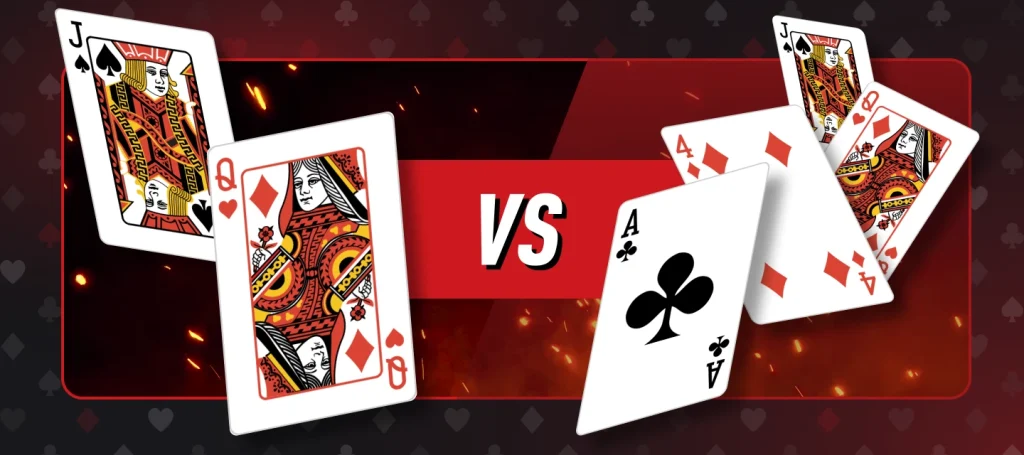
If you’re transitioning from No Limit Hold’em to Pot Limit Omaha, you should start with a more conservative approach. Stick to the strongest starting hands, as that approach will make navigating flops, turns, and rivers fairly easy. As you play more and gain experience, you can start expanding your preflop hand selection.
Here are a few examples of strong PLO starting hands:
{As}{Ah}{Ks}{Kh} – one of the best possible hands
{Th}{Jh}{Qc}{Kc}
{9s}{Ts}{Jd}{Qd}
{Kd}{Ks}{Qd}{Qs}
{As}{Ks}{Jh}{Qh}
{7s}{8s}{9d}{Td}
Tip #2: Don’t Overplay Your Hands Before the Flop
Pot Limit Omaha is a flop game, and that’s a big change from Texas Hold’em. In Hold’em, when you’re dealt a premium, like pocket aces, pocket kings, or ace-king suited, you usually want to pile as much money as possible before the flop.
In PLO, however, hand equities run much closer, so you shouldn’t be as eager to get chips into the pot without seeing the flop. Sure, you can still do it with strong pocket aces and the best of rundowns, but, beyond that, you need to be ready to play way more flops.
This is why you won’t see too much 4-betting take place in PLO. Usually, when someone 3-bets, there will be one or two callers, and they will take it to the flop.
To demonstrate just how close the equities are, let’s look at two hands:
{Ac}{Ad}{Kc}{Kd} – an absolute monster of a hand
{Js}{Ts}{6h}{5h} – a mediocre hand at best
Before the flop, the monster hand has barely over 61% equity, and, if you’re playing even against semi-competent players, this will be almost your best-case scenario.
Of course, there is nothing wrong with getting it in as a 61% favorite, which is why you can play your best hands fast, but, beyond that, you’ll be taking many more flops and trying to out-maneuver your opponents.
Tip #3: Avoid Playing Out of Position as Much as Possible
Position is important in Hold’em, but it is way more important in Omaha. This is one of the most important tips for moving to PLO from No Limit Hold’em that you need to take to heart before you play even a single hand.
Getting involved out of position, especially as you’re learning the ropes, will get you into many tricky situations. Whether you have a strong hand or are drawing to the nuts, you will struggle to find the best way to play your hand.
In position, you’ll have a much easier time, as even experienced players can’t do that much when they’re first to act. They don’t have the benefit of seeing your actions, so they have to tread carefully.
This ties in to the previous tip, where we talked about having to play more flops, turns, and rivers. Quite often, you’ll be very deep stacked, and mistakes you make on any individual street will compound. Out of position, you’ll be making more mistakes, especially as a beginner.
So, to start with, stick to very tight opening ranges from early positions and expand your hand selection as you get closer to the button. On the button, you can afford to play many more hands, because you’ll always be in an absolute position, and that’s the kind of advantage that trumps almost everything else in PLO.
Of course, you’ll still have to defend your big blind quite wide, simply because you’ll be getting good pot odds, and hand equities do run close, so over-folding isn’t the way to go. Navigating tricky big blind spots falls outside of this guide on transitioning from No Limit Hold’em to Pot Limit Omaha, but it’s one of the things you’ll need to tackle fairly quickly after you’re done with the basics.
Tip #4: Big Draws Are Very Powerful in PLO
One of the most significant aspects of transitioning from NLHE to PLO is understanding how powerful big draws can be in Pot Limit Omaha.
Strong draws are powerful in Hold’em, too, but in certain PLO spots, you’ll much rather have a big draw than a made hand. This virtually never happens in Texas Hold’em.
Let’s say you get to a flop of {9h}{8s}{Kh}. Would you rather have a hand like {Kd}{9d}{5c}{4c} for top two pair (but not much potential to improve beyond making a full house) or a hand like {Ah}{Js}{Ts}{5h}?
Despite the fact that the two pair hand is technically ahead at the moment, you might be surprised to see how the equities stack up:
{Kd}{9d}{5c}{4c} – 41,6% to win by the river
{Ah}{Js}{Ts}{5h} – 58.4% to win by the river
This gives you the ability to play your big draws very aggressively, knowing that you’ll often have a mathematical advantage over many of your opponent’s holdings, and, even in the worst of cases, where they have a top set and maybe holding a couple of your outs, you’ll be close to flipping.
Many new PLO players approach these spots too conservatively, preferring to call and try to make their hand. This is not the best approach, for a number of reasons:
By betting and raising, you give yourself a chance to win the pot without having to make your draw.
You get to build a big pot while you have the most equity.
Once a scare card hits, you won’t be able to extract value from your opponent.
Adopting this style of play will take some time if you’re coming from a Hold’em background, but the best PLO players in the world are very aggressive when they need to be. Playing a weak-passive style is an even bigger mistake in Omaha than it is in Texas Hold’em.
Tip #5: Get Used to Big Swings
Variance is a natural component of poker, but different variations have different levels of variance. If you thought swings in Hold’em are bad, wait till you see what PLO has in store for you.
Because of all the things we’ve covered so far, i.e., equities running closer, more pots going multi-way, and players playing more aggressively with their big made hands and their strong draws, any individual PLO session can result in a big win or a big loss.
When things are going your way, this is great, and it will feel like PLO is the best game in the world. However, when you find yourself on the wrong side of variance, you could be down 10+ buy-ins before you know it. This is just the nature of the beast.
Thus, the importance of proper bankroll management is even more emphasized in Pot Limit Omaha.
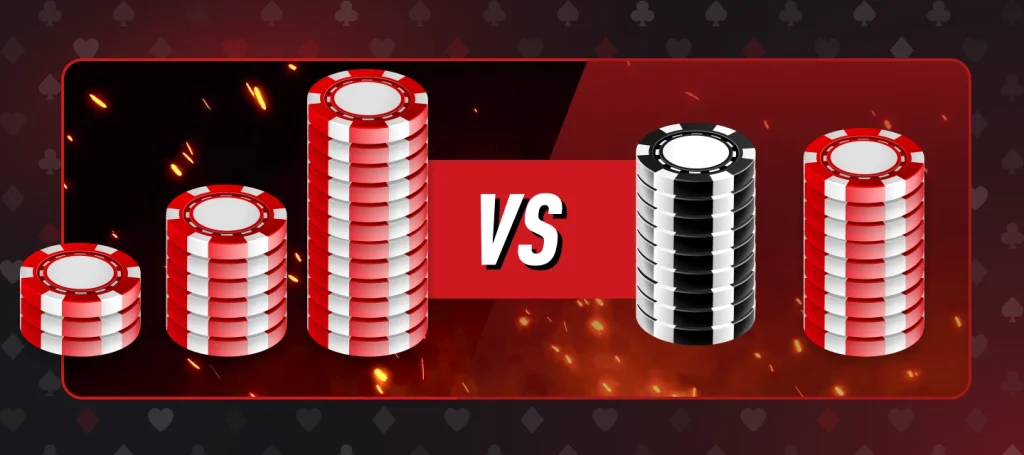
In Hold’em, you might be happy to have 50-60 buy-ins for your particular level, especially if you’re a solid player. For PLO, I’d say that you need at least 100 buy-ins to be comfortable, and 150 is even better.
This is, of course, presuming you’re a winning player. If you can’t beat the games, no amount of bankroll management will help you.
Adopting a more conservative bankroll management style will allow you to play the game the way it is meant to be played. You won’t be afraid to be aggressive when it is required or to make big calls in spots where it’s likely your opponent missed on the river.
At the lowest of stakes, you can probably get away with having a shallower bankroll, but as soon as you start moving up and going against better players, you’ll need all the buffer you can afford.
Is transitioning from NLHE to PLO Worth the Hassle?
As you may have heard elsewhere and as you can probably conclude from this guide, transitioning from No Limit Hold’em to Pot Limit Omaha isn’t that easy. There is a lot to learn before you can confidently consider yourself a winning player, even if you are pretty good at Texas Hold’em.
While some skills are certainly transferable, your Hold’em knowledge alone won’t be enough.
So, you might be wondering if it’s worth the hassle. Should you keep grinding NLHE and making a small profit after rakeback, or would you be better served spending some time learning PLO?
The answer depends on too many factors to cover here, but, from a strictly win-rate point of view, you’ll be able to win much more money in Pot Limit Omaha once you get good at it. The game hasn’t been nearly as solved; there aren’t that many free resources out there, and, because of its swingy nature, it’s more attractive to gamblers who are just looking to blow off some steam.
On the flip side, you need better bankroll management, more emotional control, and some patience to get you through the learning stage.
Ultimately, the decision is yours to make. However, with PLO becoming more and more popular, you should at least consider becoming familiar with the game, even if you’re not ready to make the full transition. That way, when the time is right, you’ll be in a much better spot than those players having to move without any understanding of the game.
Sites like BC Poker and GGPoker offer low-stakes PLO games where you can learn the ropes without risking much money, making them ideal for playing poker for beginners. This is the perfect training ground where you can put these basics to the test and start expanding your horizons beyond Texas Hold’em!
About the Editor

Ivan Potocki is Somuchpoker's Content Writer and Poker Strategy Specialist, writing strategy guides, online poker rankings and US regulation coverage for the site. He spent more than five years as a professional poker player before moving into writing, and brings a mathematical, data driven approach to breaking down poker and casino concepts.
Related News
 StrategyOnline PokeriGaming
Mystery Bounty Poker Tournaments Explained: Rules, Strategy & Big Prizes (2026)
Learn how mystery bounty poker tournaments work, why players chase massive jackpot envelopes, and the best strategy adjustments to increase your EV in 2026.
 Strategy
Poker for Beginners: How to Learn Online Poker from Streams
Discover how to turn poker streams into your best study tool! Learn online poker basics like preflop action, pot odds, and bet sizing with this beginner guide.
 StrategyOnline PokeriGaming
Poker Psychology: The Ultimate Guide to Master the Mental Game
Transform your results with this comprehensive guide to poker psychology. Learn to master emotional control, eliminate tilt, build confidence, and more.
![[Poker Basics] Target Stack and Timed Tournaments: The Complete Strategy Guide](/_next/image?url=https%3A%2F%2Fimages.ctfassets.net%2Fo0c4x84rxbjm%2F6AlscPiq8eFWhuKT0DNpu5%2Fe5e2e24abc7323cb5f48f69fabeec2f9%2Ftarget_timed_featured.webp&w=3840&q=75) Strategy
Strategy[Poker Basics] Target Stack and Timed Tournaments: The Complete Strategy Guide
Learn how target stack poker and timed poker tournaments work, with practical strategy tips for both formats.
 StrategyOnline Poker
The Main Differences Between Poker Rebuy and Re-Entry Tournaments
Discover the main differences between a poker rebuy and a re-entry tournament. Learn how the rules, seat changes, and strategies affect your game.
 Side PotStrategyStories
Why Keeping Your Phone at the Poker Table Could Actually Save You Money
Think hiding your phone at the poker table is smart? Discover how keeping it handy can prevent you from playing trash hands and improve your win rate.