

Courchevel: The Sleek European Omaha Variant Explained

The history of poker has always been a history of constant evolution. The game we love has come a long way from the smoky saloons of the Wild West to the glamorous high-stakes tables of Las Vegas, and it is still reinventing itself.
Poker is also a game of endless variations, and sometimes just a tiny little twist can create a game that demands an entirely new strategic approach. That is exactly the case with the increasingly popular game of Courchevel, which is similar to Pot-Limit Omaha (PLO), except that the first community card is already revealed before the preflop betting round. This small change dramatically alters the game’s dynamics, forcing players to adjust everything in their strategies, including hand selection.
It does not matter if you are already an Omaha pro or just a curious newcomer; this variant is a fresh twist on the PLO game, offering fast-paced action and strategic battles for everyone.
In our comprehensive guide, we aim to take you through Courchevel’s history, its rules, and its similarities and differences with classic Pot-Limit Omaha, and to provide you with poker rules and basic and advanced strategies to help you get started.
A Brief History of Courchevel
Courchevel is a relatively new game that originated in Europe, more precisely, a luxury ski resort in the French Alps called Courchevel, where wealthy businessmen found the high-stakes action of Pot-Limit Omaha a bit boring, so they spiced it up a notch.
Although this new game did not reach mainstream popularity like its predecessor, Courchevel has already acquired a small cult following in the high-stakes mixed-game world, especially on its birth continent, Europe, where it is often featured in H.O.R.S.E. and other mixed poker formats.
The Rules of Courchevel
Courchevel is based on Pot-Limit Omaha, so its basic structure is similar to the classic game’s poker rules, but with a unique preflop twist.
Courchevel is also a card game that can be played with 2 to 10 players using a standard 52-card deck, and players have to make the best possible five-card hand by using exactly two of their private 'hole cards' and three of the shared 'community cards' on the table.
Before dealing any cards, the two players to the left of the dealer must post mandatory 'blind bets' called the 'small blind' and the 'big blind'. The purpose of these blind bets is to ensure there is always some money in the middle to incentivize player action. Some games might include ‘antes’ too, which must be posted by every player in the hand, not just the blinds.
When the blinds are posted, each player is dealt five private cards face down. Some variations may only have four hole cards instead of five.
Before any batting happens, the first flop card, called the ‘Courchevel card’, is revealed face-up.
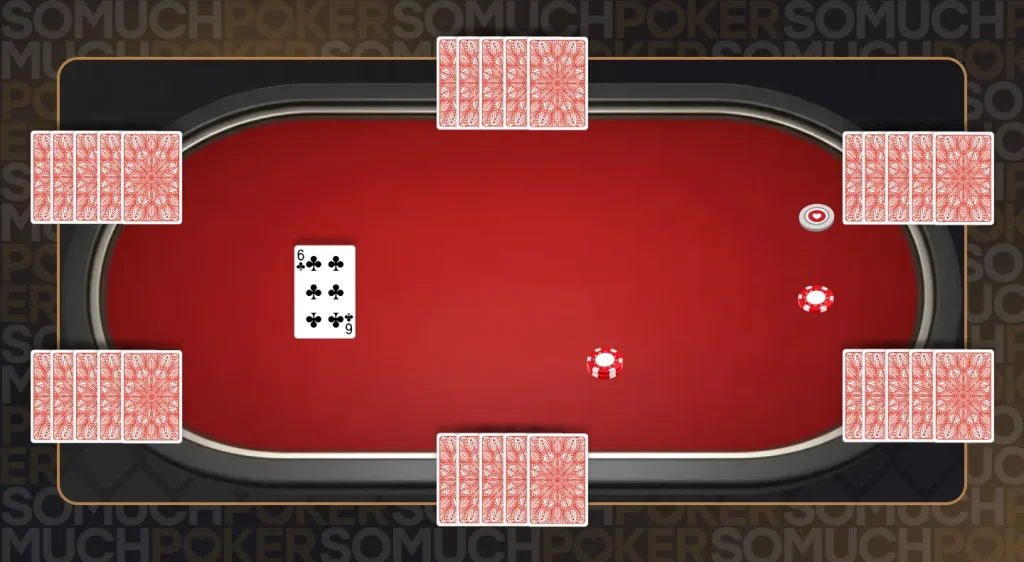
After the Courchevel card is revealed, the first betting round begins.
Players can either:
throw their cards away or 'fold'
put in the same amount of money as the big blind or 'call'
put in more money than the big blind or 'raise'
Courchevel is traditionally played in pot-limit version, but some places also offer fixed-limit and no-limit games.
After all players have acted, the remaining two flop cards are dealt face-up in the middle, and another round of betting happens.
After all players have acted on the flop, a fourth community card is dealt face-up: the turn, where another round of betting ensues.
After players have acted once again, a single final community card is dealt face-up: the river, where the last round of betting takes place.
If more than one player is still in action after the final betting round, a showdown occurs where players turn their hole cards face-up and compare their ranks.
Players must use exactly two hole cards and three community cards to make their best hand, and the pot is awarded to the player with the best five-card hand. Ties are a much rarer event in Courchevel than in Texas Hold'em, but in case it happens, the pot is split equally among the winning players.
Courchevel Hand Rankings
To evaluate their own and opponents' hands, players need to be familiar with the hand ranking hierarchy of the game.
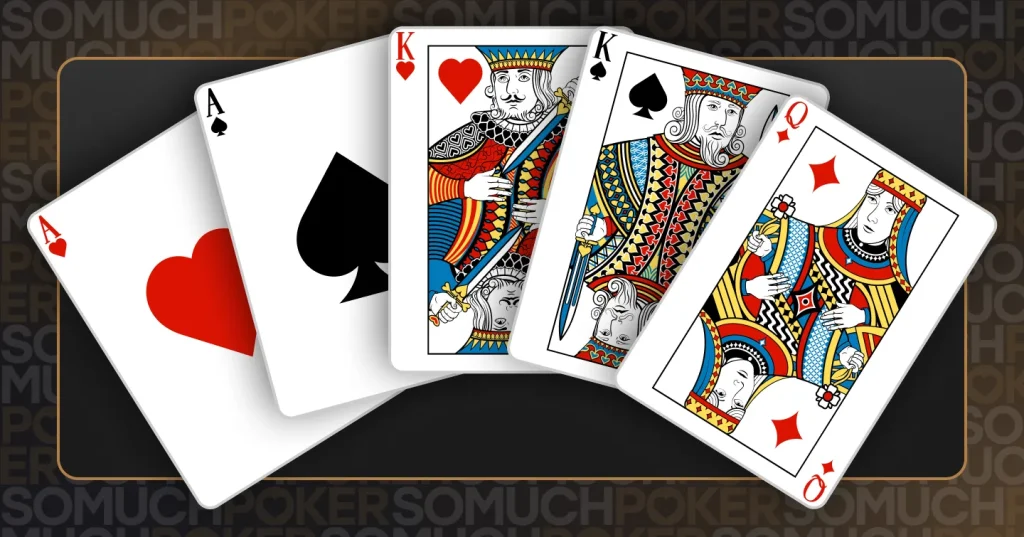
Here are the rankings for every possible combination, sorted from highest to lowest:
Hand | Example |
|---|---|
Royal Flush | A♥K♥Q♥J♥10♥ |
Straight Flush | 9♣8♣7♣6♣5♣ |
Four of a Kind | Q♦Q♠Q♥Q♣2♠ |
Full House | K♠K♦K♥4♣4♠ |
Flush | A♠J♠8♠5♠2♠ |
Straight | 10♦9♣8♥7♠6♦ |
Three of a Kind | 7♠7♥7♦K♣2♥ |
Two Pair | A♥A♣Q♠Q♦3♠ |
One Pair | J♠J♦9♣6♥2♦ |
High Card | A♣Q♥10♦7♠3♥ |
Basic Strategies & Tips for Courchevel
Generally speaking, Courchevel is a more complex game than Pot-Limit Omaha. Due to its higher variance and lots of swings, it is crucial for an aspiring Courchevel player to learn how to navigate these dangerous waters.
Here are some essential strategies to help you get started:
Starting Hand Selection
In the long run, some hands perform much better than others. You should take the time to carefully evaluate the strength of your cards before betting.
Luckily, with the Courchevel card already revealed before betting, players can dynamically adjust their starting-hand requirements, allowing them to make more informed preflop decisions.
If the Courchevel card is an Ace or a King, the best starting hands are like A-A-K-Q-J or K-K-Q-J-10. Connected cards like Q-J-10-9-8 also work well if the flop card fits your range. Low, unconnected cards like 2-3-4-5-7 are less valuable, unless the Courchevel card suggests a low draw. In that case, if the exposed card is a low card (2-6), you should consider playing hands with potential to make a flush or a straight rather than high pairs.
Reading the Board Texture
When all three cards of the flop are revealed, you should reassess your hand based on multiple factors. Do you have the potential to make the nuts, or is your hand vulnerable? What are your opponents’ tendencies? For example, if the board is A-7-2 rainbow, many players might overcommit with a single Ace, which might give you the opportunity to bluff them on later streets if you also hold some blockers in your hand.
Strategic Bluffing with Partial Information
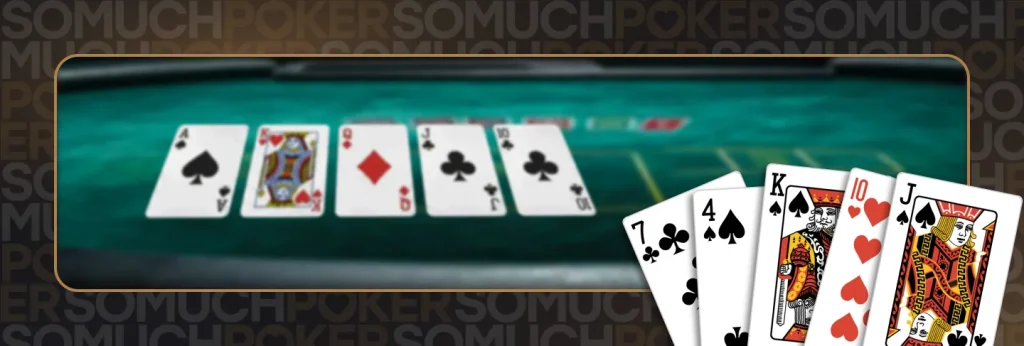
Because your opponents also see one flop card before betting, you should bluff in a more nuanced manner. For example, if the courchevel card is the King of Spades, and you hold K-Q-J-10-9, representing a top pair and a straight draw can force folds from your opponents. What is more, if you hold the Ace of Spades and the exposed card is the King of Spades, you can represent a flush draw even with a weak holding.
Advanced Tips & Tricks for Courchevel
Adjust Your Strategy Based On Position
Deviate from your basic strategy depending on your position. Late positions give you an advantage because you act last and can gather more information to exploit or steal pots. Play more hands from late positions to take this advantage. Conversely, you should play fewer hands from early positions, because you have less information, and you will act first in future rounds.
Pot Control with Marginal Hands
Because Courchevel is usually played with a pot-limit betting structure, overplaying second-best hands can be very expensive. If you have a top pair but with a weak kicker, you should consider checking rather than bloating the pot.
Profile Your Opponents
Pay careful attention to your opponents’ actions and assign them to player categories. Calling stations call too often, so you should value bet them a lot. Nits fold under pressure, so you can easily bluff them off marginal hands. Maniacs overbet their weak hands, so you can trap them with your strong holdings.
Balance Your Range
If you only bet your strong holdings, players might quickly find out about your strategy. You should avoid being predictable by mixing strong hands as well as bluffs in your betting patterns. This was, your opponents will have more difficulty exploiting your strategy.
Common Mistakes to Avoid in Courchevel
There are countless pitfalls in poker. Be easy on yourself if you make a mistake – even experienced players make them from time to time, especially when they transition to Courchevel.
Identifying potential pitfalls reduces the risk of falling into them. Here are some mistakes you should look out for:
Overvaluing One-Pair Hands
The truth is that you are not very likely to win with just a top pair on the showdown, even though many players think that something like A-K-x-x-x is strong just because the exposed card is an Ace. You should always remember that one pairs rarely hold up in Omaha and any game based on Omaha, because they favor nut hands.
Ignoring the Exposed Card’s Impact
If you play Courchevel the same way you would play classic Omaha, you are in for a bad time. You should always consider the exposed first flop card, and adjust your preflop range based on whether it helps your hand or not.
Chasing Non-Nut Draws
Chasing non-nut draws, second-best flushes, or straights is a very fast way to lose chips in Courchevel. If you call big bets regularly with a low flush or straight draw, you will definitely lose in the long run. You should fold your draws unless you have the nut potential or have strong implied odds.
Tilting After Bad Beats
Courchevel, like other Omaha variants, has infamously big swings, so it is very important to work on your mental game.
If you want to avoid tilt, practicing mindfulness to maintain a calm demeanor might be an effective way. Remember though that variance is a natural part of poker that you cannot erase.
Courchevel vs. Omaha vs. Texas Hold'em
Generally speaking, Courchevel poker, despite being an Omaha variant, requires more nuanced play than Traditional Pot-Limit Omaha.

Let’s break down the differences between Courchevel, Pot-Limit Omaha, and Texas Hold'em, according to their respective poker rules:
Feature | Courchevel | Pot Limit Omaha (PLO) | Texas Hold'em |
|---|---|---|---|
Hole Cards Dealt | 5 (sometimes 4) | 4 | 2 |
Community Cards | 5 (1 exposed pre-flop) | 5 (all hidden pre-flop) | 5 (all hidden pre-flop) |
Hand Requirement | Must use exactly 2 hole + 3 community | Must use exactly 2 hole + 3 community | Can use 0-2 hole + 3-5 community |
First Card Revealed | Before pre-flop betting | After pre-flop betting | After pre-flop betting |
Betting Structure | Typically Pot-Limit | Typically Pot-Limit | Most common: no limit |
Strategic Focus | Early information advantage | Multi-way pot odds | Bluffing and position play |
Hand Strength | Strong draws dominate | Strong draws dominate | Top pair often wins |
Complexity Level | High (5-card starting hands) | High (4-card starting hands) | Moderate |
Popularity | Niche (mixed games) | High (second to Hold'em) | Extremely high |
Best For | Advanced players | Action players | All skill levels |
How to Get Started with Courchevel
Want to start playing this poker variant, but don't know where to start? Here are some tips to help you get ahead of the competition:
Learn the Basic Rules
Many players aren't even familiar with the rules of the game, so knowing exactly how the game is played can already give you an edge over them.
Take The Time to Study
Being disciplined about regular study sessions is what separates great players from mediocre ones. There are many free and paid courses on Courchevel online for players of every skill level.
Play Online
Playing online can improve your game fast because hands are played faster than in live poker, and you can also play multiple tables at once. This means that you can gain much more experience playing a day online than you would if you spent a day in a casino!
What is more, many sites offer low-stakes tables where you can play without risking too much money.
Start with Low-Stakes Games
When you feel that you are ready to play with real money, start playing small stakes. When you have built enough confidence there, you can safely move up to the next stake.
Ready to test your skills? Join an online poker platform like Natural8 to practice and compete against players worldwide. Remember, every pro was once a beginner.
About the Editor

Beus Zsoldos is Somuchpoker's Senior Copywriter and Player Stories Editor, covering WSOP color moments, player profiles and poker personalities for the site's Stories section. She has spent more than 20 years around the game, first as a player, then as a live tournament director and localization manager for a major online poker room, before moving into full time poker writing.


