

Geek Women Legends at the Poker Table – Part 7: Maria Konnikova

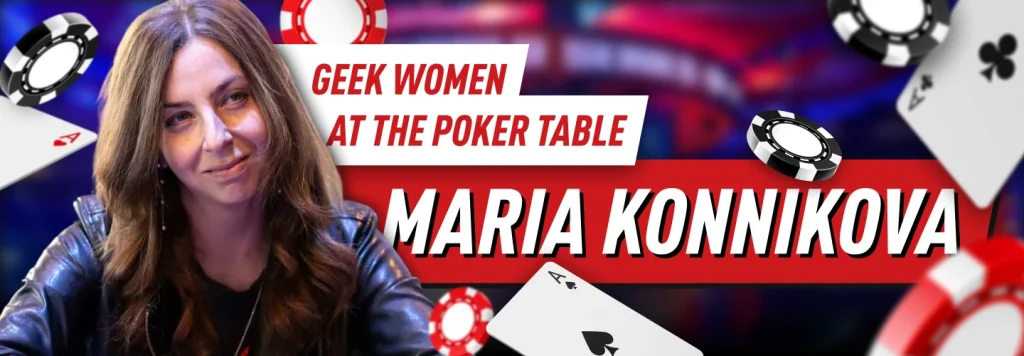
In the world of professional poker, few stories are as uniquely intellectual, unconventional, and “geek-driven” as that of Maria Konnikova. A Harvard-educated psychologist, a Columbia-trained PhD researcher, and a bestselling author, she is one of the rare figures who entered poker not to become a gambler or to chase jackpots, but to run an experiment on decision-making, human behavior, risk, and the fine balance between skill and luck.
Her ascent from academic writer to major tournament champion is not only unusual but also deeply symbolic: Konnikova embodies how analytical thinking, scientific curiosity, and disciplined learning can redefine what success means in a game long dominated by instinctive aggression and statistical intuition.
This article retraces her journey from psychology to poker, highlights her specific “geek traits,” examines her tournament achievements, and shows how she reshaped both her career and the narrative around women in the modern poker world.
Starting point: When Curiosity and Cognitive Science Take Root
Maria Konnikova was born in 1984 in Moscow, and at the age of four, her family emigrated to the United States. Growing up in a new country, she became immersed in storytelling, language, and the study of human behavior. From childhood onward, she wrote short stories, essays, and plays, signs of an early intellectual drive that later defined her career.
Konnikova pursued undergraduate studies at Harvard University, where she majored in psychology and creative writing, a dual focus that already blended structured analysis with narrative thinking. She later earned a PhD in psychology at Columbia University, specializing in cognition, decision-making, and the mechanisms behind human behavior.
Before poker entered her life, she built a respected career as an author and journalist. Her nonfiction books, Mastermind: How to Think Like Sherlock Holmes, The Confidence Game, and The Biggest Bluff, explored deductive reasoning, deception, cognitive bias, and the science of persuasion.
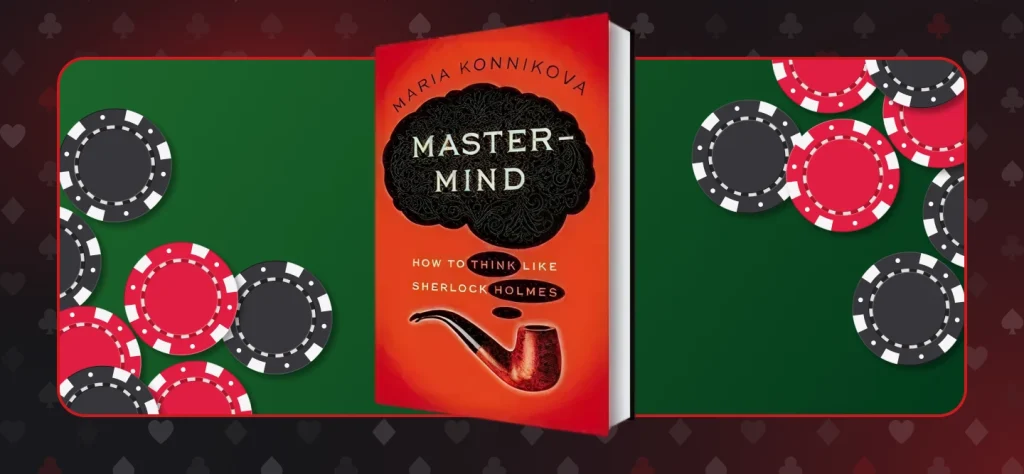
These works already hinted at a fascination that would eventually lead her toward poker: a desire to understand how humans make decisions under uncertainty and how emotion and logic collide under pressure.
From Scientific Horizon to Strategic Dedication
Maria Konnikova’s entry into poker was not a hobbyist’s whim. It was a research project. While writing about chance, luck, and decision-making, she realized that poker, more than almost any other environment, offers a real-time laboratory for observing how human minds operate under stress, ambiguity, and competition.
Konnikova herself has stated many times that she did not begin playing poker because she loved gambling. She was attracted to the psychological mechanics behind the game, the way players make decisions when faced with incomplete information, fluctuating emotions, and cognitive traps.
During her research, she became increasingly fascinated by game theory, probability, risk management, and behavioral interpretation. Poker was a perfect testing ground.
In 2016, she reached out to Erik Seidel, a legendary eight-time WSOP bracelet winner, with a bold proposition: she wanted to train with him from scratch to learn the game at a professional level. Seidel agreed and thus began one of the most compelling intellectual transitions in modern poker history.
For Konnikova, poker became a structured experiment, a deep dive into decision science and strategic development. She was not looking for overnight success; she wanted to systematically understand the mechanics of winning and losing.
From Novice Researcher to Recognized Professional
Maria Konnikova began playing live tournaments in 2017, slowly building her experience in real competitive fields. Her progression was steady, analytical, and rooted in the methods she valued as a scientist: observation, iteration, self-correction, and controlled experimentation.
In January 2018, she won the PokerStars Caribbean Adventure (PCA) National Championship, taking home $84,600. This victory awarded her a Platinum Pass, granting entry into the prestigious 2019 PokerStars Players Championship, one of the highest-value tournaments in the world.
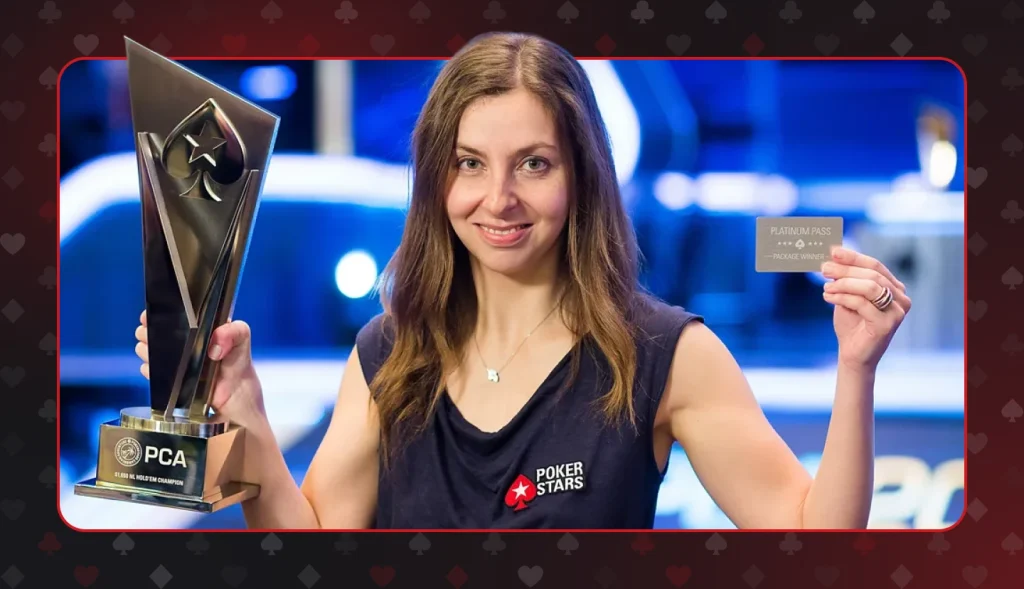
This breakthrough moment marked a turning point. What began as research was now a career path. By mid-2018, she officially became a professional poker player, participating in major live events and establishing herself within the competitive circuit.
In 2024, she added another major achievement: winning her first World Series of Poker Online Bracelet in the NLHE Fall Crazy 8’s event, earning $68,478. The victory solidified her status not only as a respected player but also as one capable of closing out tournaments, a skill many experienced pros struggle to master.
Across online and live events, her documented tournament earnings range from over $500,000 to over $1,100,000, depending on the source and whether online results are included. For someone who began as a true beginner only a few years prior, guided purely by intellectual curiosity, this is remarkable.
Why Maria Konnikova Is a True Intellectual Among Poker Pros
Maria Konnikova stands out not only for her results but also for how she achieved them. Her entire poker identity is built on the core qualities of a “geek thinker”: analytical rigor, systematic study, psychological insight, and an obsession with understanding how behavior emerges under pressure.
1. Poker as Psychological Laboratory
Konnikova’s PhD studies focused on cognition/behavior, and poker became the real-world extension of that research. She approaches every hand as a data point, every opponent as a behavioral model, every decision as a testable hypothesis.
Stress, fatigue, emotional impulse, risk-reward balance: these universal psychological forces play out in every session. For Konnikova, the table is not just a competitive arena. It is an ongoing experiment.
2. Structured Learning and Mentorship
Unlike many professionals who grew up playing poker casually, Konnikova took a scientific route:
She studied theory, probability, and decision architecture.
She trained under one of the world’s greatest players, Erik Seidel.
She treated every session as practice, tracking mistakes, outcomes, and patterns.
This disciplined learning style is quintessentially geeky: deliberate, analytical, and iterative.

3. Writing and Thought Leadership
Konnikova is not only a player; she is a translator of ideas. Her book The Biggest Bluff details her journey from novice to professional, but more importantly, it explores risk, intuition, attention, and the psychology behind every choice we make.
For many readers unfamiliar with poker, the book reframed the game as a lens for understanding life, decisions, and behavior. This ability to bridge academic insight, narrative structure, and competitive strategy is one of the reasons she stands out so profoundly.
4. Intellectual Courage in a Male-Dominated Environment
Poker remains heavily male-dominated, especially at high levels. Konnikova never wanted to be placed into a separate category of “women players” and rarely entered women-only events. She insisted on competing in open fields where skill, not gender, determines results.
Her stance is part of her analytical integrity: controlled variables matter, and special treatment distorts the experiment. She wanted the purest data set possible: the real competitive field.
This alone makes her a model for many women entering the game.
Challenges, Identity, and the Realities of a Second Career
Maria Konnikova did not follow the traditional path of poker professionals. She did not grow up watching televised tournaments or playing home games. Her first years were marked by genuine growing pains and steep learning curves.
In interviews, she has described sitting at her first live event armed only with a starting-hand chart, proof of how new she truly was. Yet through discipline, self-reflection, and scientific persistence, she closed the gap that typically requires a decade of experience.
Navigating Bias and Expectations
As a woman and an academic newcomer, she often faced assumptions that she lacked skill, that she was simply writing a book, or that her presence was temporary. Rather than responding emotionally, she used these experiences to study the psychological landscape of poker culture.
Her identity as a thinker, not just a competitor, allowed her to navigate these moments with clarity and insight.
Why Maria Konnikova Matters to Poker and Beyond
Maria Konnikova’s significance reaches far beyond prize money or bracelets. Her impact is multifaceted:
1. She Proved Poker Is Accessible to Intellectual Outsiders
Konnikova’s journey is living evidence that poker is not reserved for lifelong grinders or high-variance risk takers. It can be mastered through disciplined study, self-awareness, and analytical thinking.
2. She Added Psychological Depth to Poker Literature
With The Biggest Bluff, she introduced the game to new audiences: readers interested in psychology, decision-science, and personal development. This expanded the cultural understanding of poker beyond gambling clichés.
3. She Reframed Women’s Role in Poker
Without campaigning or dramatizing, she quietly dismantled stereotypes by proving that intellectual rigor is genderless and that women do not need segregated events to prove their worth.
4. She Built a Bridge Between Academia, Writing, and Competitive Play
Her hybrid identity, psychologist, author, professional player, created a new template for what a poker career can look like. She demonstrated that the game can be both an analytical pursuit and a narrative journey.
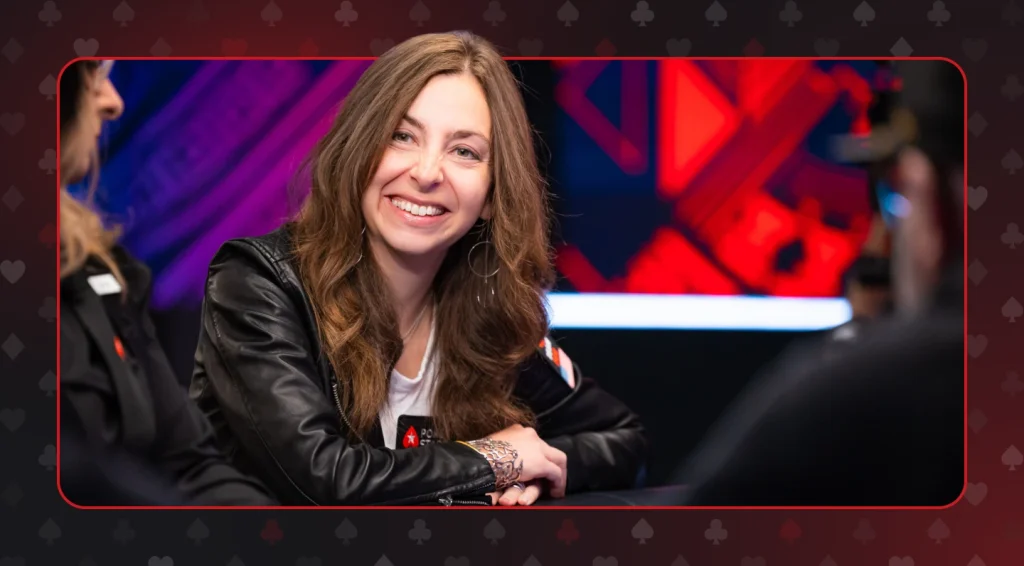
Conclusion: Maria Konnikova as a Geek Icon at the Poker Table
Maria Konnikova’s path from psychology to poker is one of the most compelling modern stories in the competitive gaming world. It is a journey driven not by thrill-seeking or financial ambition, but by curiosity, analysis, and intellectual courage.
She embodies the geek virtues the best:
deep focus
scientific method
self-driven learning
and the ability to transform data into insight.
Her success proves that poker is, at its core, the game of the analytical mind, a domain where knowledge, discipline, and critical thinking can outperform instinct and tradition.
Maria Konnikova is not merely a player; she is a symbol of how thought, science, and strategy can reshape a career, a mindset, and even an entire field.
About the Editor

Adam Biro is Somuchpoker's Content and Creative Quality Lead, writing the site's Legends of Poker series, including From TCG to the Top and Geek Women Legends at the Poker Table, along with strategy content for newer players. He brings a background as a trading card game developer and tester, plus close to twenty years in software testing and quality assurance, to how he analyzes poker strategy and player psychology.
Related News
 StoriesLegends of Poker
Gus Hansen Now: Poker, Fatherhood and Life Beyond the Tables
Does Gus Hansen still play poker? Explore his life today, from Team Winamax and WSOP appearances to fatherhood, family life and his growing passion for padel.
 Legends of PokerStoriesStories
Daniel Cates Net Worth: Jungleman’s Poker Career, Biggest Wins and Losses
Explore Daniel “Jungleman” Cates’ net worth, documented poker earnings, biggest wins and losses, back-to-back WSOP titles and multimillion-euro heads-up matches.
 Legends of PokerStories
Bill Perkins: Net Worth, Poker Career and Biggest Bets
Discover Bill Perkins’ net worth, poker career, biggest prop bets, high-stakes cash games, Die With Zero philosophy and business background.
 Live PokerInterviewLegends of Poker
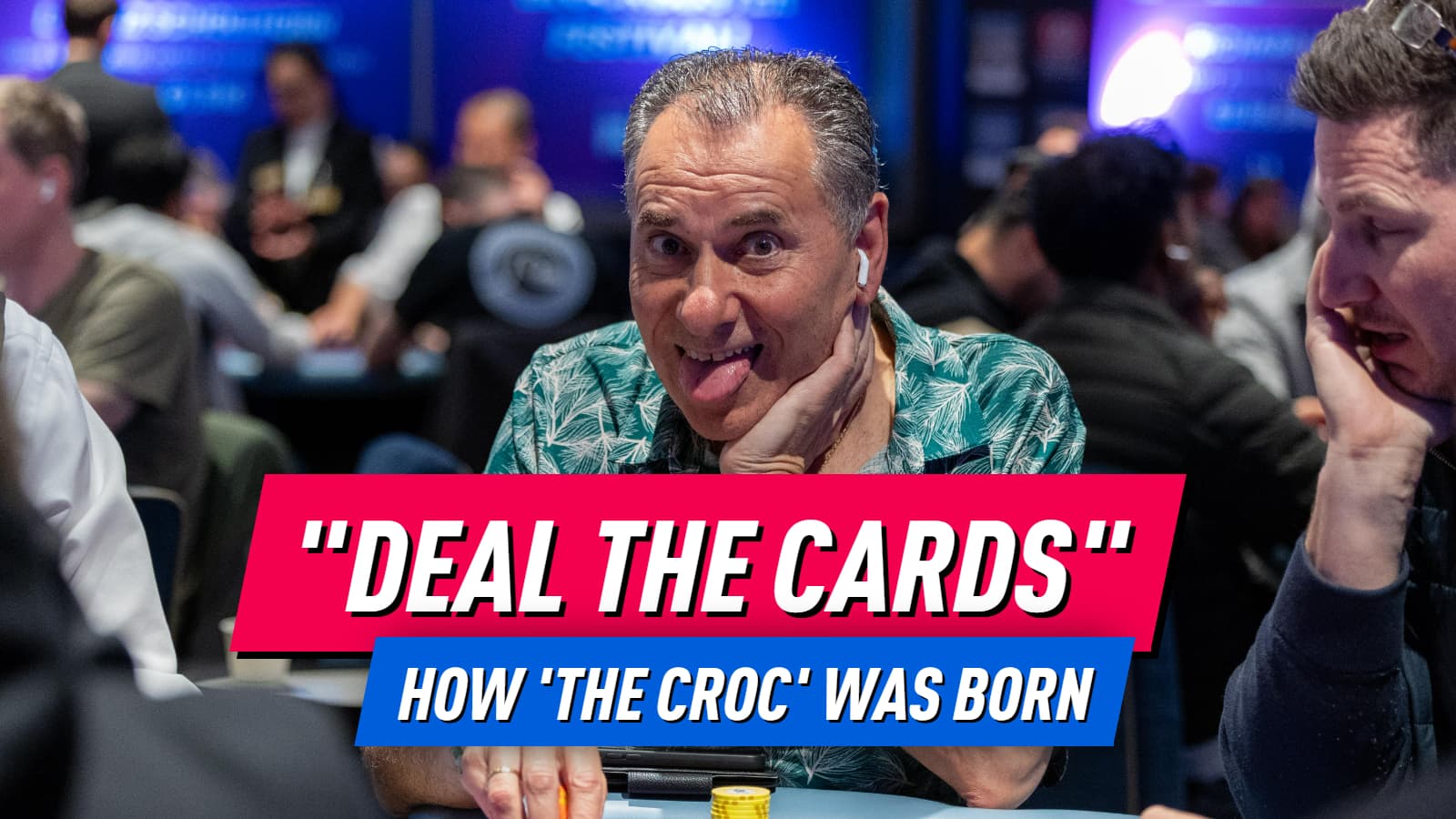
Billy ‘The Croc’ Argyros Wants Poker’s Character Back
Billy "The Croc" Argyros recalls facing Johnny Moss, earning his famous nickname and why today’s poker pros must respect recreational players.
 Legends of PokerStories
From Chips to Fame - Part 6 - Casino Cash Games vs Tournaments: Which Made Poker Players Richer?
Wondering about poker tournaments vs cash games? Discover the best poker format for beginners, explore the risk vs reward, and learn how to grow your bankroll.
 NewsLegends of PokerStories
Geek Women Legends at the Poker Table – Part 2: Annie Duke
Part 2 of Geek Women Legends at the Poker Tables focuses on Annie Duke, a living example of the intersection between cognitive science and high stakes poker.