

Geek Women Legends at the Poker Table - Part 8 Jennifer Shahade and Annette Obrestad


For the final chapter of this eight-part exploration of geek women in poker, I wanted a true finale: not a single spotlight, but a head-to-head comparison between two women whose minds belong at the same table for entirely different reasons. Jennifer Shahade and Annette Obrestad come from different universes, one built in the centuries-old discipline of chess, the other forged in the chaotic speed-lab of online poker, yet both embody what “poker geek” really means when it’s taken seriously: curiosity, analysis, pattern recognition, and the ability to stay rational when others get emotional.
This is not a simple “who’s better” story. It’s a study of two styles of intelligence that poker rewards: structured thinking vs. high-volume intuition, theory-first learning vs. exploit-first adaptation, cultural voice vs. sudden global shockwave. Their paths couldn’t be more different, but their message is the same: poker is not a luck contest. Poker is an information sport, and the best minds learn to extract, process, and act on imperfect information faster and cleaner than everyone else.
Two Origins, Two Universes: Chess Logic vs. Online Analytics
Jennifer Shahade: the structured thinker from the chess realm
Jennifer Shahade’s story starts far away from the felt. Born in 1980 into a chess family in Philadelphia, she grew up in a world centered on logic, long-term planning, and abstract calculation. Chess was not just a childhood activity; it was a training ground for patience and decision-making. She made a historic breakthrough as the first woman to win the U.S. Junior Open (1998), later becoming a two-time U.S. Women’s Chess Champion and earning the title of Woman Grandmaster (WGM).
Why does this matter in poker? Because the best poker players share a chess player’s core habits:
they think in branches (“if X then Y”)
they accept uncertainty without panic
they value process over outcome
they understand that good decisions can produce bad short-term results
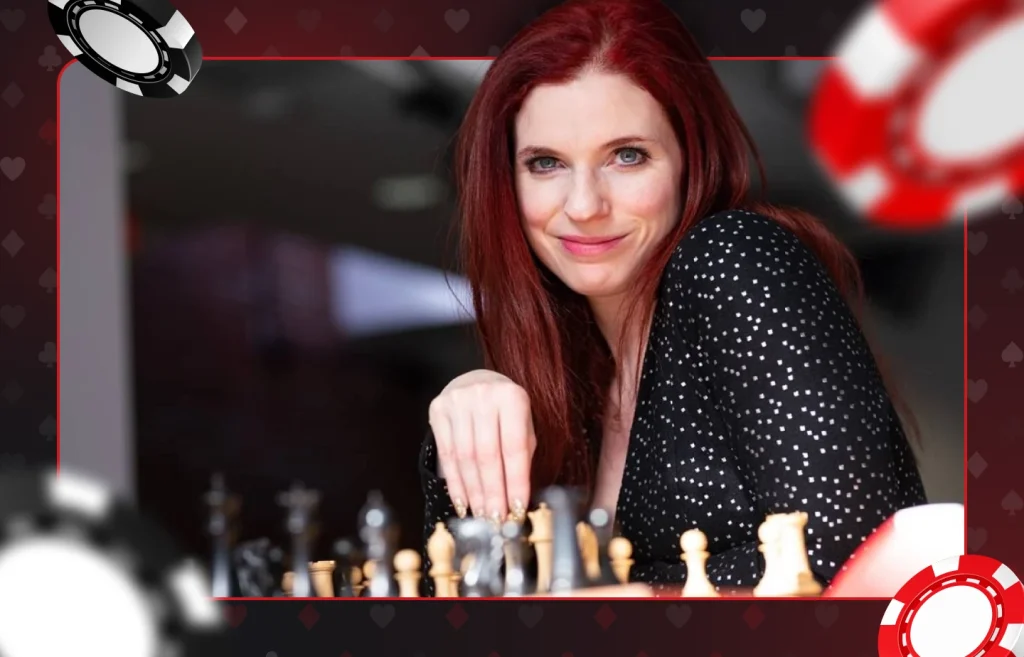
Shahade fits the archetype of the “geek polymath”, someone whose passion isn’t limited to a single game. She approaches mind sports like interconnected systems. Chess gave her a framework for disciplined thinking, and that framework becomes portable when the game changes.
Annette Obrestad: the online prodigy who broke poker’s age barrier
If Shahade’s world is tradition, Annette Obrestad’s world is acceleration. Born in 1988 in Sandnes, Norway, she didn’t grow up chasing trophies through structured federations. Her arena was the internet: high-speed tournaments, endless opponents, and volatility as a daily reality. She rose through online poker with a style that felt native to the digital environment: fearless aggression, rapid pattern recognition, and constant recalibration.
Annette Obrestad’s name first surfaced in the online poker world at an unusually young age. According to multiple sources, she was already playing at 15, something that would no longer be possible today, as modern regulations strictly require players to be at least 18 years old. Although she played under aliases and non-public accounts due to her age, she still managed to produce remarkable results, winning several small and mid-stakes online tournaments during this period. These early achievements laid the foundation for her later career and propelled her into the global spotlight, where she soon proved herself at prestigious live events.
Obrestad’s legend became permanent when she won the 2007 World Series of Poker Europe Main Event, making her the youngest WSOP bracelet winner at the time. That single achievement didn’t just give her a title. It sent shockwaves through poker culture because it proved something simple and hardcore: in an open field, against experienced professionals, a young woman could win on the biggest stage with composure and technical strength.
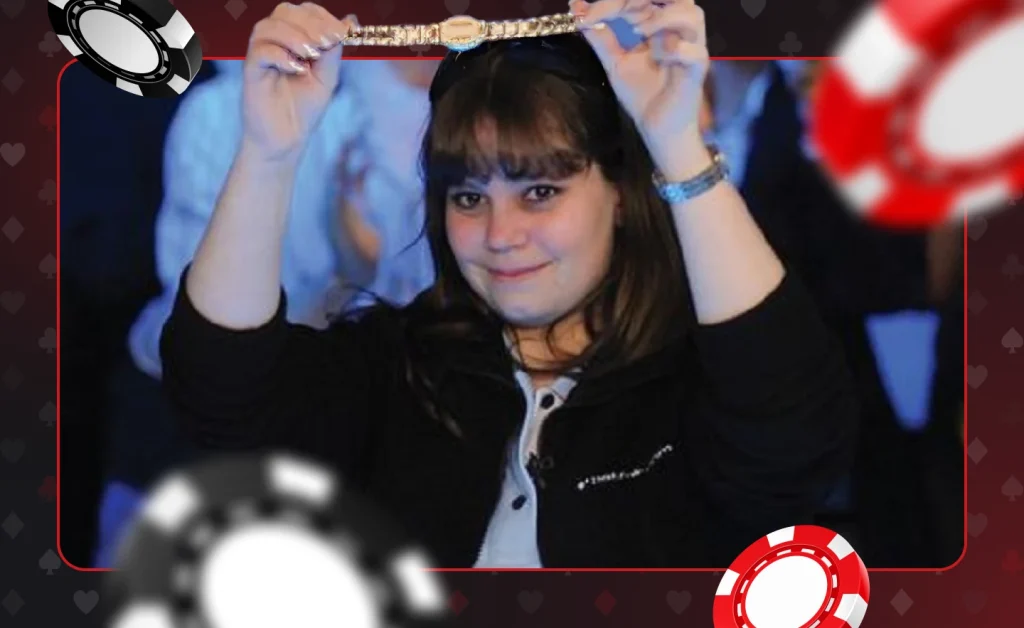
The internet generation of poker created a new kind of “geek”: less formal, less institutional, more experimental. Obrestad’s rise is a case study in how fast skill can grow when a player absorbs massive volume, constantly encounters new opponents, and develops an instinct that is basically compressed data.
How They Entered Poker: Purpose, Motivation, and Intellectual Curiosity
Shahade: poker as an extension of mind sport thinking
For Jennifer Shahade, poker reads like an intellectual continuation rather than a personal reinvention. She did not need poker to prove she was competitive, chess already demanded that. What poker offered her was a different kind of puzzle: a game where psychology and incomplete information are not weaknesses, but the point.
Her mind works naturally with concepts that poker people love to talk about when they’re being honest:
model-building
opponent strategy prediction
cognitive discipline
decision quality across long horizons
Shahade is also unusually valuable because she can translate complexity into language. In a game where many players “feel” strategy but cannot teach it, communication is an underrated edge. Her writing, commentary, and educational presence made her more than a competitor: a bridge between mind sports communities.
Obrestad: poker as a mathematical puzzle solved through volume
Obrestad’s entry reads like a different impulse entirely. Poker wasn’t an extension of a prior discipline; it was a puzzle she attacked directly. In online poker, the path is ruthless: either you adapt, or you lose money quickly. The environment forces competence through repetition. You can’t hide from the results.
Her learning style reflects an engineer's mindset:
identify patterns
test actions
watch what breaks
repeat until the exploit is sharp
Obrestad didn’t become famous as a “poker philosopher.” She became famous as a poker doer, a player whose decisions looked bold but often came from reading pressure points and applying them with precise timing.
Peak Achievements: Cultural Range vs. Shockwave Results
Shahade’s achievements across mind sports and poker media
Shahade’s poker profile is unique because her influence is not measured only by tournament scores. She carries credibility from chess into poker, and she operates as a public thinker: writer, analyst, commentator, and advocate for inclusion. That matters because poker has always struggled with perception. When sharp minds from other disciplines enter poker and speak well, it legitimizes the game as something beyond gambling.
Her story showcases a form of geek greatness that poker needs more of: someone who plays, explains, teaches, and builds community. In an ecosystem filled with secrecy, her openness is a cultural contribution.
Obrestad’s record-breaking victory and long-term mystique
Obrestad’s peak is concentrated and dramatic. Her WSOPE Main Event win in 2007 is one of those poker history moments that never fades because it hits multiple narrative triggers at once: youth, underestimation, elite stage, and decisive triumph. In the public imagination, it doesn’t matter whether her later career is quieter. The achievement is myth-proof.
https://youtube.com/shorts/O91l8fyFaBM?si=e58jN8P8lvAlHKI1
A frequently repeated anecdote about Obrestad is that she made a deep run without looking at her hole cards for extended stretches. Whether remembered in every detail or stylized in retelling, the point of the story is symbolic: it frames her as someone who values accurate information (position, betting habits, opponents' fears) over the emotional comfort of seeing pretty cards. And psychologically, that is poker geek behavior at its purest: trusting logic more than dopamine.
Geek Intelligence in Two Forms: Theory vs. Data
Shahade: the analytical polymath
Shahade embodies the “geek” through interdisciplinarity:
chess pattern recognition
structured reasoning
cognitive endurance
language skills and teaching instinct
cultural leadership
Her style is measured and conceptual. You can imagine her thinking in decision trees, articulating ranges, and framing the game as a method of thinking rather than an ego contest. In a world where many players want to look tough, she looks interested and, paradoxically, has the tougher mindset in the long term.
Obrestad: the data-driven intuition machine
Obrestad represents a different geek archetype:
statistical absorption
trial-and-error refinement
exploit discovery
high-tempo adaptation
pressure application as a skill
Her intelligence looks like intuition on the surface, but it’s often implied computation: thousands of micro-observations condensed into fast decisions. This is the difference between a university researcher and a gifted hacker. Both are smart. Both are dangerous. They just learned in different laboratories.
Contrasting Personalities and Playing Styles
Shahade: calm, reflective, explanation-oriented
Jennifer Shahade’s chess background shows up in her rhythm. She values:
composure
psychological awareness
reasoned framing
fairness and clarity
long-term strategic discipline
At the table, this translates into decisions that feel “quietly strong.” She doesn’t need the game to be loud to be intense. And as an educator-voice, she has something poker often lacks: a way of discussing strategy that doesn’t rely on mysticism or macho posturing.
Obrestad: fearless, fast, exploitation-oriented
Obrestad’s style is more volatile in appearance, but not necessarily in logic. She is remembered for:
aggression
timely bluffs
sharp bet sizing
fast reads
flexible ranges
This reflects her online upbringing. Online poker trains speed and adjustment. The player who waits too long gets eaten. Obrestad’s decisions often look like she’s comfortable in chaos, and that’s a rare trait. Many players can be aggressive when they feel safe. Fewer can do it when the situation is unclear.
Career Evolution: Advocacy vs. Departure
Shahade: multi-field impact and ongoing presence
Shahade’s influence is durable because it is distributed across multiple roles. She represents the “geek poker woman” who:
writes
teaches
analyzes
advocates
builds bridges between communities
In poker, the loudest legacy isn’t always the biggest trophy. Sometimes it is being the person who changes how people talk, who makes more players feel welcome, and who turns complexity into something learnable.
Obrestad: stepping back after reaching the summit early
Obrestad’s arc is fascinating because it’s not the classic “career grind forever” story. After reaching the peak so young, she gradually stepped away from the constant poker spotlight. That shift doesn’t erase her legacy; it sharpens it. She becomes a symbol of a unique kind of genius, solving the puzzle quickly and then moving on to other challenges.
Poker has room for both paths. Not everyone needs to be a lifelong ambassador. Not everyone needs to become a media figure. Sometimes the most powerful “statement” is a single historic win that permanently rewrites what people believed was possible.
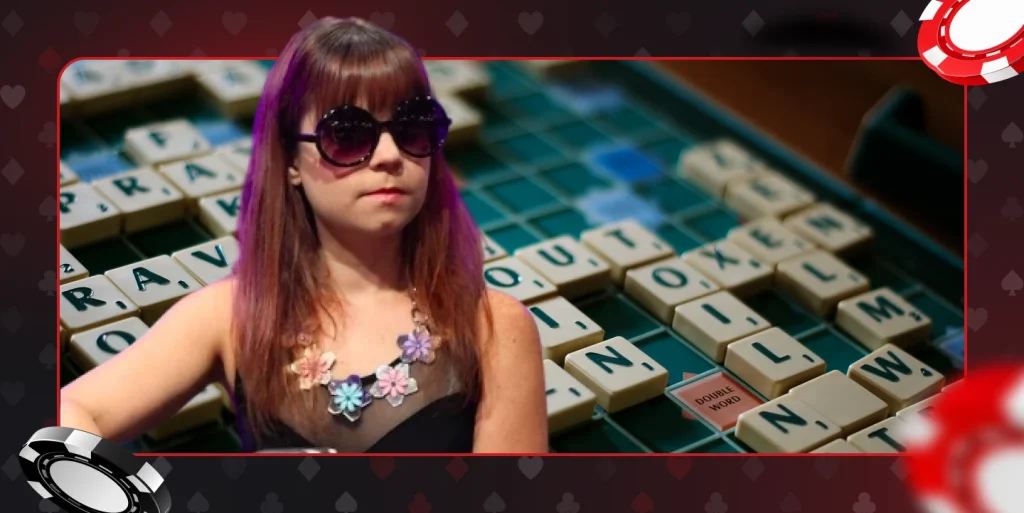
Since 2018, Annette Obrestad has largely stepped away from poker, making only rare appearances in the scene. Interestingly, since 2022, she has been competing in Scrabble tournaments, a surprising and somewhat humorous twist given her analytical background and competitive spirit.
Their Impact on Women in Poker
Shahade: the ambassador & educator
Shahade’s public voice matters because it makes the invisible work visible. She encourages participation in:
chess
poker
analytical competition
STEM-adjacent thinking arenas
Her message is that intellectual equality is not negotiable. When someone with her credibility speaks, it weakens stereotypes more effectively than arguments do.
Obrestad: proof that open fields can be conquered
Obrestad’s WSOPE win carries a different kind of power: it’s a result that can’t be explained away. It demonstrates:
women can dominate elite open fields
age is not destiny
fearlessness is trainable
assumptions get punished in poker
Her legacy functions like evidence. You can debate opinions. You can’t debate the trophy.
Conclusion: Two Different Stories, One Shared Truth
Jennifer Shahade and Annette Obrestad could not be more different, one shaped by chessboards and literature, the other by online tables and relentless repetition. Yet they share one essential truth: poker rewards the mind, and the mind has infinite forms.
Shahade shows the power of interdisciplinary intellect: structured reasoning, communication, and cultural presence. Obrestad shows the power of compressed computation: pattern recognition, aggression, and fearless adaptation.
Together, they define what “geek poker woman” really means in practice:
intelligence over ego
logic over superstition
curiosity over conformity
the courage to think differently when the table tells you to follow the crowd.
In different ways, both women helped expand the idea of what greatness looks like in poker. And that is the perfect ending for a series about geek women in poker: two minds, two paths, one message:
The future of poker belongs to thinkers.
About the Editor

Adam Biro is SoMuchPoker's Content and Creative Quality Lead, writing the site's Legends of Poker series, including From TCG to the Top and Geek Women Legends at the Poker Table, along with strategy content for newer players. He brings a background as a trading card game developer and tester, plus close to twenty years in software testing and quality assurance, to how he analyzes poker strategy and player psychology.
Related News
 Stories
Britney Sidelined as HCL Investigates Collusion Allegations
Hustler Casino Live has sidelined Britney Jing while reviewing collusion and staking allegations involving several poker players. Here's what we know about the ongoing controversy.
 Stories
The Rise of the Card Sharp: Inside 19th-Century Gambling Cheating
Explore how 19th-century card sharps used marked cards, false shuffles, second deals and collusion to cheat at Faro, poker and other popular gambling games.
 Side PotStories
Las Vegas Casino Photography Policy: Myth vs. Reality
Curious if taking photos in a casino is illegal? Discover the truth about the Las Vegas casino photography policy and how to safely snap your next selfie.
 Side PotLive PokerStories
The Ultimate Showdown: A Guide to the $250K WSOP Paradise Pro-Am
Get ready for the exciting $250,000 WSOP Paradise Pro-Am in the Bahamas! Learn the rules, schedule, and format of this 2026 gold bracelet event.
 Side PotStories
The Future of High Stakes: Inside the Deepstack Poker Show
Get ready for the new Deepstack poker show. Learn how advanced AI and poker heart rate monitoring will reveal the tension in high stakes poker.
 Legends of PokerStories
From Chips to Fame - Part 6 - Casino Cash Games vs Tournaments: Which Made Poker Players Richer?
Wondering about poker tournaments vs cash games? Discover the best poker format for beginners, explore the risk vs reward, and learn how to grow your bankroll.