

The Somuchpoker Poker Index (SPI): Introducing the Official Asian Poker Leaderboard

Ever wondered how you compare to other players across Asia?
Now you do not have to guess. The Somuchpoker Poker Index (SPI) does all the hard work for you.
For the first time, there is an official, transparent, and data-driven system that tracks tournament performance across the entire Asia-Pacific region. Whether you are a professional with years of results or a rising star breaking through, the SPI will show exactly where you stand in the race to become Asia’s top tournament player.
The Start of Something New
For years, Asian poker has grown at an incredible pace, producing world-class events, record prize pools, and international champions. But until now, there has never been a single leaderboard that truly reflected the region’s best performers.
The Somuchpoker Poker Index changes that.
It is a modern ranking system designed to capture what makes poker in this part of the world so special: its diversity, its competition, and its community. From the Philippines to Taiwan, Vietnam, Korea, and beyond, the SPI brings everything together into one unified and fair ranking.
This is the start of an annual race that will spotlight the most consistent and successful players on Asian soil. And with a brand-new formula behind it, every deep run, every final table, and every victory will count.
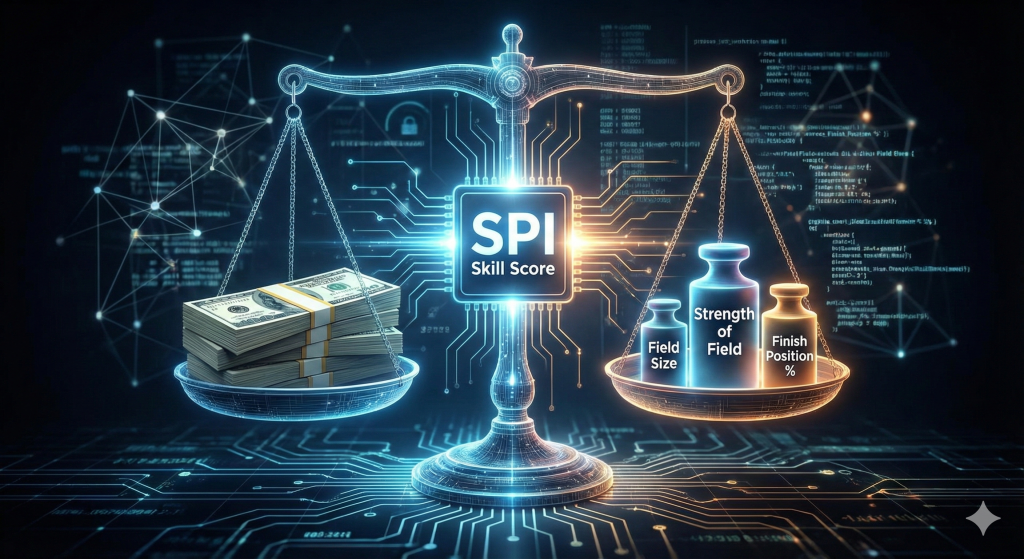
The Philosophy Behind the SPI
Most ranking systems fall into one of two traps. They either reward players who buy into the highest events or favour those who simply play the most volume.
The SPI finds the middle ground.
Our goal is simple: to identify who the best tournament player in Asia is right now. The algorithm balances buy-in size with field difficulty to create a realistic picture of true performance. It rewards achievement and consistency, not bankroll size or travel schedule.
A Fresh Race Every Year
The SPI leaderboard resets every January 1st, creating a clean start for everyone. No matter who you are or where you play, every new year is a chance to climb the ladder and chase the SPI Player of the Year title.
While international rankings such as the Global Poker Index (GPI) track results from around the world, the Somuchpoker Poker Index is focused purely on the Asia-Pacific region. It celebrates the tournaments, tours, and players that make Asian poker what it is today.
How the Formula Works
The SPI formula is built around three main pillars, which combine to create the Event Index (EI). This determines the total value of each tournament before results are applied.
1. The Buy-In Factor ($B)
The Financial Weight: Higher buy-ins matter, but money should not buy rankings.
To balance things out, the SPI uses a Cube Root formula. This makes sure a $100,000 event carries more weight than a $1,000 one, but not 100 times more. It respects prestige without letting it dominate the leaderboard.

2. The Entry Factor ($E)
The Field Difficulty: Beating hundreds or even thousands of players takes skill, focus, and endurance.
The SPI rewards that by applying a Square Root formula for field size, giving proper recognition to large-field winners who overcome long, grinding days at the tables.

3. The Event Index ($EI)
The Tournament’s Maximum Value: The Event Index combines both the Buy-In Factor and Entry Factor to set the total number of points that the winner of an event receives.
It is the baseline from which every other position’s score is calculated.

Your Score: The Position Factor
Once the Event Index is set, your points depend on your finishing position.
You only earn SPI points if you finish in the money (ITM).
From there, the system uses an inverse square root curve to reward higher finishes more heavily. The difference between 1st and 2nd place is large, while smaller jumps deeper in the payouts are more gradual. It mirrors the real challenge of poker: winning matters.

A Real Example: The APT Taipei 2025 Main Event
Here is how the SPI works in practice, using a major event as an example.
Prize Pool: USD 3,700,000
Entries: 2,547
Buy-In Factor: 113.25
Entry Factor: 50.47
Event Index (EI): 113.25 × 50.47 = 5,715 points
SPI Points Distribution:
Winner: 5,715 points
9th place (Final Table): 1,905 points
380th place (Min-Cash): 293 points
The bigger the field and the higher the buy-in, the more points are up for grabs. But the SPI still rewards consistency, so players who repeatedly run deep across multiple events will steadily climb the leaderboard.

Why the SPI Matters
The launch of the Somuchpoker Poker Index marks a new chapter for Asian poker.
It brings structure, recognition, and a sense of competition that extends beyond a single festival. For the first time, players will be able to track their progress in real time and see how their performances stack up against the rest of the region.
It is also a way to celebrate the incredible growth of the game in Asia. Every festival, every country, and every player now feeds into one shared story. Whether you are an up-and-coming grinder or a well-known pro, the SPI gives everyone a fair shot to earn their place among the region’s best.
The SPI era has already begun. The 2025 data is live, showcasing the players who led the pack this year. But the real race starts in 2026, when the first official SPI Player of the Year title is up for grabs.
It is time to find out where you really stand.
About the Editor

Kai Cocklin is Head of Live Poker at Somuchpoker, overseeing live tournament coverage, reporting teams and festival partnerships across the Asia Pacific region and beyond. Before joining Somuchpoker he worked with PokerNews at major festivals including the World Series of Poker and the European Poker Tour, where he managed live reporting teams and helped develop new writers.
Related News
 Live PokerRecap
Asian Poker Tour Unveils 2027 Schedule
APT unveils four marquee stops for 2027, with festivals in Jeju and Taipei and the USD 10,000 APT Championship returning in November.
 Live Poker
Infinity Poker Launches 2027 Tour With Incheon Festival
Infinity Poker launches at Paradise City, Incheon, March 5–14, 2027, with KRW 800M guaranteed and the first Somuchpoker Championship opening the festival.
 Live PokerRecap
Justin Vaysman Wins Poker Masters Event #6 After Stunning Comeback
Justin Vaysman came back from a quarter of a big blind to win Poker Masters Event #6 for $192,000 and his first PGT title.
 Live PokerRecap
Wouter Beltz Wins Championship Event at APPT Championship Manila 2026 For ₱11.9 Million
Wouter Beltz wins the APPT Championship Manila 2026 Main Event for ₱11.902 million after a heads-up ICM deal with Sung Jin Yun at Okada Manila.
 Live PokerRecap
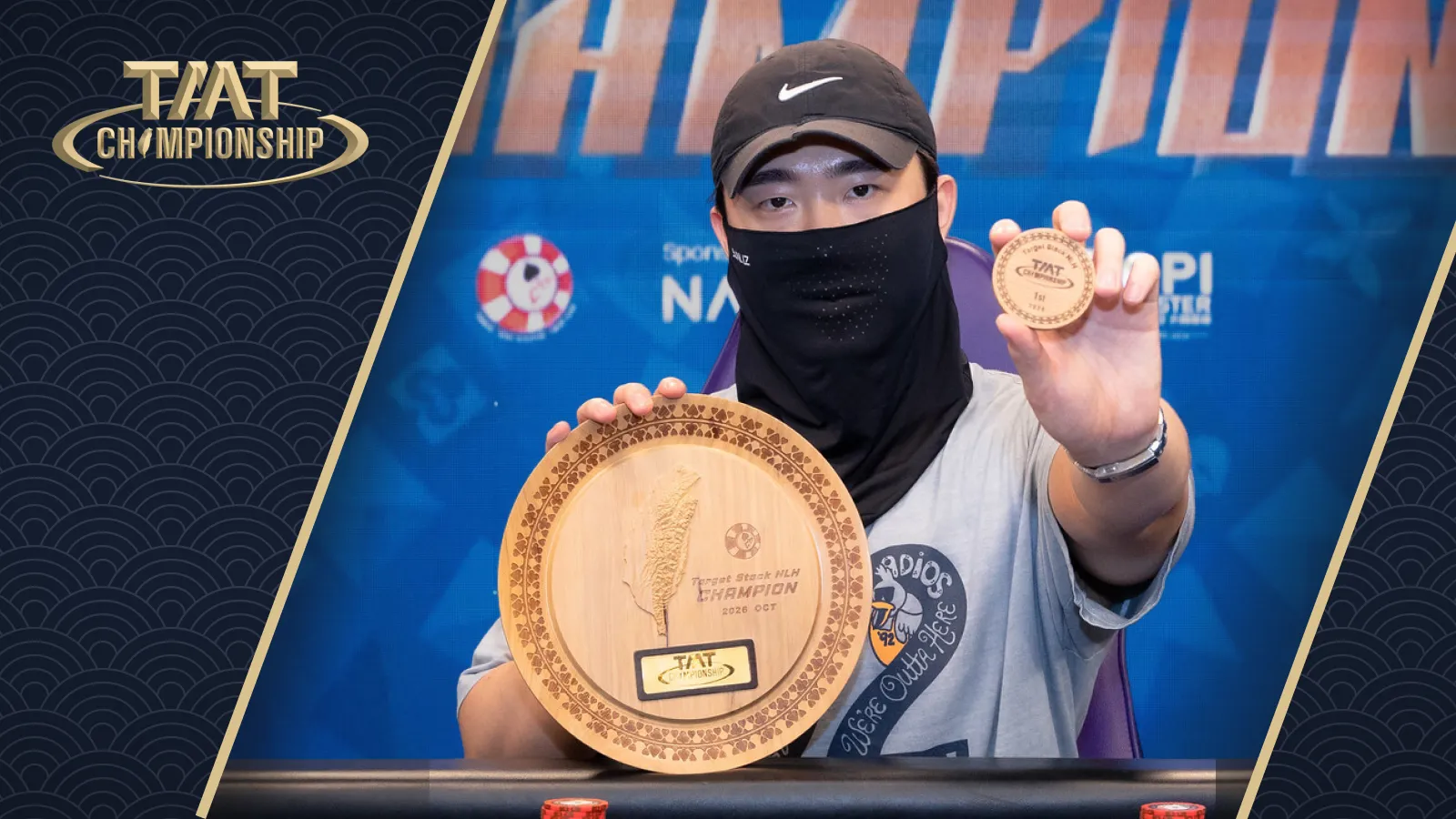
Taik Ki Yeo Wins TMT Championship Target Stack for TWD 683,000
TMT Championship 2026 Day 4 recap: Taik Ki Yeo wins the Target Stack for TWD 683,000, Wei Huang takes the Head Hunter, and the Mini Main gets under way.
 Live PokerRecap
Martin Sedlak Leads King's Main Event Final Table as Punnat Punsri Wins 20K NLH 6-Handed
Martin Sedlak leads the King's Main Event final table chasing USD 533,800, while Punnat Punsri and Mehdi Chaoui win titles in Jeju.